 Pin to Board
 I discovered this dish on a peculiar afternoon when I was flipping through an art book featuring stark Arctic photography. The images were so minimal and hushed—just white planes and scattered rocks—that I wondered if I could capture that feeling on a plate. What started as a creative whim became an obsession with translating landscape into cuisine, and somehow, the answer arrived through the simplest ingredients: vegetables that echoed snow and stone, a cold plate that demanded respect, and the kind of restraint that feels almost rebellious in a world of elaborate cooking.
I made this for the first time at a winter dinner party where I'd promised something unexpected, and I remember standing in front of my open freezer, gently laying a marble tile across the shelves like I was tucking something precious into bed. My friend watched me slice the daikon so thin you could almost see through it, and asked if I'd lost my mind in a good way or a bad way—I still don't have a clear answer, but she finished her plate in silence and asked for the recipe.
Ingredients
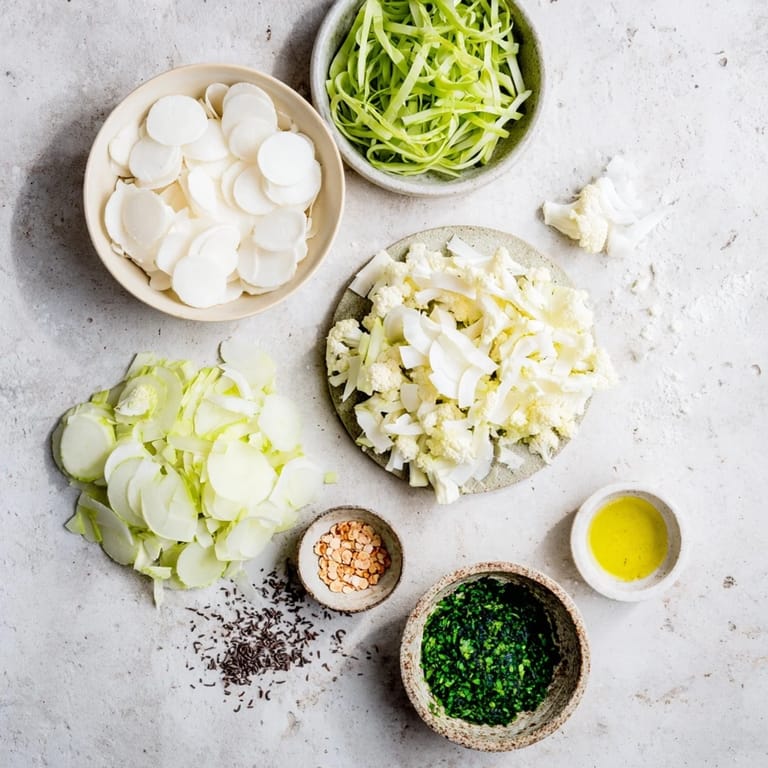
- Daikon radish: Slice it thin enough to catch light; this vegetable is your snow, crisp and clean-tasting, with a subtle peppery note that keeps things from feeling too austere.
- Kohlrabi: Peel it generously and slice it just as thin as the daikon—it's one of those underrated vegetables that tastes like a conversation between cabbage and broccoli, mild and delicate.
- Belgian endive: Leave the leaves whole or break them into pieces; they're bitter in the best way, architectural, and they hold their shape even after sitting on a cold plate.
- Cauliflower florets: Chop them very finely so they read more as texture than vegetable, almost like scattered snow that caught a bit of afternoon light.
- Unsweetened coconut flakes: Toast them lightly yourself if you can; they add a whisper of warmth and a subtle sweetness that surprises people who didn't see it coming.
- White and black sesame seeds: Toast these gently too, just until fragrant—they become little anchors of flavor that ground everything else.
- Microgreens: Use whatever you can find; they're the living element, the thing that says this plate is meant to be eaten right now.
- Flaky sea salt: Apply it at the very last moment so it stays sharp and doesn't dissolve into the vegetables too quickly.
- Extra-virgin olive oil: Use one you actually like drinking by itself; it's one of maybe four flavoring agents here, so it matters.
- Lemon juice and white wine vinegar: Together they're brighter than either would be alone, a subtle acidity that wakes everything up without announcing itself.
- White pepper: It dissolves into the dressing almost invisibly, adding heat without the dark flecks that would break the pale color story.
Tired of Takeout? 🥡
Get 10 meals you can make faster than delivery arrives. Seriously.
One email. No spam. Unsubscribe anytime.
Instructions
- Chill your canvas:
- Put your stone or marble platter in the freezer for 15 minutes before you start; this isn't decoration, it's part of the dish itself. Cold temperature keeps everything crisp and makes the whole experience feel intentional and a little bit fancy.
- Mix the dressing:
- Whisk together the olive oil, lemon juice, white wine vinegar, and white pepper in a small bowl until it looks glossy and unified. Taste it and adjust the acidity to your preference—this dressing is delicate, so it needs your attention.
- Scatter the vegetables:
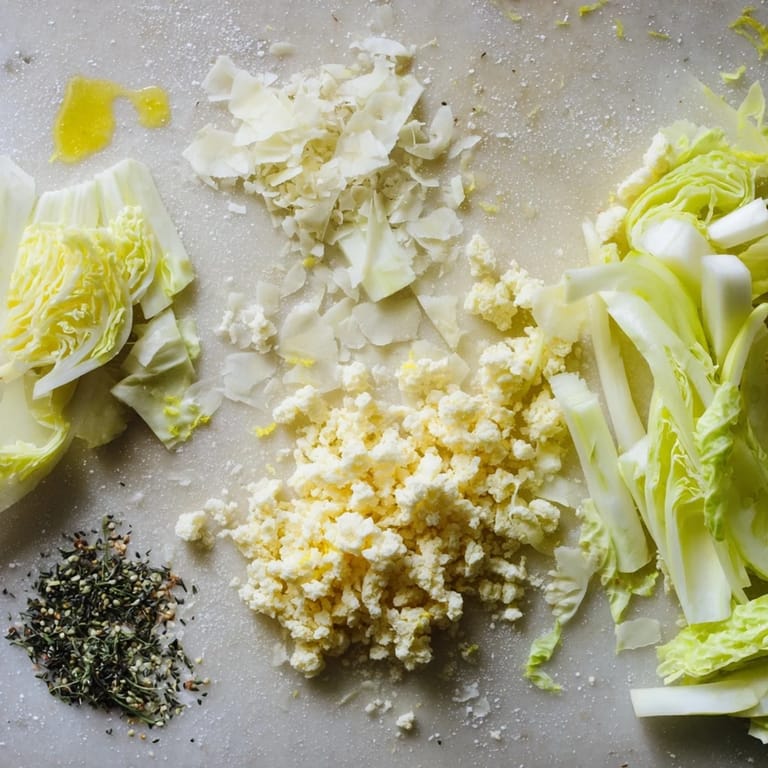
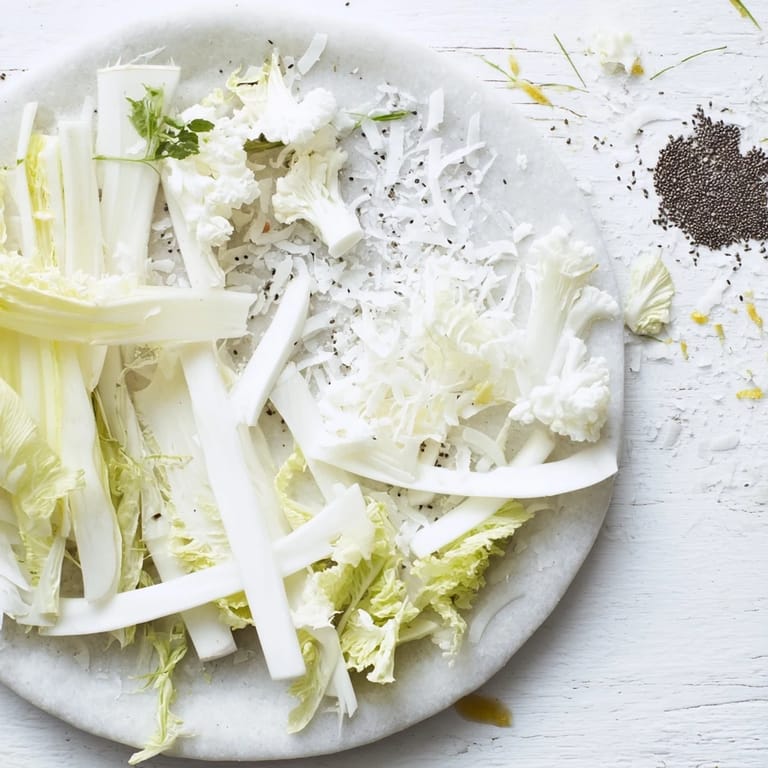
- Arrange the daikon, kohlrabi, and endive across the cold stone in a sparse, irregular pattern, like wind-blown plants clinging to arctic ground. Leave white space; empty areas are part of the composition.
- Add texture and accent:
- Sprinkle the finely chopped cauliflower across the vegetables, then scatter the coconut flakes and sesame seeds in a random, windswept arrangement. Step back and look at it—you're creating landscape, not covering a plate.
- Dress lightly:
- Drizzle the dressing across the arrangement with a light hand; you want every element to taste of itself, with the dressing as a whisper rather than a shout. Use maybe two-thirds of the dressing total.
- Finish and serve:
- Add the microgreens as the final layer and pinch the flaky sea salt over the top just before plates go to the table. Serve immediately—speed here is your ally, keeping textures sharp and temperatures cold.
 Pin to Board
 What surprised me most was watching people eat this in near silence, actually pausing between bites to look at what they were holding. Food that's also visually striking creates a different kind of experience—it makes people slow down and actually taste things instead of just consuming them. That shift, from eating to experiencing, is when a dish becomes something more than just dinner.
When to Make This
This dish shines in winter or early spring when you want something that feels light but also substantial enough to anchor a meal. It works beautifully as the opening course to a longer dinner, setting a tone of intentionality and restraint that guests somehow carry through the rest of the evening. I've made it for everything from a quiet lunch to a formal dinner party, and it adapts to context while maintaining its peculiar magic—the secret is that it doesn't try too hard, which paradoxically is the hardest thing to pull off in cooking.
Playing with Flavor
The beauty of this recipe is that while it looks austere, there's room for personal interpretation hiding inside the restraint. Swap the white wine vinegar for rice vinegar or yuzu juice if you want a different acid profile, or add a whisper of sherry vinegar for something with more depth. The white pepper can become black pepper if you're willing to sacrifice the color story for a more assertive bite, and honestly, the earth tone of black pepper against the pale vegetables isn't entirely wrong. If the vegetarian constraint feels limiting, smoked whitefish or chilled poached shrimp scattered across the top transforms this into something more substantial without disrupting the visual language—just accept that you're no longer making a purely vegetarian dish and adjust your guest list accordingly.
Making It Your Own
Once you understand the structure—cold plate, pale vegetables, intentional spacing, subtle dressing—you can riff. I've added thinly shaved fennel for anise notes, scattered pomegranate seeds for color contrast (which breaks the arctic theme but creates a different kind of beauty), and even experimented with different stone surfaces depending on what I had clean. The mandoline becomes your best friend here; invest in a decent one or sharpen your knife skills, because thickness changes everything about how this dish reads and tastes. The stone itself becomes part of the narrative—I once used a rough slate tile instead of polished marble, and the texture completely changed how the eye moved across the plate.
- Always taste your vegetables before committing to them; sometimes a daikon is aggressively peppery and needs acknowledgment in how you season the dressing.
- Keep extra microgreens in a damp towel in your fridge so you can add them last-minute without them wilting on a warm plate.
- If you're serving this to a crowd, prep all the vegetables ahead and keep them in ice water until 10 minutes before assembly—they'll stay crisp and you'll actually get to enjoy your own dinner party.
 Pin to Board
 This dish taught me that restraint can be more powerful than abundance, and that sometimes the most interesting thing you can do on a plate is acknowledge the space between elements rather than filling every inch. It's become my answer for when I want to cook something that feels both simple and surprising.
Common Questions
- → What vegetables are featured in this dish?
Key vegetables include thinly sliced daikon radish, kohlrabi, Belgian endive leaves, and finely chopped cauliflower florets.
- → How is the dish served to enhance its character?
The ingredients are artfully scattered over a chilled stone or marble plate to evoke a windswept tundra landscape.
- → What adds texture and flavor accents?
Lightly toasted white and black sesame seeds, unsweetened coconut flakes, and microgreens provide subtle crunch and contrast.
- → What is used for the dressing?
A simple dressing of extra-virgin olive oil, fresh lemon juice, white wine vinegar, and white pepper gently enhances the vegetables' natural flavors.
- → Can this dish accommodate dietary restrictions?
Yes, it is vegetarian and gluten-free, though be mindful of sesame and coconut allergens.