 Pin to Board
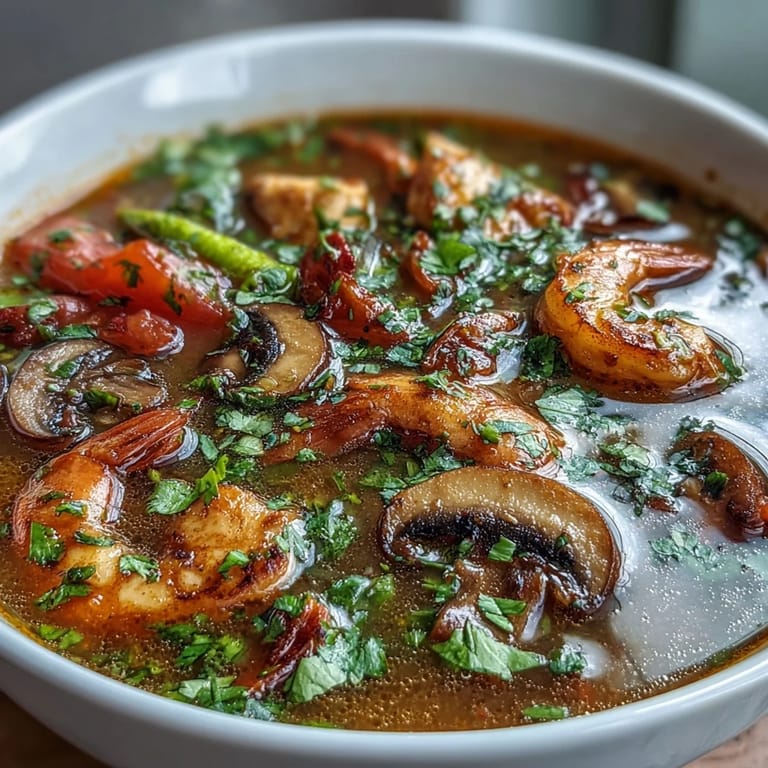
 A friend once described tom yum gai as the soup that wakes up your entire kitchen, and the moment I tasted it properly made—not from a packet, but with fresh lemongrass bruised in my palm—I understood exactly what she meant. The aroma alone is almost enough; that sharp, citrusy, slightly smoky perfume that fills the space around you is half the magic. I'd been intimidated by Thai cooking for years, thinking it required secret techniques or hard-to-find ingredients I couldn't pronounce. But then I realized tom yum is actually teaching you something fundamental: that a few bold, honest flavors, layered with intention, matter far more than complexity.
I made this for my neighbor during a particularly gloomy week, and watching her face transform as she tasted it—from curiosity to genuine delight—reminded me why I love cooking with bold flavors. She kept asking what was in it, convinced there must be some secret ingredient, but it was really just the respect given to each component. That bowl of soup became a small moment of connection, the kind that happens around food when something tastes unexpectedly alive.
Ingredients
- Chicken breast or thighs, thinly sliced: Thighs give you more forgiving, flavorful meat, though breasts stay leaner; the key is slicing them thin so they cook through in just a few minutes without toughening.
- Chicken stock: Use homemade if you have it, but good quality store-bought works beautifully—this is your foundation, so taste it first to make sure it's something you'd actually drink.
- Lemongrass: The tough outer leaves are protective, so peel them away; what matters is smashing the tender heart to release those oils, and yes, you'll smell it on your hands for hours, which is entirely worth it.
- Kaffir lime leaves: These are irreplaceable in their citrusy depth, but if truly unavailable, a strip of regular lime zest can help in a pinch.
- Galangal: This rhizome is peppery and slightly medicinal in the best way; fresh ginger is an honest substitute if you can't find it, though the flavor shifts slightly.
- Thai bird's eye chiles: Don't be fooled by their small size—these pack genuine heat, so approach them with respect and adjust down if you're unsure of your tolerance.
- Oyster or button mushrooms: Oyster mushrooms absorb the broth more readily and have a tender texture; button mushrooms are mild and forgiving if that's what you have.
- Nam prik pao: This roasted chili paste is the soul of the soup, adding depth and warmth beyond just heat; buy it from a Thai market or trusted Asian grocer, as quality varies.
- Fish sauce: Yes, it smells intense straight from the bottle, but trust the process—it becomes savory and anchoring in the finished soup, never fishy.
- Lime juice: Fresh lime is non-negotiable here; bottled lime juice won't give you that bright, living edge the soup needs to sing.
Tired of Takeout? 🥡
Get 10 meals you can make faster than delivery arrives. Seriously.
One email. No spam. Unsubscribe anytime.
Instructions
- Infuse the broth:
- Bring your stock to a gentle boil, then add the lemongrass, kaffir lime leaves, galangal, and smashed chiles. Let this simmer for 5 minutes while you watch the broth deepen in color and the kitchen fills with that unmistakable tom yum perfume—this step is where patience creates flavor.
- Cook the chicken:
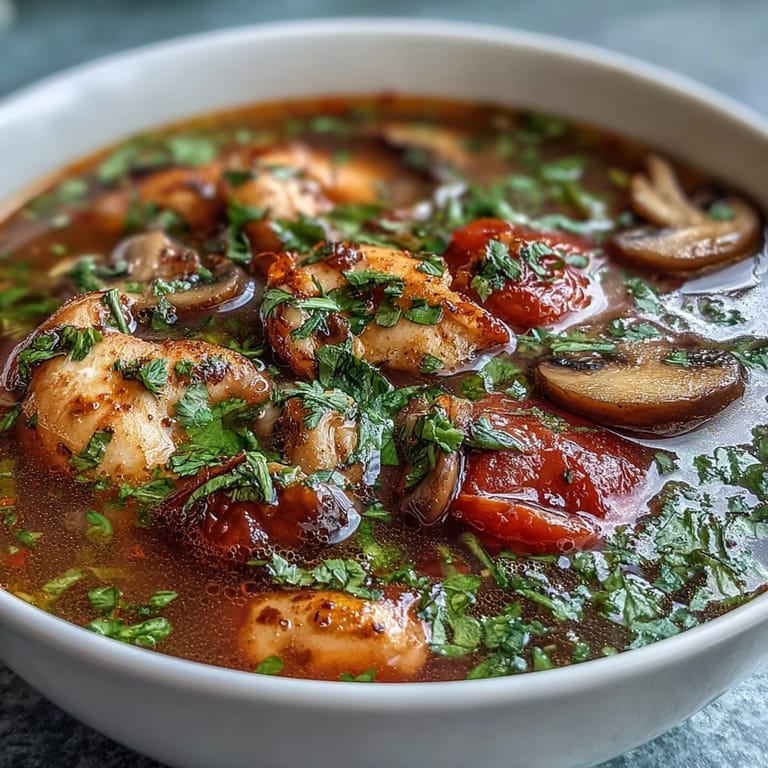
- Add your thinly sliced chicken and simmer for just 3 to 4 minutes until it turns opaque and cooked through. Skim any foam that rises to the surface; this keeps the broth clear and refined.
- Add the vegetables:
- Stir in mushrooms, tomato wedges, and onion slices, then simmer for another 3 to 4 minutes until they're tender but still have some integrity. You want to taste the vegetables, not turn them into pulp.
- Build the flavor:
- Add the nam prik pao, fish sauce, sugar, and salt, stirring everything together and simmering for 2 more minutes so the seasonings meld into the broth. Take a moment to taste it here—this is your moment to adjust.
- Finish with lime:
- Remove from heat and stir in the lime juice; the acidity should brighten everything you've built. Taste again and adjust the balance of sour, salty, and spicy to your preference—this is deeply personal.
- Serve with intention:
- Ladle the soup into bowls, garnish with cilantro and extra chile slices if you like, and serve immediately with lime wedges on the side so people can adjust the brightness to their taste.
 Pin to Board
 There's something about a soup that steams in front of you, aromatic and alive, that makes people put their phones down. I've watched quiet dinner tables transform into conversations, the shared experience of something warm and complex bringing people closer together. That's when I realized this recipe was teaching me more about hospitality than about cooking.
Balancing the Holy Trinity of Tom Yum
Every good tom yum lives in the tension between heat, sour, and salty—three flavors that should be in conversation, not fighting. When I first made this, I added too much chili and drowned out everything else; when I learned to respect the sourness of lime and the depth of fish sauce, the whole dish shifted into clarity. Think of it like seasoning a painting: you're not trying to make every flavor scream, but rather to create a balance where each one makes the others more interesting. The nam prik pao provides warmth, the lime provides brightness, and the fish sauce provides roundness; together, they create a flavor that's greater than the sum of its parts.
Ingredient Sourcing and Substitutions
I've learned that the Thai section of an Asian market is usually the friendliest place in the store—the shopkeepers genuinely want you to find the right things and often have recommendations. If you can't find galangal, ginger works, though the flavor becomes warmer and less peppery. For kaffir lime leaves, there's really no perfect substitute, but a small amount of lime zest can add brightness. You might discover that some ingredients are easier to find than you expected, especially in cities with strong Southeast Asian communities. Once you know where to shop and what to ask for, sourcing becomes part of the pleasure of cooking this dish.
Making It Your Own
My first tom yum was strictly by-the-book, but over time I've learned that this soup invites personalization in a way that honors rather than disrespects tradition. Some cooks add a splash of evaporated milk for creaminess, others swap the chicken for shrimp or tofu depending on what they're craving. I've added baby corn, bamboo shoots, and even a handful of spinach at the end, and each version felt like a conversation with the original recipe rather than a betrayal of it. The skeleton of the soup—the infused broth, the balance of flavors, the respect for ingredients—stays constant; everything else is yours to adjust.
- If you prefer a creamier version, stir in a tablespoon of evaporated milk or coconut milk after removing from heat for richness without heaviness.
- Shrimp (tom yum goong) works beautifully and cooks even faster than chicken, so add it after the initial infusion and watch it carefully.
- Always taste as you go and remember that you can add more heat, sourness, or salt, but you can't take it out—restraint early means control later.
 Pin to Board
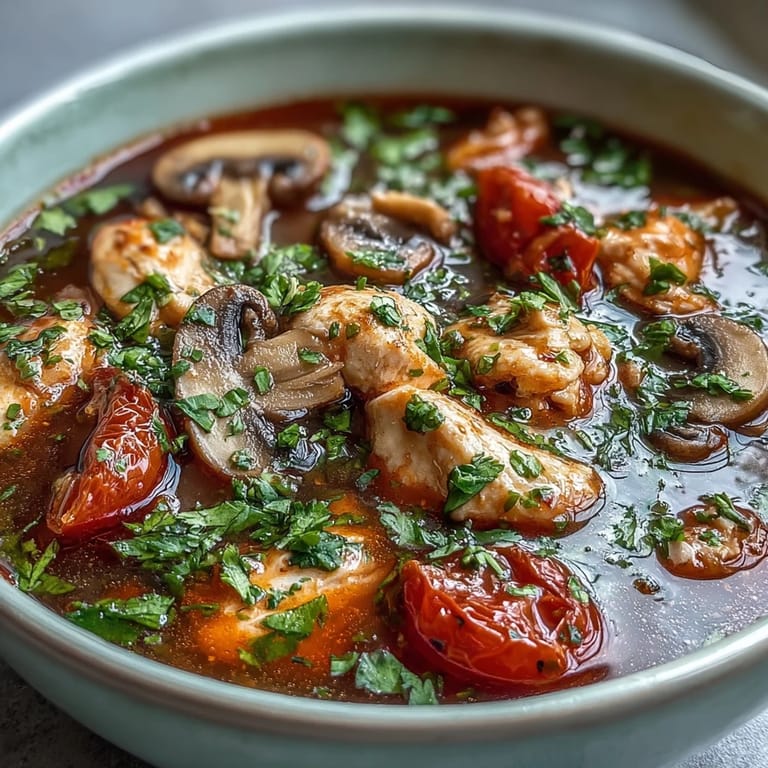
 Tom yum gai has become one of those dishes I make when I want to feel anchored—something about building it from scratch, from the smell of lemongrass to that final squeeze of lime, reminds me why I love to cook. It's proof that food doesn't need to be complicated to be profound.
Common Questions
- → What makes Tom Yum Gai authentic?
The authentic flavor comes from the holy trinity of Thai aromatics: lemongrass, kaffir lime leaves, and galangal. Combined with nam prik pao roasted chili paste and fresh lime juice, these ingredients create the distinctive hot and sour profile that defines this soup.
- → How spicy is Tom Yum Gai?
The heat level is adjustable based on the number of Thai birds eye chiles used. Two smashed chiles provide a medium spiciness that's approachable for most diners, though you can reduce to one for milder flavor or increase for extra heat.
- → Can I make this vegetarian?
Yes—substitute vegetable stock for chicken stock, use firm tofu or extra mushrooms instead of chicken, and replace fish sauce with soy sauce or a vegetarian fish sauce alternative. The aromatic base remains equally delicious.
- → What's the purpose of nam prik pao?
This roasted chili paste adds deep umami richness and smoky depth to the broth. It's a crucial ingredient that transforms the soup from simple to exceptional, contributing roasted garlic, shallots, and dried chiles that have been slowly caramelized.
- → Why add lime juice off the heat?
Citrus juice can become bitter when boiled, so stirring in fresh lime juice after removing from heat preserves its bright, clean flavor. This technique ensures the perfect balance of sourness without any harsh notes.
- → Can I substitute galangal?
Fresh ginger makes an acceptable substitute if galangal isn't available, though the flavor profile will shift slightly. Galangal has a more piney, citrusy character compared to ginger's brighter heat.