 Pin to Board
 My first bowl of tom yum arrived at a small Bangkok street stall on a humid afternoon, and I remember the steam rising off the surface carrying this intoxicating blend of lemongrass and lime that made my eyes water before I even tasted it. The soup was alive with heat and brightness, each spoonful building on the last, and I sat there on a plastic stool watching the vendor move with practiced ease, tossing in aromatics like she was conducting an orchestra. Years later, I tried recreating it at home and discovered that the magic wasn't complicated at all, just genuine ingredients and patience to let them whisper to each other in the broth.
I made this for my sister during a particularly stressful week, and watching her face transform from exhaustion to actual joy with that first sip reminded me why comfort food matters. She asked for seconds, then thirds, and by the end of dinner we were talking about flavors and memories instead of worries, which felt like small magic happening in my kitchen.
Ingredients
- Chicken or vegetable stock (4 cups): This is your foundation, so use something with real flavor rather than the bland stuff in a box, and if you have homemade broth frozen somewhere, this is the moment to use it.
- Lemongrass (2 stalks, trimmed and smashed): Smash it hard with the side of your knife so it releases those citrusy oils, and don't skip this because it's what makes tom yum taste like tom yum.
- Kaffir lime leaves (4 leaves, torn): These have an almost floral quality that regular lime can't replicate, though if you're stuck without them, a strip of lime zest in a pinch will do.
- Galangal (3 slices, or ginger as backup): It's sharper and more peppery than ginger, so if you substitute, use a bit less and taste as you go.
- Thai bird's eye chiles (2, sliced): These small chiles pack serious heat, so adjust based on your tolerance and remember that you can always add more but you can't take it back.
- Mushrooms (200 g, sliced): Use whatever you have, though oyster mushrooms stay tender longer than button mushrooms if you're being fussy.
- Tomatoes (2 medium, cut into wedges): Choose ones that smell sweet because bland tomatoes will disappoint you here.
- Onion (1 small, sliced): Keeps the bite without overwhelming the delicate aromatics.
- Garlic (3 cloves, smashed): Smashing rather than mincing means it stays chunky and you can fish it out if you prefer.
- Shrimp (300 g, peeled and deveined): Fresh is always better than frozen, but thawed frozen works perfectly fine and costs less.
- Fish sauce (3 tbsp): Yes, it smells funky straight from the bottle, but it's the salt and umami backbone that makes this soup work.
- Fresh lime juice (2 tbsp): Squeeze it yourself right before adding because bottled juice tastes tired.
- Sugar (1 tsp): Just a whisper to balance the heat and acid, making everything feel rounder.
- Chili paste nam prik pao (1 tsp, optional): This adds a smoky depth that elevates the whole thing if you have it on hand.
- Fresh cilantro and green onions: These are the finale that makes the soup sing, so don't skip them or save them for later.
- Lime wedges, to serve: Let people adjust their own sourness because every palate is different.
Tired of Takeout? 🥡
Get 10 meals you can make faster than delivery arrives. Seriously.
One email. No spam. Unsubscribe anytime.
Instructions
- Build Your Flavor Base:
- Bring your stock to a gentle boil in a medium pot, then add the smashed lemongrass, torn kaffir lime leaves, galangal slices, sliced chiles, smashed garlic, and onion all at once. Let this simmer for about 10 minutes while you finish prepping the rest, and you'll know it's working when your kitchen fills with that distinctive thai soup aroma that makes you actually hungry.
- Add the Vegetables:
- Stir in your sliced mushrooms and tomato wedges, letting them cook for about 5 minutes until the mushrooms soften and the tomatoes begin to collapse slightly. This is when the broth starts to taste less raw and more intentional.
- Cook Your Protein:
- Add your shrimp (or tofu cubes if you're going vegetarian) and let them simmer for just 2 to 3 minutes until the shrimp turn that beautiful opaque pink. Overcooking shrimp ruins everything, so watch the pot and pull it off heat the moment they're done.
- Season and Taste:
- Stir in the fish sauce, fresh lime juice, sugar, and that optional chili paste if you're using it, then taste your soup and adjust. This is your moment to be honest about whether it needs more heat, more salt, or more brightness.
- Finish and Serve:
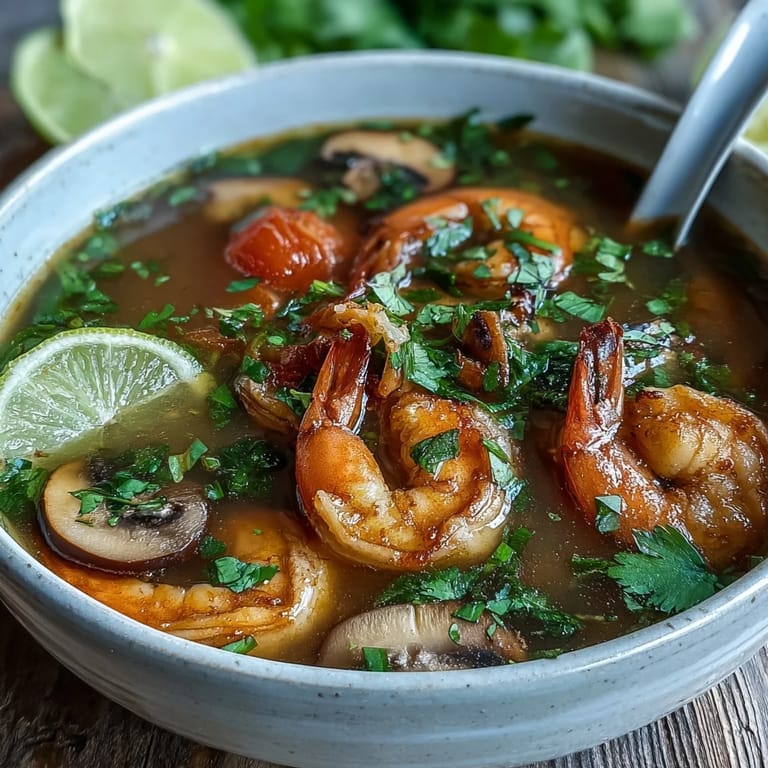
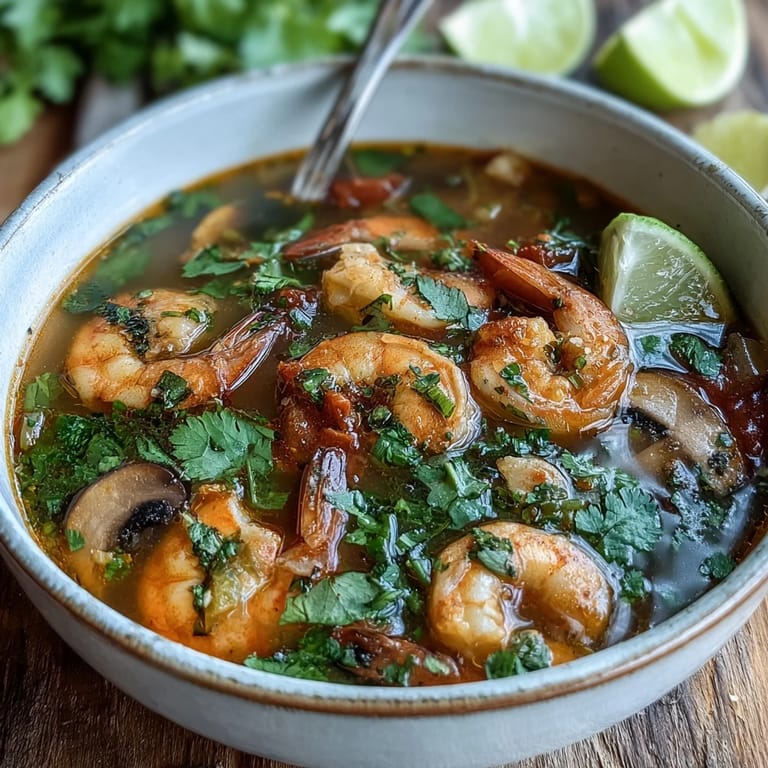
- Ladle the soup into bowls, top generously with fresh cilantro and sliced green onions, and set out those lime wedges so people can squeeze in exactly as much as they want. Serve it hot, right away, because tom yum is best when the aromatics are still rising from the bowl.
 Pin to Board
 The first time someone told me that tom yum reminded them of a trip they took or a person they missed, I understood that this soup carries stories with it. It's one of those dishes that tastes like travel and adventure, but lives comfortably in your everyday kitchen.
The Art of Balance
Thai cuisine is built on the principle of balancing four tastes at once, and tom yum is the perfect lesson in that philosophy. Every element in this soup has a job: the lemongrass and lime provide brightness, the chiles bring heat, the fish sauce adds depth, and that tiny bit of sugar rounds out the sharp edges. When you taste it and something feels off, it's usually because one of these flavors is whispering too loudly, so learning to adjust them teaches you something fundamental about cooking itself.
Ingredient Shopping Wisdom
Finding authentic Thai ingredients used to feel impossible, but now most grocery stores carry them or you can order them online without much fuss. Kaffir lime leaves and galangal are worth seeking out because they're genuinely irreplaceable, though I'll admit I've used ginger and regular lime zest when I was in a bind and it was still delicious if slightly different. The fish sauce is worth buying even if it smells challenging, because a good one makes all the difference and a little goes such a long way.
Beyond the Basic Recipe
Once you understand the structure of tom yum, you can play with it based on what's in your kitchen or what you're craving. Some days I add straw mushrooms for their unique texture, or baby corn for a slight sweetness, or even shredded chicken if I want something heartier. The beauty is that as long as you respect the flavor balance and don't overcomplicate things, you can make this soup your own.
- Try adding coconut milk to make it into a creamier tom kha style soup if you want something richer.
- Keep the aromatics in the bowl if you like the visual drama, or strain them out before serving for a cleaner presentation.
- Serve it with jasmine rice on the side to soak up the broth and make it more of a complete meal.
 Pin to Board
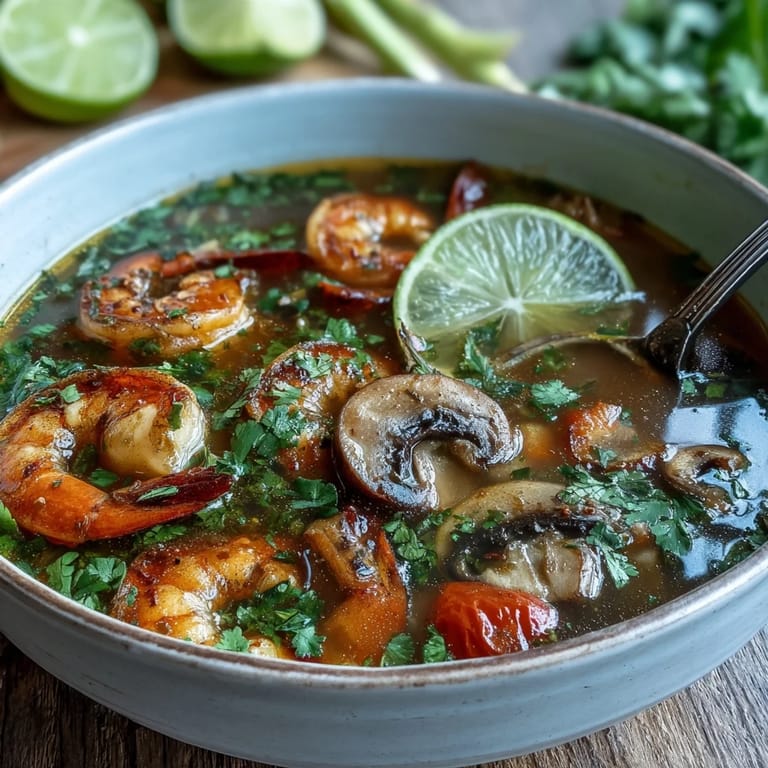
 Tom yum is the kind of soup that tastes impressive but asks very little of you except attention and honest tasting. Make it for someone, watch their face light up, and enjoy knowing you created something that feels like a small gift.
Common Questions
- → What makes Tom Yum distinct from other Thai soups?
Tom Yum is characterized by its signature sour-spicy flavor profile from fresh lime juice and Thai chiles, combined with aromatic herbs like lemongrass, galangal, and kaffir lime leaves. Unlike coconut-based Tom Kha, Tom Yum has a clear, intensely flavorful broth that's lighter yet incredibly fragrant.
- → Can I make this vegetarian?
Absolutely. Substitute vegetable stock for chicken stock, replace fish sauce with soy sauce or a vegetarian fish sauce alternative, and use firm tofu instead of shrimp. The aromatic herbs and seasonings remain the same, delivering the same bold flavors in a plant-based version.
- → How spicy is this soup?
The spice level is adjustable based on your preference. The base recipe calls for 2 Thai bird's eye chiles, which provide moderate heat. You can reduce to one chile for milder flavor, or increase to three or more for extra intensity. Removing the seeds also reduces heat while preserving the chile flavor.
- → What can I substitute for galangal?
While galangal has a unique piney, citrusy flavor, fresh ginger makes an acceptable substitute if galangal is unavailable. Use slightly more ginger than the galangal amount called for, though the flavor profile will be slightly different. You can find galangal in Asian markets or the international aisle of well-stocked grocery stores.
- → How do I store and reheat leftovers?
Store cooled soup in an airtight container in the refrigerator for up to 3 days. The flavors often deepen and improve overnight. Reheat gently over medium-low heat, being careful not to overcook the shrimp if using. You may need to add a splash of water or stock if the soup has thickened. Avoid freezing, as the texture of shrimp and vegetables may become rubbery.