 Pin to Board
 My kitchen filled with steam one rainy afternoon when I decided to stop ordering Tom Kha Gai from the Thai place down the street and finally make it myself. The moment that fragrant broth hit my nostrils—lemongrass, galangal, and lime leaves dancing together—I realized I'd been missing something essential by settling for takeout containers. What started as curiosity about replicating that creamy, tangy perfection became an obsession, and now this soup lives permanently in my rotation. There's something about building those layers of flavor from scratch that feels like unlocking a secret.
I made this for my partner on a night when they came home looking completely worn out, and watching their face soften with that first spoonful reminded me why home cooking matters. They went back for seconds without saying much, just made that satisfied sound, and I knew I'd nailed it. That's when Tom Kha Gai stopped being just a recipe and became my go-to comfort weapon.
Ingredients
- Boneless, skinless chicken breast (400 g): Slice it thin so it cooks fast and stays tender—this is not the time to rush with thick chunks.
- Chicken stock (800 ml): Use homemade if you can, but good quality store-bought works beautifully and makes a real difference in depth.
- Full-fat coconut milk (400 ml): Don't even think about using lite; the richness is non-negotiable here.
- Lemongrass stalks (2): Trim the dry ends, smash them hard to bruise the fibers and release that impossible-to-describe fragrance.
- Kaffir lime leaves (4): Tear them gently as you add them—this tiny gesture releases oils and makes the aroma jump out of the pot.
- Galangal (3 slices): If you can't find it, ginger works, but galangal has this peppery warmth that's distinctly Thai.
- Thai bird's eye chilies (3): Crush them with the side of your knife; don't overthink it—the heat will adjust during cooking.
- Garlic and shallots (4 cloves plus 4 shallots): Smashing garlic and slicing shallots thickly lets them infuse without disappearing into oblivion.
- Oyster or white mushrooms (200 g): Slice them thick enough to have some presence in the bowl.
- Cherry tomatoes (100 g): Their sweetness balances the heat and saltiness beautifully.
- Fish sauce (2 ½ tbsp): This is the soul of the soup—it doesn't make it taste fishy, it amplifies everything.
- Fresh lime juice (1 ½ tbsp): Add this at the very end so it stays bright and doesn't cook off.
- Palm sugar (1 tsp): A tiny sweetness to round out the sharp edges; light brown sugar works if you're in a pinch.
- Fresh cilantro and green onions: These aren't just garnishes—they're the finishing notes that make each spoonful feel complete.
Tired of Takeout? 🥡
Get 10 meals you can make faster than delivery arrives. Seriously.
One email. No spam. Unsubscribe anytime.
Instructions
- Build your aromatic base:
- Pour chicken stock into a large saucepan and bring it to a gentle boil, then add lemongrass, kaffir lime leaves, galangal, crushed chilies, smashed garlic, and sliced shallots. Let this simmer for 5 minutes undisturbed—this is when the magic happens, when the broth transforms from plain to intoxicating.
- Cook the chicken gently:
- Add your thinly sliced chicken breast and reduce the heat so the broth barely bubbles, cooking for 5 to 7 minutes until the meat turns opaque. You want it tender, not rubbery, so watch it closely.
- Introduce the coconut milk:
- Pour in the full-fat coconut milk while stirring gently, then add mushrooms and tomatoes and let everything simmer together for 5 more minutes. Keep the heat modest—a rolling boil will split the coconut milk and ruin the silky texture you're after.
- Season with precision:
- Stir in fish sauce, lime juice, palm sugar, and salt, then taste and adjust—this is your moment to make it yours, so keep tasting as you go. The soup should taste equally tangy, salty, sweet, and spicy with no single note overpowering the others.
- Finish and serve:
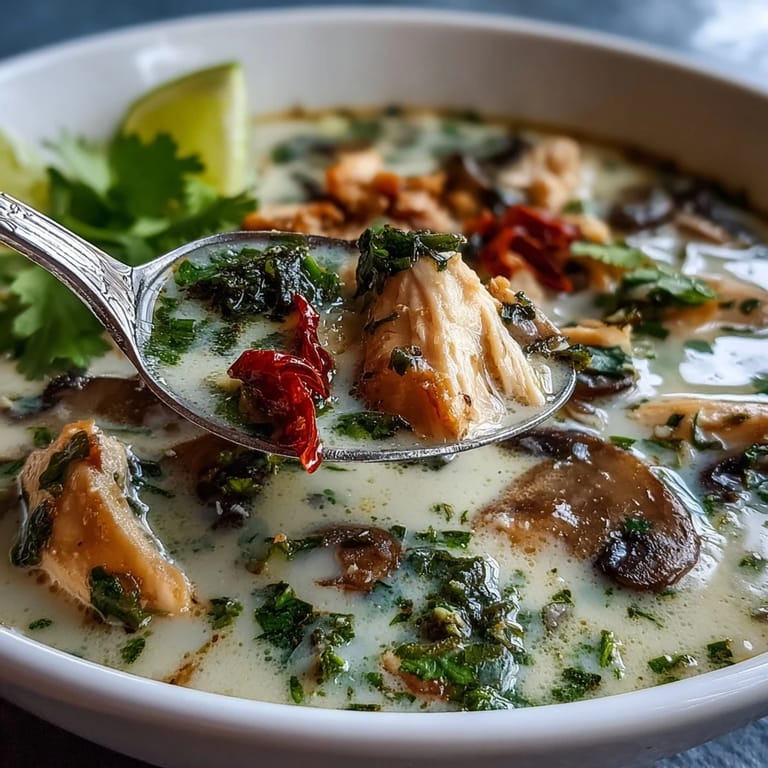
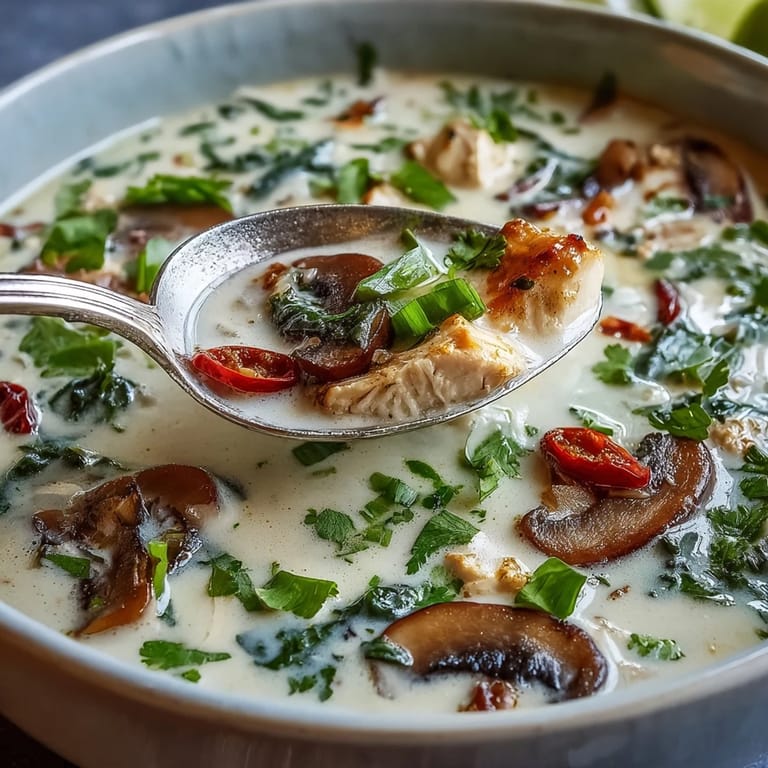
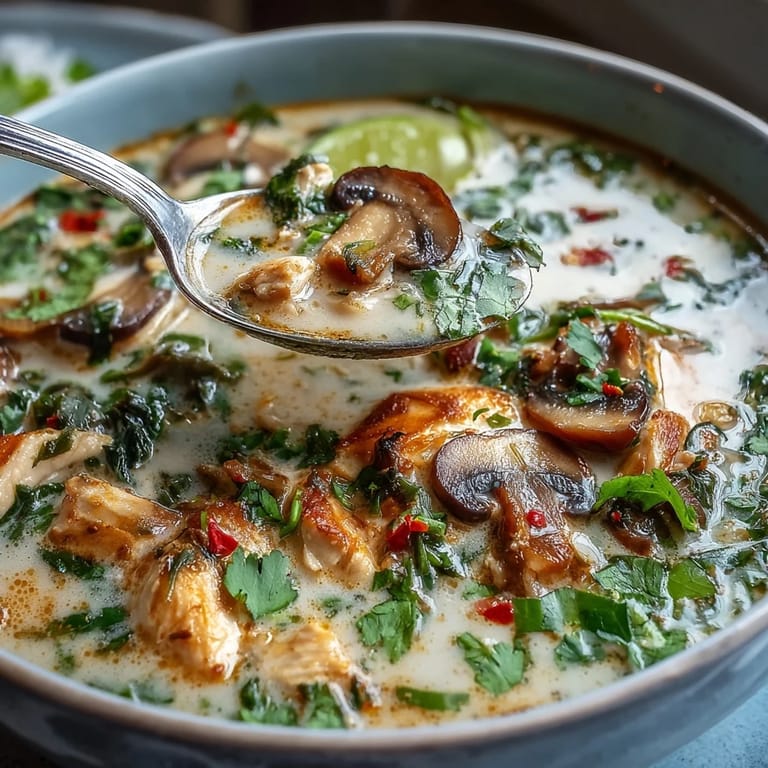
- If you want a cleaner presentation, fish out the big aromatics with a slotted spoon, though some people leave them in for extra flavor. Ladle the soup into bowls and shower each one with cilantro, green onions, a lime wedge, and thin sliced red chili if you're feeling it.
 Pin to Board
 There's a moment when you smell that finished soup, before you even taste it, where you realize you've cracked the code—that this bowl in front of you could hold its own against any restaurant version. It's the kind of small victory that makes you want to cook more Thai food, then more food in general.
The Secret Behind the Flavor Balance
Thai cooking thrives on the tension between opposites, and Tom Kha Gai is the perfect example of that philosophy in action. The coconut milk brings richness and sweetness, the lime juice cuts through with brightness, fish sauce adds savory depth, and chili heat ties everything together—none of these flavors should dominate, they should dance. I learned this the hard way by making batches that were either too salty or too sour or not aromatic enough, until I understood that seasoning isn't about adding more, it's about proportions.
Customizing Without Losing the Soul
The beautiful part about this soup is its flexibility—swap the chicken for shrimp and you get a different experience, use tofu for vegetarian guests and the aromatics carry it completely. I've thrown in baby bok choy, added extra mushrooms when I had them, even experimented with different chili levels based on who was coming over. The structure stays intact as long as you respect the aromatic base and the balance of seasonings.
Serving and Storage Wisdom
This soup tastes best served immediately while the aromatics are still perfuming the air and everything is at peak temperature, though it absolutely reheats beautifully the next day if you keep the coconut milk from separating. I usually store it without the fresh garnishes, adding those bright elements when I warm it up so they haven't wilted or lost their punch. Some people serve it over steamed jasmine rice to make it more substantial, turning a soup course into a full meal.
- Make the aromatic broth base a day ahead if you want to save time on serving day—just reheat, add chicken and remaining ingredients, and you're done.
- If your coconut milk separates during storage, just stir it back together when reheating over gentle heat.
- The lime juice always goes in at the very end, never before, or it loses its brightness to the heat.
 Pin to Board
 This soup has become my answer to the question of what to make when I want to feel like I'm traveling without leaving my kitchen. Every bowl reminds me why learning to cook even one dish really well is worth the effort.
Common Questions
- → What makes Tom Kha Gai different from other Thai soups?
Tom Kha Gai stands out for its creamy coconut milk base, which distinguishes it from clear broth soups like Tom Yum. The combination of galangal, lemongrass, and kaffir lime leaves creates an aromatic profile that's uniquely Thai, while the coconut milk adds richness and balances the tangy lime and spicy chilies perfectly.
- → Can I make this soup vegetarian?
Yes, simply substitute the chicken with firm tofu and use vegetable broth instead of chicken stock. Replace fish sauce with soy sauce or tamari to maintain the salty, umami element. The rest of the aromatics and vegetables work beautifully in a vegetarian version.
- → Is galangal necessary, or can I use ginger?
Galangal has a distinct piney, citrusy flavor that's different from ginger's spiciness, but fresh ginger with lime zest makes an acceptable substitute if you can't find galangal. The flavor profile will shift slightly but still result in a delicious bowl.
- → How do I prevent the coconut milk from separating?
Keep the heat at a gentle simmer rather than a rolling boil after adding the coconut milk. Stir gently and avoid vigorous boiling, which can cause the coconut milk to separate. The soup should remain creamy and emulsified when cooked slowly over low-medium heat.
- → What should I serve with Tom Kha Gai?
Steamed jasmine rice is the classic accompaniment, soaking up the flavorful broth. You can also serve it with rice noodles or crusty bread. The soup is substantial enough to enjoy as a main course, or serve smaller portions as an elegant starter before a Thai-inspired meal.