 Pin to Board
 My neighbor Marcus showed up at my door on a gray Tuesday afternoon with a jar of Thai red curry paste and a challenge: make something that tastes like the soup he'd eaten in Bangkok, but better. We stood in my kitchen laughing at our own audacity, but three weeks later, after tinkering with ratios and discovering that smashing lemongrass releases a perfume you simply cannot ignore, we nailed it. This soup became our thing, the one we make when someone needs comfort or when we're celebrating small victories.
I made this soup for my sister during her first week at a demanding new job, when she was too stressed to think about cooking. She called me three days later to say she'd made it twice more and had stopped ordering delivery entirely. Watching someone find peace in a bowl of something you created—that's when a recipe stops being just instructions and becomes something meaningful.
Ingredients
- Large raw shrimp (350 g/12 oz), peeled and deveined: Use the largest ones you can find because they'll stay tender and look generous in the bowl, and honestly, removing the vein takes an extra 30 seconds per shrimp but makes them taste cleaner.
- Lemongrass (2 stalks), trimmed and smashed: This is where half the magic lives—smash it hard against the cutting board to bruise it and release those volatile oils that make you understand why Thai cooks are obsessive about this step.
- Kaffir lime leaves (4), torn (optional): If you can find them, they add an almost citrus-floral note that you cannot replicate; if not, a strip of lime zest works in a pinch.
- Garlic (3 cloves), minced: Mince it small so it distributes evenly and doesn't leave harsh chunks, and do it fresh because jarred garlic tastes like regret in hot liquid.
- Small onion, thinly sliced: Slice it thin so it practically melts into the broth within the first few minutes of cooking.
- Mushrooms (100 g/3.5 oz), sliced: Use whatever you have—button, cremini, or oyster all work—and slice them thin so they absorb the coconut broth instead of staying woody.
- Small red chili, sliced (optional): Leave the seeds in if you like heat, remove them if you prefer whisper of spice, or just skip it if you're cooking for people who find jalapeños aggressive.
- Fresh ginger or galangal, thumb-sized piece, sliced: Slice it rather than mince it so you can easily fish it out later; galangal is more floral if you can find it, but ginger does the job beautifully.
- Coconut milk (400 ml/14 oz): Use full-fat because the richness is non-negotiable, and shake the can first or it'll separate into annoying layers.
- Chicken or vegetable broth (500 ml/2 cups): Make it good quality or homemade if possible, because mediocre broth tastes like sadness in a pot.
- Thai red curry paste (2 tbsp): This is where you don't compromise—find a brand you like (I've learned through trial that some are saltier than others) and taste as you go.
- Fish sauce (2 tbsp): Yes, it smells funky in the bottle, but trust the process; it rounds out the flavors and makes everything taste more alive.
- Lime juice (1 tbsp, plus more to taste): Fresh lime only—bottled tastes like nothing and bitterness.
- Sugar (1 tsp): This balances the heat and salt, and you'll probably add more depending on how spicy your curry paste is.
- Fresh cilantro, lime wedges, and sliced green onions for garnish: Don't skip this because the fresh herb brightness is what elevates this from good to something you'll make again next week.
Tired of Takeout? 🥡
Get 10 meals you can make faster than delivery arrives. Seriously.
One email. No spam. Unsubscribe anytime.
Instructions
- Start the aromatics:
- Heat a splash of oil in your pot over medium heat until it shimmers, then add the onion, garlic, smashed lemongrass, ginger, and chili. Watch it for 2–3 minutes, stirring occasionally, until your kitchen fills with a fragrance so good you'll forget why you were cooking and just stand there breathing it in.
- Bloom the curry paste:
- Stir in the red curry paste and let it toast for about a minute, which deepens its flavor and releases an intense aroma that tells you something delicious is happening. It'll look a bit dark and concentrated, which is exactly right.
- Build the broth:
- Pour in the coconut milk and broth, stirring gently to combine, then add the kaffir lime leaves if using. Bring it to a gentle simmer—not a rolling boil, because you want to coax flavors out, not batter them out.
- Simmer the vegetables:
- Add the mushrooms and let them soften for about 5 minutes, which gives them time to absorb the coconut and curry flavors. They should be tender but not dissolved.
- Cook the shrimp:
- Add the shrimp and watch them carefully—they'll turn from translucent gray to bright pink in about 2–3 minutes, and if you go much longer they'll toughen up. The moment they're opaque all the way through, you're done.
- Season to taste:
- Stir in the fish sauce, sugar, and lime juice, then taste. This is the moment you become the chef—add a bit more lime if you want brightness, more fish sauce for depth, or more sugar if the heat is overwhelming you. Trust your palate.
- Strain out the solids:
- Fish out the lemongrass stalks, ginger slices, and lime leaves with a spoon or small strainer. They've done their job and now they're just obstacles between you and the soup.
- Serve with intention:
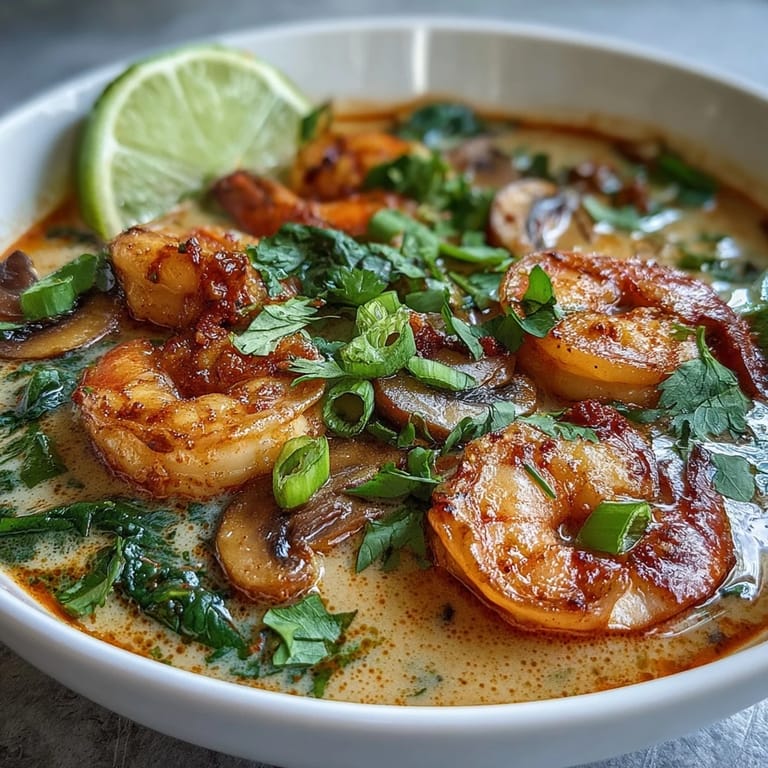
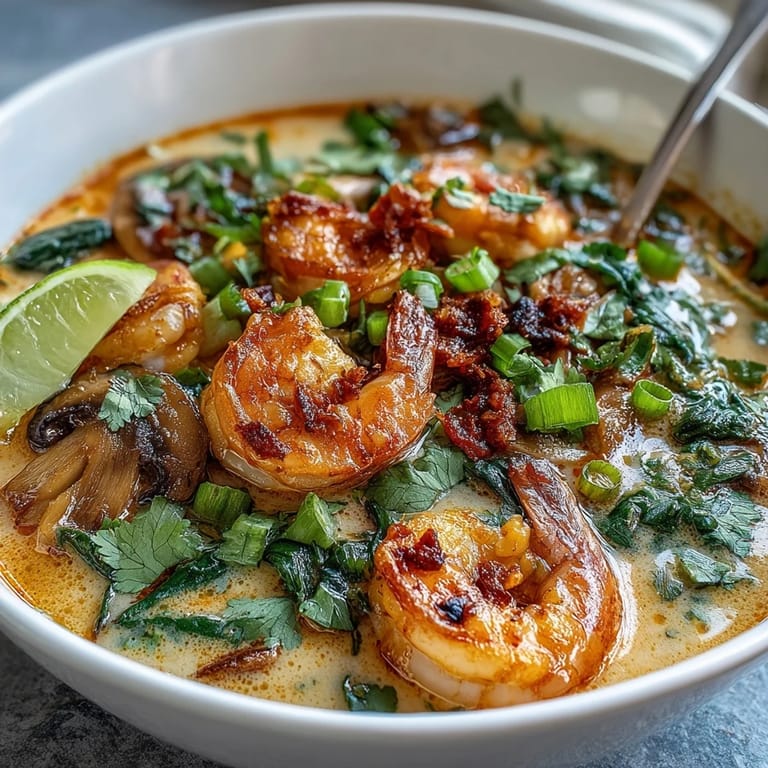
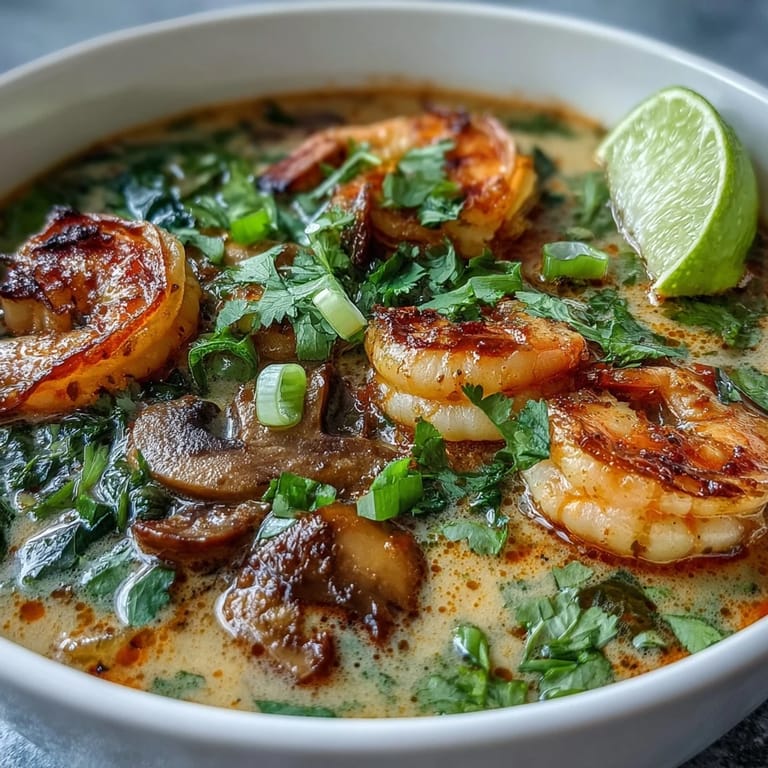
- Ladle the soup into bowls and crown each one with cilantro, green onions, and a lime wedge. The garnish isn't just decoration—it's flavor, texture, and the final say in how your soup tastes.
 Pin to Board
 There's something about this soup that dissolves boundaries. I've watched someone who claimed they didn't like seafood eat three bowls, and I've seen people from Thailand nod and smile while eating it, which feels like the highest compliment I could receive. It's not fancy, but it's honest, and that matters.
Why This Soup Works So Well
The genius of this dish is that it balances four distinct flavor profiles without any single one overpowering the others. The coconut milk provides richness and creaminess, the curry paste brings heat and depth, the fresh herbs add brightness, and the shrimp give you substance without heaviness. It's a soup that teaches you something about flavor architecture every time you make it.
Variations That Opened New Doors
After making this soup dozens of times, I started experimenting with additions that transformed it based on what I had on hand. Baby corn adds a subtle sweetness, bell peppers bring color and crunch, and bamboo shoots give you texture. I even tried adding a sliced chicken breast once when shrimp was expensive, and it was different but equally good. The foundation is so solid that it welcomes improvisation.
Serving and Storage Thoughts
This soup is best eaten immediately while the shrimp are still tender and the herbs are sharp, though you can store it in the refrigerator for up to two days if needed. When you reheat it, do so gently so the shrimp doesn't turn into little rubber bullets, and add fresh garnish as if you're serving it for the first time. I've also learned that serving it alongside jasmine rice turns it into something more substantial, though on lighter nights, a bowl with crusty bread is completely sufficient.
- Freeze just the broth base (without the shrimp or mushrooms) for up to three months, then thaw and add fresh protein and vegetables when you want the soup again.
- If your soup tastes too spicy midway through cooking, stir in an extra splash of coconut milk rather than reaching for water, which only dilutes the flavor.
- Lime juice is your secret weapon for fixing oversalted soup—the acid masks saltiness in a way that tastes intentional rather than corrective.
 Pin to Board
 This soup has taught me that Thai cooking is about understanding how flavors interact rather than following rigid rules. Once you understand that principle, you're not just making soup anymore—you're building something that tastes alive.
Common Questions
- → Can I make this soup vegetarian?
Yes, substitute shrimp with firm tofu and replace fish sauce with soy sauce or a vegetarian fish sauce alternative. The result remains equally delicious and satisfying.
- → How spicy is this soup?
The heat level is easily adjustable. Start with one red chili and the curry paste, then add more fresh chili to taste. You can also reduce the curry paste amount for a milder version.
- → Can I use frozen shrimp?
Absolutely. Thaw frozen shrimp completely and pat them dry before adding to the soup. Cook them just until they turn pink, about 2-3 minutes, to prevent tough, overcooked seafood.
- → What can I serve with this soup?
Jasmine rice makes an excellent accompaniment, soaking up the flavorful broth. You can also serve it with crusty bread or enjoy it on its own as a light, satisfying meal.
- → How long does this soup keep?
Store in an airtight container for up to 3 days. Reheat gently over medium-low heat, adding a splash of broth if needed. For best texture, add fresh shrimp when reheating rather than storing them already cooked.
- → Can I make this soup ahead of time?
Prepare the broth base up to 2 days in advance and refrigerate. Add the fresh shrimp and final seasonings when reheating to serve, ensuring perfectly cooked seafood every time.