 Pin to Board
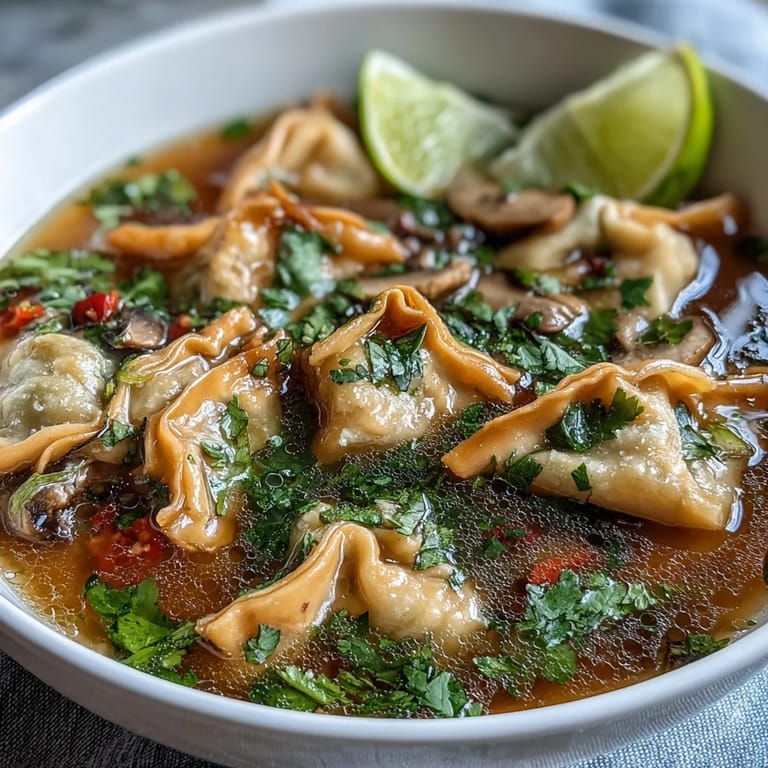
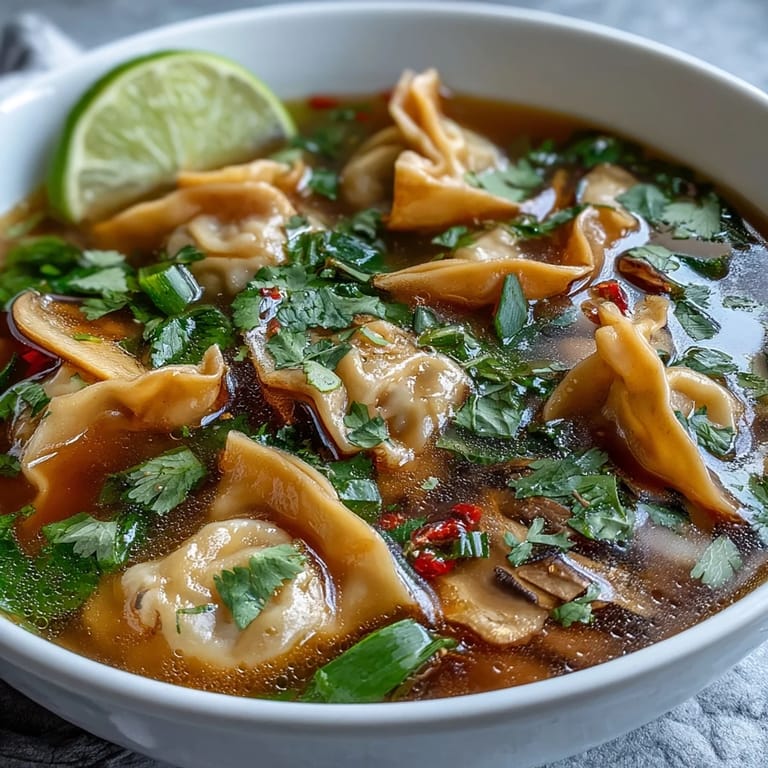
 My first encounter with tom yum happened in a cramped Bangkok night market stall, where an elderly vendor assembled bowls with the precision of a conductor leading an orchestra. Years later, I found myself at home on a rainy evening, craving that exact balance of heat and brightness, but wanting something more substantial. The idea struck me suddenly: why not fill those delicate Chinese wontons with aromatic pork and let them float in that legendary Thai broth? That spontaneous combination became my favorite bowl of soup, and I've been making it ever since.
I made this for my sister during one of those conversations where we sat at the kitchen counter and didn't stop talking for three hours. She kept pausing between spoonfuls to say how the flavors kept surprising her, and I remember laughing because that's exactly what I'd hoped for. By the time we finished, the pot was empty and we were both a little flushed from the chilies, trading stories about our favorite meals and childhood tastes.
Ingredients
- Ground pork: Choose a blend with some fat (not too lean) so your wontons stay juicy and tender when cooked.
- Soy sauce: Use a quality brand because this is where much of the wonton's savory depth comes from.
- Sesame oil: Just a teaspoon is enough to add that toasted, nutty note that makes people wonder what your secret is.
- Ginger and garlic: Fresh and minced fine so they distribute evenly throughout the filling without overpowering.
- Wonton wrappers: Keep them under a damp cloth while working to prevent them from drying out and cracking.
- Chicken stock: Low-sodium allows you to build the flavors yourself with fish sauce and lime, rather than fighting an existing saltiness.
- Lemongrass: Smash the stalks before adding so they release their aromatic oils into the broth more generously.
- Kaffir lime leaves: These are non-negotiable for authentic tom yum flavor, but if truly unavailable, a strip of lime zest can substitute in a pinch.
- Galangal: It's like ginger's spicy, slightly floral cousin—find it fresh or frozen in Asian markets, or use fresh ginger if you must.
- Red chilies: Start with two slices and taste as you go; heat tolerance varies wildly from kitchen to kitchen.
- Shiitake mushrooms: Their earthy depth complements the bright tom yum broth beautifully, though button mushrooms work fine too.
- Fish sauce: This ingredient seems intimidating until you taste how it transforms the entire broth into something rounded and complete.
- Lime juice: Always use fresh; bottled lime juice tastes thin and hollow by comparison.
- Baby bok choy: Its mild bitterness provides a gentle contrast to the spicy broth and cooks in seconds.
- Shrimp: Optional but worth adding if you want extra protein and a subtle sweetness that plays beautifully with the lime.
Tired of Takeout? 🥡
Get 10 meals you can make faster than delivery arrives. Seriously.
One email. No spam. Unsubscribe anytime.
Instructions
- Make the wonton filling:
- Combine the pork, soy sauce, sesame oil, ginger, garlic, spring onion, and white pepper in a bowl, mixing gently so you don't overwork the meat. The texture should stay loose and tender, not compact.
- Fold your wontons:
- Place roughly a teaspoon of filling in the center of each wrapper, dab the edges with water using your fingertip, and fold into a triangle or envelope shape, pressing firmly so they seal completely. Lay them on a plate under a damp kitchen cloth so they don't dry out before cooking.
- Build the broth base:
- Bring your chicken stock to a gentle simmer in a large pot, then add the smashed lemongrass, torn kaffir lime leaves, galangal slices, and red chilies. Let this infuse undisturbed for about 10 minutes so the aromatics fully release into the liquid.
- Simmer the vegetables:
- Add the sliced mushrooms and quartered tomatoes, letting them soften for 5 minutes until they start to break down slightly and release their flavors. This is when your kitchen starts smelling like something special.
- Strain and season:
- Use a slotted spoon to fish out the lemongrass, galangal, and kaffir lime leaves (they've given all they have), then add fish sauce, lime juice, and sugar. Taste carefully and adjust the balance—more lime if you want brightness, more fish sauce if you want depth.
- Cook the wontons:
- Gently drop the wontons into the simmering broth along with shrimp if using, and cook for 4 to 5 minutes until the wontons float to the surface and the shrimp turns pink. This is the moment everything comes together.
- Finish with greens:
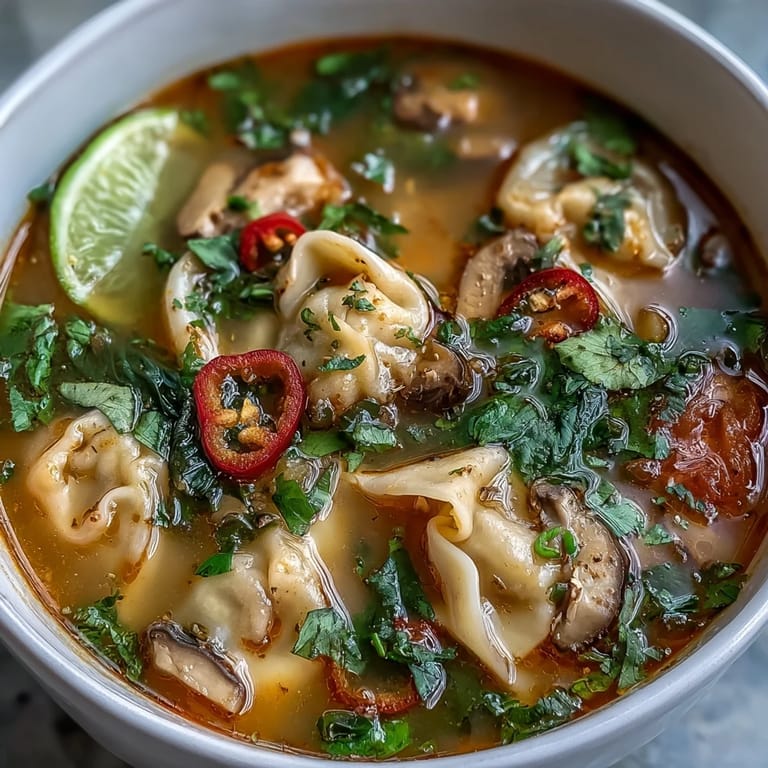
- Add your bok choy or spinach and let it wilt for just 1 minute—you want it tender but still vibrant, not sad and gray. Ladle everything into bowls and crown with fresh coriander, spring onions, lime wedges, and a drizzle of chili oil if you're feeling bold.
 Pin to Board
 There's something deeply satisfying about watching someone's face change when they taste this soup for the first time. The moment when hot, aromatic liquid mingles with that first tender wonton and they realize all these flavors actually belong together—it's the kind of small magic that reminds me why I love cooking.
The Art of the Wonton
Making wontons by hand is meditative work, the kind that slows you down and makes you present in the kitchen. I've learned that the secret to wontons that don't burst is respecting how much filling they can actually hold—a teaspoon sounds small until you're folding wrappers and realize that a bit less is always more. The water on your fingers should be there just to help them seal, not to saturate them, and the folding motion should be firm but not aggressive, like you're tucking something precious into bed.
Navigating the Heat
Thai cuisine doesn't whisper; it speaks directly, and tom yum is no exception. The chilies in this broth aren't there to be polite—they're there to wake you up and make you pay attention. My approach has become to start with two slices of chili, taste the broth after a few minutes, and only add more if I'm feeling brave, because the heat builds gradually and what seems mild at first can become intense as you eat.
Making It Your Own
Once you've made this soup a few times, you'll start seeing all the ways it adapts to what you have on hand and who you're cooking for. I've made vegetarian versions for friends by swapping tofu into the wontons and using vegetable stock instead, and honestly, they've been just as craveable as the original. The structure is flexible enough to welcome your preferences while still maintaining that essential tom yum character.
- For a vegetarian version, use pressed tofu in place of pork, vegetable stock, and swap fish sauce for an extra tablespoon of soy sauce or tamari.
- Serve alongside steamed jasmine rice if you want something more substantial, or with a side of crispy spring rolls for texture contrast.
- Make the wontons ahead of time and freeze them on a tray; they'll cook directly from frozen with just an extra minute or two in the broth.
 Pin to Board
 This soup has become my go-to bowl when I want to feel nourished and a little bit adventurous at the same time. Whether you're cooking it on a quiet Tuesday night or sharing it with people you love, it carries flavors that feel both comforting and exciting.
Common Questions
- → Can I make the wontons ahead of time?
Yes, prepare and freeze uncooked wontons on a tray until firm, then store in bags for up to a month. Add frozen wontons directly to the simmering broth—no need to thaw first.
- → How can I adjust the spice level?
Reduce chilies for milder flavor or add more slices for extra heat. Serve with chili oil on the side so diners can customize their bowl. Removing seeds from chilies also tones down the intensity.
- → What can I substitute for galangal?
Fresh ginger works as an alternative, though the flavor profile will shift slightly. Use slightly less ginger than galangal called for, as it has a more pronounced taste.
- → Is this soup freezer-friendly?
The broth freezes beautifully for up to three months. However, freeze wontons separately and add them when reheating to prevent them from becoming soggy or losing texture.
- → Can I use store-bought wontons?
Absolutely—frozen pork or shrimp dumplings from Asian markets work well. Add them during the last 3–4 minutes of cooking to ensure they heat through without overcooking.
- → How do I make this vegetarian?
Swap ground pork for crumbled tofu in the wontons, use vegetable stock, and replace fish sauce with soy sauce or tamari. Omit shrimp or add mushrooms for extra umami.