 Pin to Board
 I stumbled onto the real deal Tom Kha Gai at a small vendor stall in Bangkok during the monsoon season, sitting on a plastic stool with my feet practically in the street. The soup arrived in a dented aluminum bowl, steam rising into the humid air, and one spoonful completely rewired what I thought Thai comfort food could be. When I finally recreated it at home, I realized the magic wasn't hiding in some obscure technique—it was in respecting the aromatics and letting them whisper rather than shout. Now whenever that lemongrass scent hits my kitchen, I'm transported back to that rainy afternoon and the quiet confidence of someone who'd been making this soup for decades.
I made this for my brother's girlfriend on a random Tuesday when she mentioned offhand that she'd never had Thai soup before. Watching her eyes widen at that first spoonful, then seeing her automatically reach for a lime wedge without being told—that's when I knew the recipe was honest. She's since texted me for it three times, and each time I'm reminded that the best meals are the ones that make someone feel like you've shared a secret.
Ingredients
- Chicken broth (3 cups): Use homemade if you can; it absorbs the aromatic flavors so much better than store-bought, though a good quality low-sodium broth works in a pinch.
- Lemongrass (1 stalk): Trim the dry outer layers and smash the stalk with the side of your knife—this releases the oils and makes the flavor bloom faster.
- Galangal (4 slices): This is the ingredient that separates authentic Tom Kha from imitations; if truly unavailable, ginger will work but use slightly less since it's spicier.
- Makrut lime leaves (4 leaves): Tear them as you add them so the oils release into the soup; these aren't optional if you want that unmistakable Thai aromatics profile.
- Thai bird's eye chilies (3): Lightly crush them to keep the heat controlled—crushing means the soup gets warmth without bites of pure spice.
- Chicken thighs (1 lb): Slice them thin while still slightly frozen; thighs stay tender even with longer cooking, unlike breast meat which can turn stringy.
- Coconut milk (14 oz full-fat): Full-fat is non-negotiable here; the cream is what makes this soup feel like a hug, and it balances the sour and salty notes.
- Fresh mushrooms (5 oz): Straw mushrooms are ideal but cremini or button mushrooms work—just slice them consistently so they cook evenly.
- Shallot (1 medium): Slice thin enough that it almost disappears into the broth; shallots mellow with heat where onions would stay sharp.
- Fish sauce (2 tbsp): This is the backbone of savory depth; start with 2 tablespoons and taste before adding more because it's potent.
- Lime juice (1 tbsp plus more): Fresh limes only—bottled juice tastes hollow and flat against the coconut.
- Palm sugar (1 tsp): Brown sugar works but palm sugar has a subtle caramel note that matters; use the smallest amount needed to balance the sourness.
- Cilantro and green onions: These are the final voice of the soup, so chop them fresh right before serving for maximum brightness.
Tired of Takeout? 🥡
Get 10 meals you can make faster than delivery arrives. Seriously.
One email. No spam. Unsubscribe anytime.
Instructions
- Build the aromatic base:
- Pour the chicken broth into your pot and bring it to a gentle simmer—you want small, lazy bubbles, not an aggressive roll. Add the smashed lemongrass, galangal slices, torn lime leaves, and lightly crushed chilies, then let them steep for 5 to 7 minutes while your kitchen fills with that unmistakable Thai fragrance.
- Cook the chicken:
- Slip your thinly sliced chicken and shallot into the simmering broth and let them cook for 3 to 4 minutes until the chicken loses its raw appearance and turns opaque. The shallot will begin to soften and add its sweetness to the broth.
- Bring in the coconut:
- Add the mushrooms and pour in the full-fat coconut milk in a slow stream while stirring gently. Return the soup to a simmer, but don't let it boil hard—vigorous boiling can break the emulsion and make the coconut separate.
- Season with balance:
- Stir in the fish sauce, palm sugar, and lime juice, then taste carefully. This is where you learn the Thai approach: salty from fish sauce, sour from lime, sweet from sugar, and heat from the chilies all working together.
- Finish and serve:
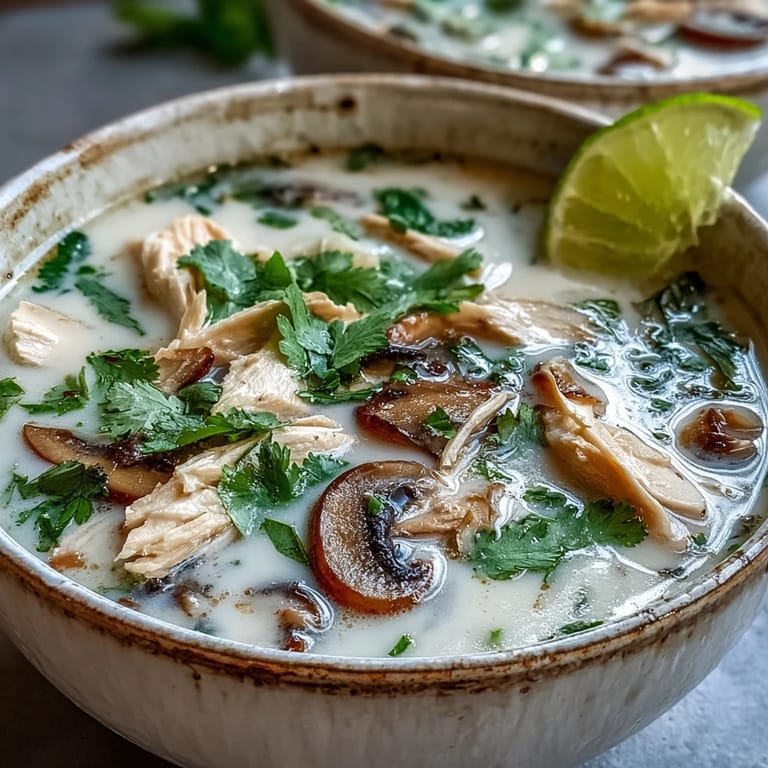
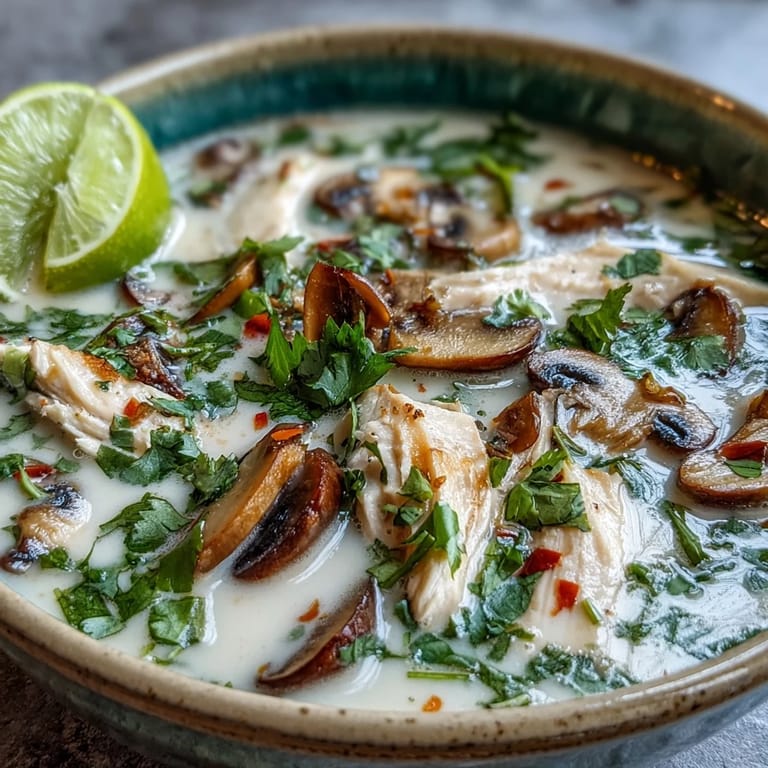
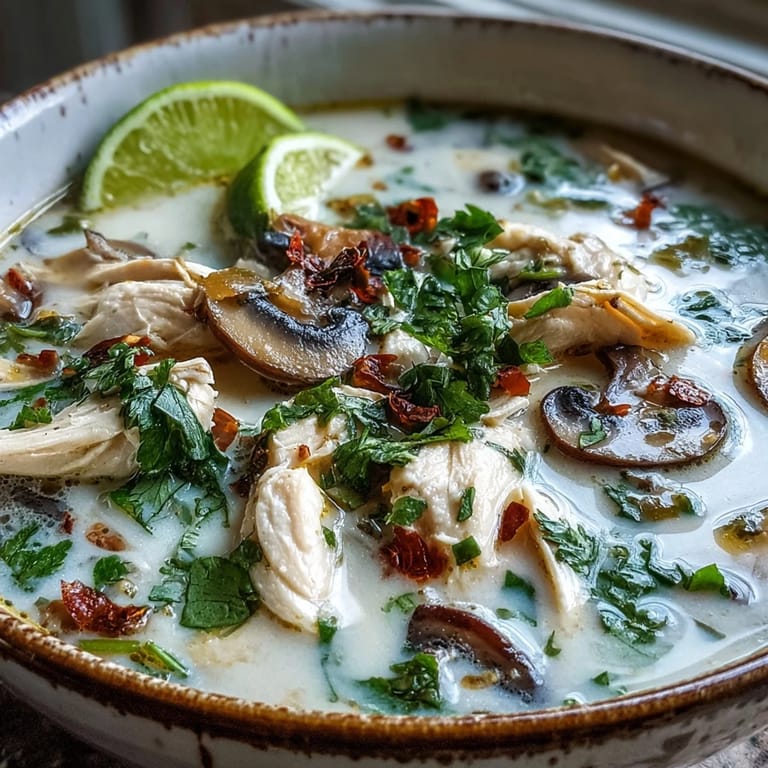
- Remove from heat and discard the lemongrass stalk, galangal slices, and lime leaves if you prefer (some people leave them for continued flavor release). Ladle into bowls, scatter cilantro and green onions over top, and set lime wedges alongside.
 Pin to Board
 My neighbor smelled this cooking through the wall one evening and knocked on my door asking what was happening in my kitchen. Five minutes later she was sitting at my counter with a bowl, and we ended up talking for two hours about everything while the soup went down to the last spoonful. That's when I realized Tom Kha Gai is one of those dishes that naturally invites people closer.
Why Aromatics Matter More Than You Think
The difference between a forgettable soup and an unforgettable one lives in those first 7 minutes when lemongrass, galangal, and lime leaves are getting to know the broth. It's tempting to rush and add everything at once, but your patience here is the difference between a soup that tastes like you followed instructions and one that tastes like you understand something true about how flavors work. I learned this the hard way by skipping the infusion and wondering why my first attempt felt flat—now I set a timer and actually watch the steam, almost meditatively.
The Coconut Milk Paradox
Coconut milk seems like it would make a soup heavy, but in Tom Kha Gai it actually brightens everything by carrying the aromatic flavors and softening the heat. The trick is pouring it slowly and stirring gently so it emulsifies with the broth rather than sitting on top like a separate layer. Once you understand this, you realize coconut milk isn't a rich indulgence—it's a flavor vehicle that makes the whole dish sing.
Serving and Variations to Explore
Tom Kha Gai belongs in a bowl with rice alongside, lime wedges waiting, and time enough to sit and actually taste it. The texture and temperature matter—a piping hot soup poured over slightly cooled garnishes, so the cilantro stays bright and the lime wedges wait for you to squeeze them at the last moment. Try this with soft tofu for a vegetarian angle, or add shrimp for a different protein that cooks in 2 minutes flat.
- Make double and freeze the aromatics-infused broth on its own so you can pull together this soup in 15 minutes on busy nights.
- Adjust the chili amount based on your crowd, but remember that heat needs a few minutes to develop, so taste as you go.
- Serve with jasmine rice to soak up the beautiful broth, or scoop it up with Thai basil if you find some at the market.
 Pin to Board
 This soup has become my answer for when someone needs comfort, wants something impressive, or simply deserves a moment of bright, warm clarity. Make it once and you'll understand why it traveled from Thailand to kitchens around the world.
Common Questions
- → What makes Tom Kha Gai different from Tom Yum?
Tom Kha Gai features coconut milk for a rich, creamy base, while Tom Yum is a clear, sour soup. The coconut adds sweetness and velvety texture that balances the tangy lime and spicy chilies.
- → Can I substitute galangal with ginger?
While ginger works in a pinch, galangal has a distinct piney, citrusy flavor that's essential to authentic taste. Look for frozen galangal at Asian markets—its flavor is closer to fresh than powdered substitutes.
- → How spicy is this soup?
Three bird's eye chilies provide moderate heat that builds gently. Reduce to one or two for milder flavor, or leave them whole for subtle warmth without intense spice.
- → Why shouldn't I let the coconut milk boil?
Vigorous boiling can cause coconut milk to separate and become oily. A gentle simmer preserves its smooth, creamy texture while allowing flavors to meld properly.
- → Can I make this vegetarian?
Absolutely. Replace chicken broth with vegetable broth, swap chicken thighs for firm tofu cubes, and use soy sauce or tamari instead of fish sauce. The aromatic base remains just as fragrant and satisfying.
- → What's the best way to serve Tom Kha Gai?
Serve steaming hot in deep bowls, garnished generously with fresh cilantro and green onions. Accompany with extra lime wedges and jasmine rice to soak up the flavorful broth.