 Pin to Board
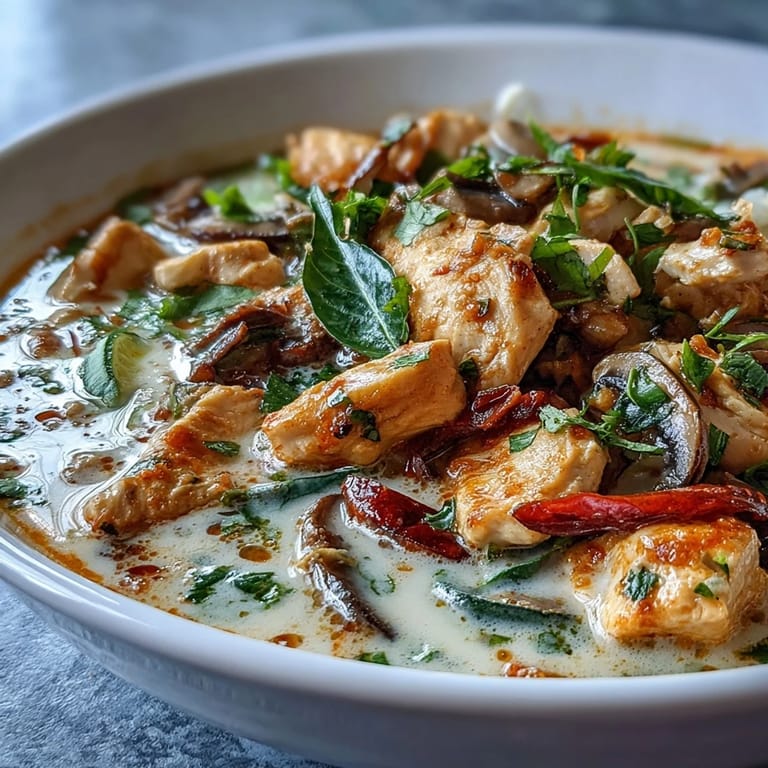
 My neighbor knocked on my door one rainy afternoon asking if I had any coconut milk, and within minutes I was stirring together this Thai curry soup in her kitchen while she told stories about a trip to Bangkok. What started as borrowing an ingredient turned into both of us realizing how quickly something so deeply flavored could come together, and honestly, how forgiving this recipe is when you're cooking by feel rather than precision. The first spoonful hit different that day, maybe because the kitchen smelled like an actual Thai street market, or maybe because good food shared unexpectedly tastes better. Now I make it whenever I want to feel transported without leaving my stove.
I served this to my mom during her last visit and watched her close her eyes after the first spoonful, just sitting with it for a moment. She asked for the recipe right there at the table, which meant everything coming from someone who usually critiques my cooking with the affection of a professional. We ended up making it together the next night and the kitchen filled with this warm, spiced steam that felt like home in the most unexpected way.
Ingredients
- Chicken thighs or breasts (400g): Thighs stay juicier through simmering, but breasts work if that's what you have. Cut them into generous bite-sized pieces so they stay tender rather than shredding into the broth.
- Red curry paste (2 tbsp): This is where the soul lives, so use a brand you actually like since there's no way around its presence. Some pastes are saltier than others, which affects how much fish sauce you'll need later.
- Coconut milk (400ml): Full-fat is non-negotiable here, the kind that separates slightly in the can. That richness is the whole point, and lighter versions leave the soup feeling more like broth than the hug it should be.
- Chicken broth (750ml): Use something with real flavor, not the sad stuff in a box. I learned this the hard way after making this soup taste flat and wondering what went wrong before realizing my broth was basically seasoned water.
- Fresh ginger and garlic: Grate the ginger so it dissolves almost completely into the broth rather than sitting in chunks, and mince the garlic fine enough that it becomes part of the flavor rather than something to bite into.
- Shallots, fish sauce, and soy sauce: These three create the savory backbone that makes you want to keep eating. Fish sauce smells absolutely vile in the bottle but transforms into something essential in the pot.
- Bell pepper, shiitake mushrooms, and snow peas: The vegetables stay bright if you add them toward the end, which is why I learned to resist the urge to throw everything in at once like I'm making a sad pot of mush.
- Lime juice, cilantro, and Thai basil: These are what pull everything into focus at the very end, adding brightness and freshness that you need to taste before adding more salt or anything else.
Tired of Takeout? 🥡
Get 10 meals you can make faster than delivery arrives. Seriously.
One email. No spam. Unsubscribe anytime.
Instructions
- Build your flavor foundation with shallots, ginger, and garlic:
- Heat oil in a large pot and let the shallots, ginger, and garlic sizzle until the kitchen smells undeniably Thai, which takes about two minutes but feels longer because you're waiting for it. You'll know it's ready when the aromatics soften and the smell stops being individual ingredients and becomes something unified.
- Toast the curry paste to wake it up:
- Add the red curry paste and stir constantly for a minute, watching it darken slightly and deepen in aroma. This small step transforms it from a raw paste into something that smells intentional and warm.
- Cook the chicken briefly with the aromatics:
- Add your chicken pieces and stir everything together for a few minutes so the meat gets coated in all that curry-scented oil. The chicken doesn't need to cook through yet, just get introduced to the party.
- Build your broth by adding liquid:
- Pour in the chicken broth and coconut milk and bring everything to a gentle simmer, which should take a few minutes and fill your kitchen with steam. Keep the heat moderate so it simmers rather than boils, which keeps everything tender.
- Season the base with salt, sweetness, and umami:
- Stir in the fish sauce, soy sauce, and brown sugar, tasting as you go. The balance is personal here—some people like more salt, others want more sweetness—so go easy and adjust after you've cooked everything together.
- Add vegetables and let them cook gently:
- Drop in the bell pepper, mushrooms, and snow peas and let everything simmer for ten to twelve minutes until the chicken is cooked through and the vegetables still have a slight resistance when you bite them. This is where you get to taste and adjust the seasoning one more time before finishing.
- Brighten everything with lime juice:
- Stir in the lime juice right before serving, which lifts all the flavors and makes everything taste more alive. Taste one more time and add more lime, fish sauce, or sugar depending on what feels right.
- Serve with plenty of garnish:
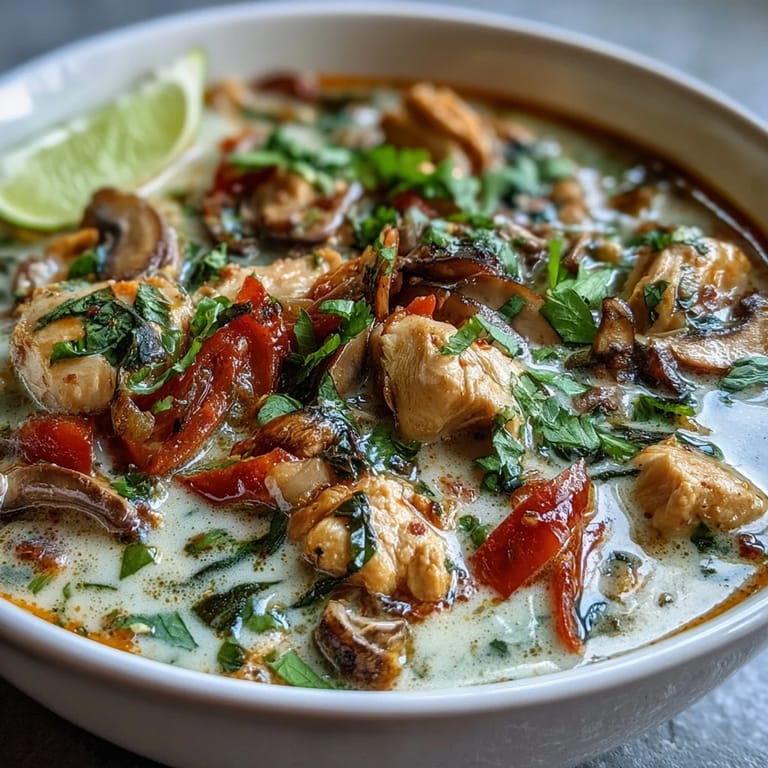
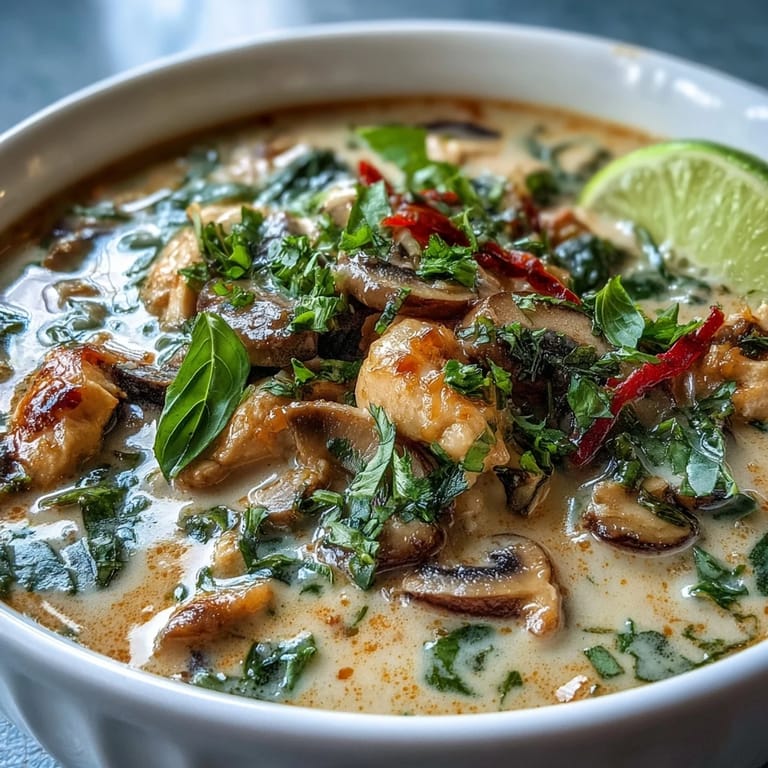
- Ladle into bowls and let people pile on cilantro, Thai basil, chili, and squeeze of lime, making it their own. The garnishes aren't decorative, they're part of the actual eating experience.
 Pin to Board
 There's a moment when you're standing over the pot and the steam rises up and you smell that combination of coconut, curry, lime, and fresh herbs all at once, and suddenly you understand why people crave certain foods when they're sick or sad or just need comfort. This soup has that effect on people, which is why I keep making it even though it's not fancy or difficult, because sometimes the best things we cook are the ones that make someone feel understood.
Why This Soup Works Every Time
The magic is in the balance between the creamy coconut milk and the salty-spicy-sour elements that keep it from being one-dimensional. Every component has a job, and when they work together, you get something that tastes way more complicated than the actual effort requires. I've made this when I'm tired and when I'm energized, and it comes out great both times because the recipe itself does half the thinking for you.
Substitutions That Actually Work
Shrimp cooks faster than chicken and tastes incredible in this broth, so if you go that route, add it about five minutes before serving so it doesn't turn rubbery. Tofu works beautifully too if you're vegetarian, and switching to vegetable broth and leaving out the fish sauce keeps everything plant-based while still tasting rich and intentional. I've even used leftover rotisserie chicken when I was being lazy, and nobody complained.
Making It Your Own
This soup is a framework, not a strict rule, which is part of why I keep making it because there's always room to play around. You can add rice noodles to make it more substantial, throw in baby spinach or bok choy if you want more vegetables, or crank up the heat with extra curry paste or fresh chili if you like things spicy. The beauty is that you can taste as you go and adjust everything before it hits the bowl, so there's really no way to mess this up badly enough to regret trying.
- Add cooked noodles right before serving so they don't absorb too much broth and make the soup thick and stodgy.
- Make a double batch and freeze half for nights when cooking feels like too much effort, because this reheats beautifully and tastes even better the next day.
- Pair it with jasmine rice or crusty bread to soak up every last drop of that coconut broth because leaving it in the bowl feels like a crime.
 Pin to Board
 This soup has become my go-to when I want to cook something that feels effortless and tastes like love, which is maybe the highest compliment you can give any recipe. Every time I make it, I'm reminded that the best cooking doesn't require fancy techniques or impossible ingredients, just the willingness to let something simple taste absolutely extraordinary.
Common Questions
- → How spicy is this soup?
The heat level depends on your red curry paste choice. Standard paste offers medium warmth, while Thai brands bring more intensity. Adjust by adding more paste or fresh sliced chilies.
- → Can I make this vegetarian?
Absolutely. Replace chicken with firm tofu cubes and switch to vegetable broth. Omit fish sauce and add extra soy sauce or a splash of vegetarian fish sauce alternative.
- → What can I serve with this soup?
Jasmine rice absorbs the flavorful broth beautifully. For a complete meal, add spring rolls or grilled Thai-style vegetables. A crisp white wine like Riesling complements the richness.
- → How long do leftovers keep?
Store in airtight containers for up to 4 days. Reheat gently over medium-low heat, adding a splash of broth if needed. The flavors often develop deeper complexity after resting.
- → Can I freeze this soup?
Freeze for up to 3 months without garnishes. Coconut milk may separate slightly when thawed but reincorporates easily with stirring. Add fresh herbs and lime after reheating.
- → What curry paste works best?
Thai brands like Maesri or Mae Ploy deliver authentic flavor. Look for red curry paste with shrimp paste listed in ingredients. Mild varieties work well for sensitive palates.