 Pin to Board
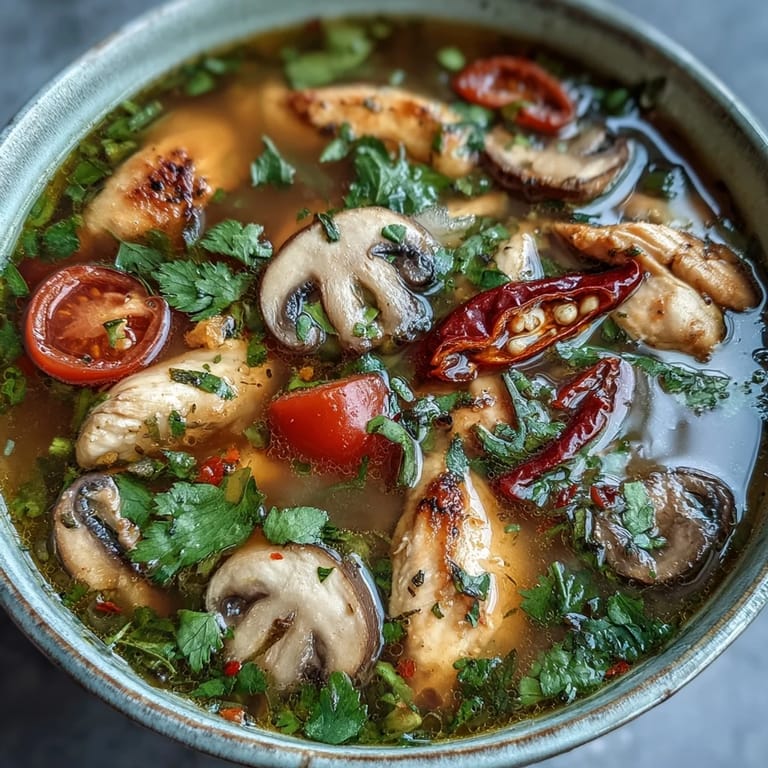
 My first encounter with Tom Yum happened in a cramped Bangkok kitchen at dusk, steam rising from a pot while my friend's mother moved with practiced ease, bruising herbs and coaxing out their essence. She never wrote anything down, just trusted her nose and the way the broth transformed from pale gold to something alive and complex. Years later, I finally understood that the magic wasn't in following steps precisely but in listening to what the soup was telling me as it simmered. Now whenever I make it, I think of that moment and how a single bowl can hold an entire country's love of bold flavor.
I made this for my partner on a rainy night when we both felt homesick for travel we couldn't take, and watching them close their eyes after the first spoonful made everything feel possible again. The kitchen filled with that specific kind of fragrance that pulls you right back to somewhere warm and loud and alive, and for a moment, that was enough.
Ingredients
- Boneless, skinless chicken thighs (400 g): Thighs stay tender even with the heat, and their flavor is more forgiving than breasts if you're learning to judge doneness.
- Chicken stock (1.2 liters): The foundation matters more than you'd think; use the best quality you can find or make your own if you have time.
- Lemongrass (2 stalks): Smash it hard with the knife flat and you'll release a citrus perfume that fills your whole kitchen; dried lemongrass works but fresh is the real conversation starter.
- Fresh galangal (4 slices, or 2 tsp dried): It looks like ginger's spicier cousin and tastes slightly peppery and medicinal in the best way; dried works in a pinch but fresh adds a brightness that matters.
- Makrut lime leaves (5 leaves): These are the soul of the soup, adding a floral citrus note that lime juice alone can't replicate; tear them to release their oils.
- Birds eye chilies (4, lightly crushed): Adjust this fearlessly depending on your heat tolerance; crushing them instead of slicing releases flavor gradually throughout cooking.
- Mushrooms (150 g): Oyster mushrooms soak up the broth beautifully, but button mushrooms work fine if that's what you have.
- Tomatoes (2 medium), onion (1 small), garlic (3 cloves): The aromatic team that rounds out the sharpness with gentle sweetness and body.
- Fish sauce (3 tbsp): This is the umami anchor; it smells intense in the bottle but becomes savory magic once it hits the broth.
- Lime juice (2 tbsp fresh): Squeeze it right before adding so you capture that bright, alive quality that makes the whole soup sing.
- Sugar (1 tsp) and salt (½ tsp): These aren't about making it sweet; they're about balancing the sour, salty, and spicy into something that feels complete.
- Fresh cilantro and spring onions: Add these right at the end so they stay vibrant and don't turn dark and tired.
Tired of Takeout? 🥡
Get 10 meals you can make faster than delivery arrives. Seriously.
One email. No spam. Unsubscribe anytime.
Instructions
- Wake up your herbs:
- Lay your lemongrass stalks on the cutting board and press down hard with the flat side of your knife, listening for that satisfying crack. Do the same with the galangal slices and tear the lime leaves with your fingers so they're jagged and ready to give up their oils.
- Build your aromatic base:
- Bring the stock to a rolling boil and immediately add the smashed lemongrass, galangal, lime leaves, crushed chilies, and garlic. Let this simmer uncovered for five minutes while you watch it transform in color and smell, your kitchen becoming a small version of Southeast Asia.
- Cook the chicken and soften the onion:
- Add your sliced chicken and onion to the broth and let them simmer for eight to ten minutes, skimming off any foam that rises to the surface with a spoon. The chicken should turn opaque and the onion will become translucent and sweet.
- Add the vegetables:
- Drop in your sliced mushrooms and tomato wedges and cook for another five to seven minutes until the vegetables soften but the tomatoes haven't completely fallen apart. This is the moment when the soup starts to taste like itself, less about individual ingredients and more about a unified whole.
- Season with intention:
- Stir in the fish sauce, fresh lime juice, sugar, and salt, then taste and adjust until you find that perfect balance of sour, salty, and spicy. The soup should make you pause and take another spoonful, not a moment of regret.
- Finish and serve:
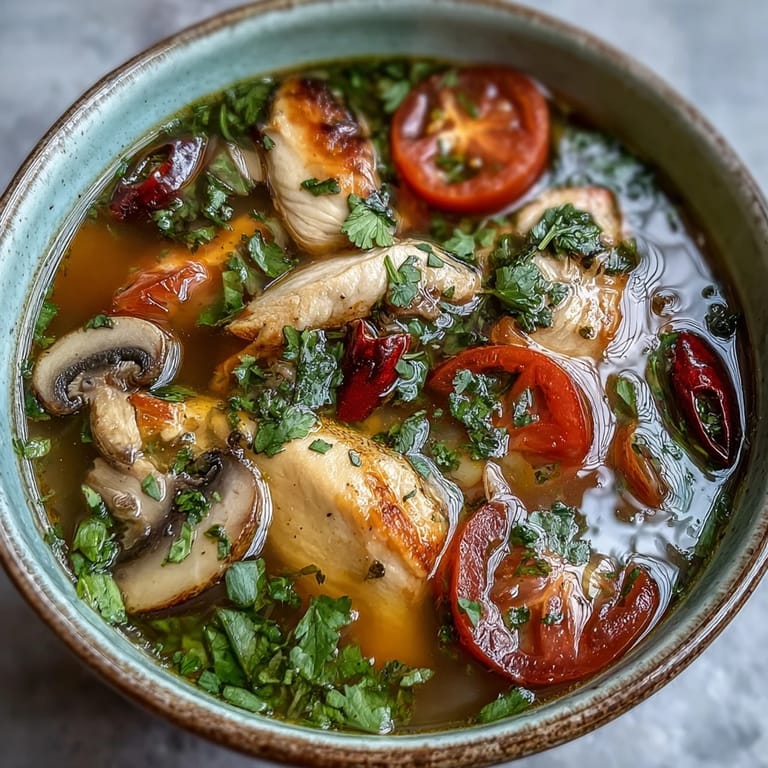
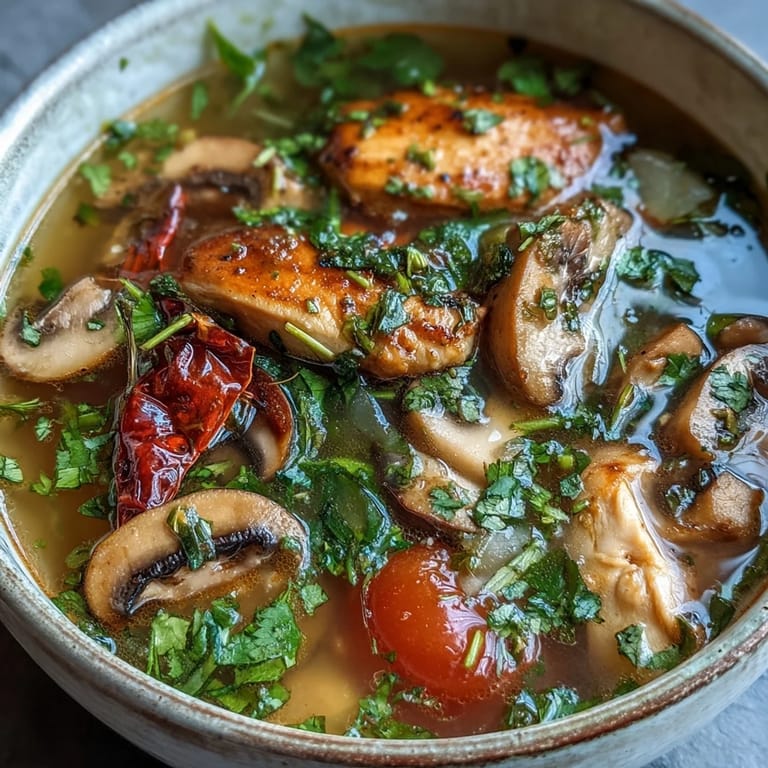
- If you prefer a cleaner broth, fish out the lemongrass, galangal, and lime leaves with a fork or spoon, though some cooks leave them in for continued flavor. Ladle into bowls and crown each one with cilantro, spring onions, and a lime wedge, serving immediately while everything is still steaming.
 Pin to Board
 There's something deeply satisfying about the moment when someone asks for the recipe and you realize you've made something that matters enough to remember. This soup has that quality, the kind of dish that people keep returning to on cold nights or when they're craving something that feels both exotic and comforting.
Heat Levels and Adjustments
The four chilies I call for give a gentle, rolling heat that builds without overwhelming, but this recipe is forgiving if you're sensitive to spice. You can halve the chilies or seed them before crushing if you want warmth without intensity, or double down if you're someone who loves that immediate sharp bite. I've learned that the heat feels less aggressive when the broth is rich and complex, so if you're nervous, make sure you're not cutting corners on the aromatics.
Protein Variations Worth Exploring
Chicken thighs are my go-to because they forgive imperfect timing, but shrimp cooks through in two minutes and transforms this into Tom Yum Goong with a completely different character. Firm tofu, sliced thin, soaks up the broth beautifully if you're cooking for vegetarians, though you'd want to use vegetable stock and omit the fish sauce or swap it for soy sauce and a squeeze more lime. Even thinly sliced beef sirloin works if you add it in the last two minutes so it stays tender.
The Creamier Path and Other Detours
If you're craving something richer, stir in about a quarter cup of coconut milk or evaporated milk just before serving, which softens the sharp edges without losing the soup's essential character. This version tastes almost luxurious spooned over jasmine rice, turning a weeknight dinner into something that feels like a small celebration. I've also stirred in a splash of evaporated milk on nights when I wanted the soup to feel more substantial, and it's become its own favorite variation.
- A squeeze of extra lime at the table lets everyone adjust their own balance of sour, which is always appreciated.
- Serve alongside jasmine rice so people can build bowls according to their preference.
- This soup tastes just as good reheated the next day, though the flavors mellow slightly so add fresh lime juice when you warm it up.
 Pin to Board
 This is the kind of soup that taught me how to cook by taste instead of time, a lesson worth the price of admission alone. Make it once and you'll find yourself returning to it again and again, each time understanding a little more about what makes it sing.
Common Questions
- → What makes Tom Yum taste authentic?
The signature comes from lemongrass, galangal, and makrut lime leaves. These three aromatics create the distinct sour and aromatic profile. Fresh ingredients make all the difference compared to pastes or powders.
- → Can I make this less spicy?
Absolutely. Reduce the birds eye chilies or remove them entirely after infusing the broth. You can also serve chili oil on the side so diners add heat to their preference.
- → What's the difference between Tom Yum and Tom Kha?
Tom Yum is a clear, sour soup while Tom Kha includes coconut milk making it creamy and richer. Both share the same aromatic base of lemongrass, galangal, and lime leaves.
- → Can I use chicken breast instead of thighs?
Yes, chicken breast works well. Slice it thinly against the grain so it stays tender. Reduce cooking time slightly as breast cooks faster than thighs.
- → How long does the broth keep in the refrigerator?
Store in an airtight container for up to 3 days. The flavors actually develop and improve overnight. Reheat gently on the stove, adding fresh lime juice before serving to brighten the taste.