 Pin to Board
 I still remember the first time I arranged a noodle board for friends—it was at a dinner party where I wanted to impress without being stressed, and that's when I realized the magic of letting everyone build their own bowl. The colorful vegetables, the tender noodles, the choice of sauces... it became less about me cooking for them and more about us creating together. That's what this Asian Fusion Noodle Bowl Board is all about.
There was this one evening when my sister brought her new partner to dinner, and I was nervous about making a good impression. I set out this board, watched their faces light up as they realized they could pick and choose exactly what they wanted, and suddenly everyone was relaxed and laughing. That's when I knew this recipe was special—it breaks down the wall between cook and guest.
Ingredients
- Rice noodles or soba noodles (300 g): The foundation of everything—I learned to rinse them thoroughly after cooking because that's what stops them from clumping into a solid mass
- Sesame oil (1 tbsp): Just a whisper of it through the cooled noodles keeps them silky and prevents them from sticking together
- Cooked chicken breast (200 g), thinly sliced: Slice against the grain and your chicken will feel tender instead of stringy—this small detail changes everything
- Cooked shrimp (150 g), peeled and deveined: Already cooked saves time, and the pink color against the vegetables is absolutely stunning
- Boiled eggs (2), halved: The creamy yolk becomes its own little sauce when you break into it
- Julienned carrots (1 cup): The bright orange is not just pretty—it's sweet and adds texture
- Cucumber, thinly sliced (1 cup): Keep these cool in the fridge until the last moment so they stay crisp
- Red bell pepper, julienned (1 cup): Sweet and crunchy, and that color is impossible to replicate
- Red cabbage, thinly sliced (1 cup): More forgiving than you'd think, and it holds up beautifully
- Cooked edamame (1 cup), shelled: Nutty and satisfying, they add protein and that pop of green
- Radishes, thinly sliced (4): Peppery little surprise that wakes up your palate
- Scallions, sliced (2): The fresh onion bite brings everything together
- Fresh cilantro leaves (1/4 cup): Don't skip this—it's the herbal breath that makes it feel alive
- Fresh mint leaves (1/4 cup): Cooling and unexpected in the best way
- Roasted peanuts, chopped (1/4 cup): Toast them yourself if you have time and the kitchen will smell incredible
- Toasted sesame seeds (2 tbsp): These tiny seeds are nutty little flavor bombs
- Lime wedges: The squeeze at the end brightens everything
- Soy sauce (1/3 cup): Salty, savory, the classic anchor
- Spicy peanut sauce (1/3 cup): Rich and a little dangerous—this is the one people come back to
- Hoisin sauce (1/3 cup): Sweet and deep, it coats your noodles in comfort
- Sweet chili sauce (1/3 cup): Bright and tangy, it cuts through the richness
Tired of Takeout? 🥡
Get 10 meals you can make faster than delivery arrives. Seriously.
One email. No spam. Unsubscribe anytime.
Instructions
- Cook the noodles gently:
- Bring water to a rolling boil and add your noodles, stirring occasionally so they don't stick to themselves. When they're tender but still have a little bite, drain them immediately and run cold water over them until they're completely cool. This stops the cooking and keeps them from turning mushy. While they're still slightly warm, toss them with that sesame oil—your hands or a fork work perfectly for this.
- Prep your vegetables with intention:
- This is where you can slow down and actually enjoy the process. Slice your cucumbers thin enough to see light through them. Julienne your carrots and peppers into matchsticks—uniform sizes look professional and eat better. Don't be intimidated by the red cabbage; it's tougher than you think and holds its shape beautifully. Keep everything in separate bowls as you go, and if you're doing this ahead of time, store the vegetables in the fridge covered with a damp paper towel.
- Arrange with your own sense of beauty:
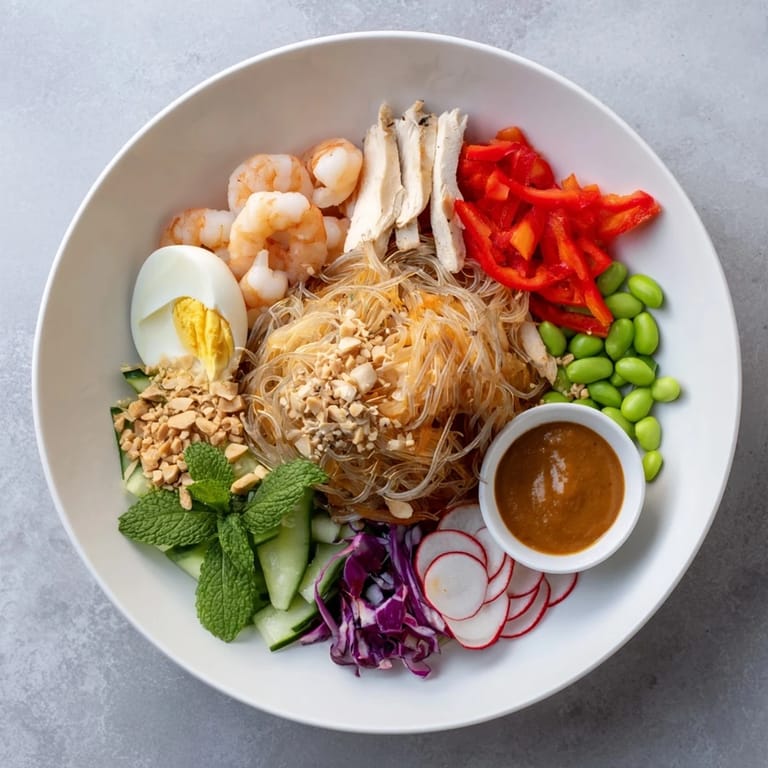
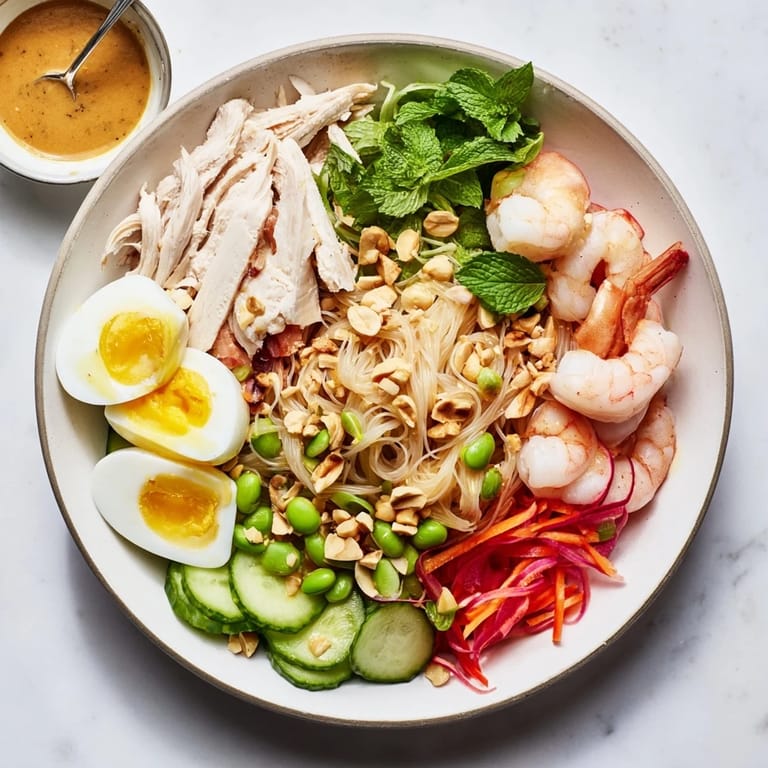
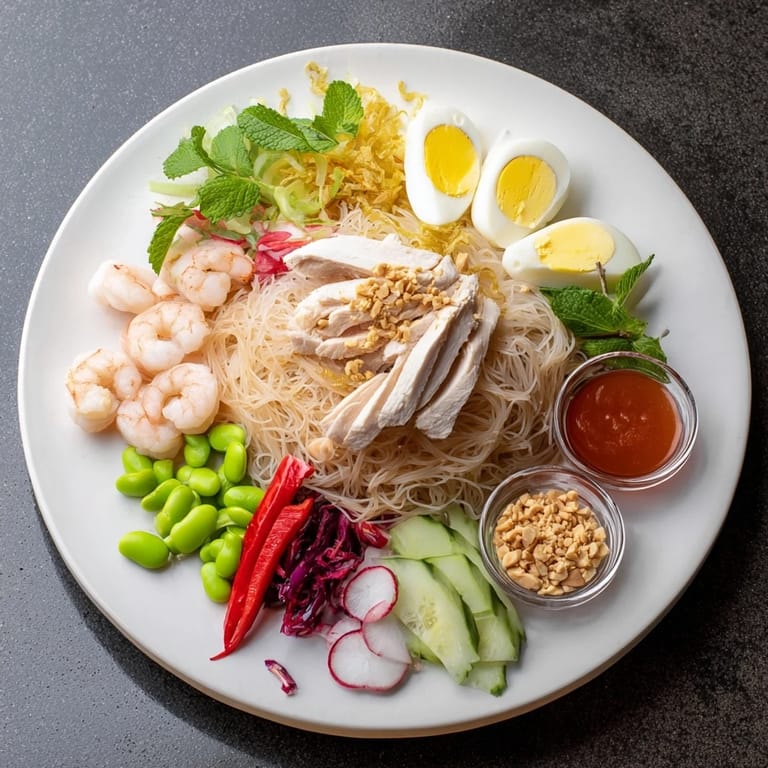
- Find your largest board or platter—this is your canvas. There's no wrong way to do this, but I love creating neat rows or little fans of each ingredient. Start by placing the noodles in sections, then arrange the proteins in their own areas—the sliced chicken, the pink shrimp, the golden halved eggs. Each one gets its own little territory so people can see what they're choosing.
- Create the sauce moment:
- Place a divided bowl or four small bowls right in the center of your board. This becomes the heart of everything. Fill each section with a different sauce—the deep soy, the creamy peanut, the glossy hoisin, the bright chili sauce. People will come back to these sauces again and again, each one changing the flavor story.
- Fill the spaces with intention:
- Now use the remaining space on your board for the vegetables, herbs, and garnishes. Sprinkle the cilantro and mint over everything so their freshness is visible. Scatter the peanuts and sesame seeds where they'll catch the light. Nestle lime wedges into little gaps. Step back and look—you're aiming for colors that pop against each other and enough variety that every section of the board tells a different part of the story.
- The finishing touch:
- Right before people sit down, you might add a few more herb leaves, a light sprinkle of extra sesame seeds, or arrange those lime wedges one more time. This isn't fussiness—this is love showing on the plate.
 Pin to Board
 I'll never forget watching my quiet, reserved uncle try three different combinations of noodles, vegetables, and sauces—and then actually smiling and asking for seconds. That moment when someone who usually just eats what's put in front of them gets excited about building something themselves? That's when I understood this recipe isn't just about noodles. It's about agency. It's about everyone at the table feeling like the meal is theirs.
The Art of the Board
There's something deeply satisfying about creating a board that makes people stop and take a photo before eating. The key is thinking about color balance—you want pockets of brightness surrounded by different shades. The orange carrots next to the deep red cabbage, the green edamame scattered throughout, the creamy white of the egg yolks. It's not just about taste; it's about creating something that feels special before anyone even takes a bite. When vegetables are sliced uniformly, the whole board feels intentional and cared-for, even if you threw it together in 20 minutes.
Building Your Perfect Bowl
The beauty of this recipe is that there's no hierarchy. Someone might build a bowl that's mostly vegetables with just a little noodle and a drizzle of sweet chili sauce. Someone else might load up on noodles and protein and go heavy with the peanut sauce. A friend of mine always takes a little of everything and tastes each sauce first before committing—and that's perfect too. There's no way to do this wrong. Watch how people naturally gravitate toward certain flavors and sauces; that's how you learn what they love.
Make It Your Own
Once you've made this a few times, you'll start seeing it as a template rather than a strict recipe. Add crispy tofu for extra texture. Swap in pickled vegetables or kimchi if you want more tang and funk. Try adding fresh Thai basil if you can find it. Some nights I add grilled zucchini or roasted mushrooms. The noodles and sauces are the foundation, but everything else is negotiable based on what you have and what your guests love.
- For a vegetarian board, use extra-firm tofu sliced and pan-seared until golden, plus double the edamame and add mushrooms
- If you're cooking for someone with a shellfish allergy, just use more chicken or tofu and no one will notice anything is missing
- Make the sauces ahead of time and store them in small containers; they last days in the fridge and actually taste better when the flavors have melded
 Pin to Board
 Every time I make this, I'm reminded that the best meals are the ones where people feel like they have a choice. This Asian Fusion Noodle Bowl Board has become my answer to 'what should we make?' because it works for almost everyone and it always feels special.
Common Questions
- → What types of noodles work best for this platter?
Rice noodles or soba noodles are ideal, offering delicate textures that complement the fresh vegetables and proteins.
- → Can the proteins be substituted for vegetarian options?
Yes, firm tofu replaces chicken and shrimp to maintain variety and protein without animal ingredients.
- → How should the dipping sauces be served?
Place sauces in a divided bowl at the platter's center to allow easy access and variety of flavors.
- → What garnishes enhance the flavors?
Fresh herbs like cilantro and mint, along with roasted peanuts and toasted sesame seeds, add aroma and crunch.
- → Are there gluten-free options available?
Use tamari instead of soy sauce and verify all sauces are gluten-free to accommodate dietary needs.
- → What beverages pair well with this dish?
Chilled sake or a crisp white wine complements the fresh, vibrant flavors beautifully.