 Pin to Board
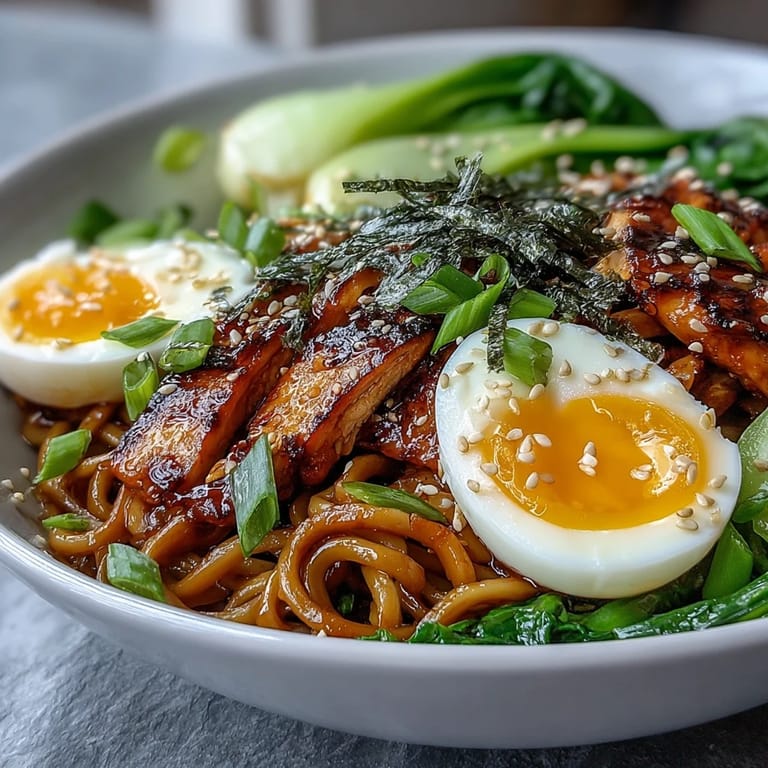
 My neighbor knocked on my door one rainy Tuesday holding a crumpled grocery receipt and asked if I had any miso paste. She was attempting a soup she'd seen online and panicked halfway through. I invited her in, and we ended up cooking together, improvising with what we had. That bowl of mismatched noodles and vegetables turned into something neither of us expected: a deeply savory, soul-warming dinner that tasted like it came from a tucked-away ramen shop. We've been tweaking the recipe ever since, and this version is the keeper.
I made this for my sister after she finished a long shift at the hospital. She sat at my kitchen counter in her scrubs, barely speaking, and I slid the bowl in front of her. She took one spoonful, closed her eyes, and said it was exactly what she needed. I've learned that this dish has a way of meeting people right where they are, whether that's exhausted, cold, or just craving something that feels like care in a bowl.
Ingredients
- Boneless, skinless chicken thighs or breasts: Thighs stay juicier and more forgiving if you overcook them slightly, but breasts work if you prefer leaner meat.
- White miso paste: This is the backbone of the entire dish; it adds a salty, slightly sweet funk that you can't replicate with anything else.
- Low-sodium soy sauce: Keeps the saltiness in check so the miso can shine without overwhelming the broth.
- Rice vinegar: A splash of acidity brightens the marinade and cuts through the richness of the sesame oil.
- Honey or maple syrup: Just enough sweetness to caramelize the chicken edges and balance the soy and miso.
- Fresh ginger: Grate it finely so it melts into the marinade and doesn't leave fibrous bits behind.
- Garlic: One clove is plenty; too much and it competes with the ginger and miso.
- Toasted sesame oil: A little goes a long way; it adds a nutty aroma that makes the whole kitchen smell incredible.
- Soba noodles or whole wheat spaghetti: Soba has a wonderful earthy chew, but spaghetti works in a pinch and holds the broth just as well.
- Low-sodium chicken broth: The base of your soup; taste it before you add miso to make sure it's flavorful on its own.
- Shiitake mushrooms: They add a meaty, umami depth that makes the broth taste more complex.
- Carrot: Julienne them thin so they soften quickly and look elegant in the bowl.
- Baby bok choy: Halve them so the tender leaves cook faster than the crisp stems.
- Snow peas: Trim the ends and toss them in at the last moment so they stay bright green and snappy.
- Baby spinach or kale: Spinach wilts instantly; kale needs an extra minute but adds a heartier texture.
- Soft-boiled eggs: The jammy yolk melts into the broth and makes every spoonful richer.
- Scallions: Slice them thin and scatter them on top for a fresh, sharp bite.
- Toasted sesame seeds: A small sprinkle adds crunch and a subtle nuttiness.
- Fresh cilantro or parsley: Cilantro is traditional, but parsley works if you're in the cilantro-tastes-like-soap camp.
- Nori strips: Optional, but they add a briny, oceanic note that makes the bowl feel more complete.
- Chili oil or Sriracha: A drizzle of heat wakes up the whole dish and adds a layer of warmth.
Tired of Takeout? 🥡
Get 10 meals you can make faster than delivery arrives. Seriously.
One email. No spam. Unsubscribe anytime.
Instructions
- Mix the marinade:
- In a shallow bowl, whisk together 1 tablespoon miso paste, soy sauce, rice vinegar, honey, ginger, garlic, and sesame oil until the miso dissolves completely and the mixture is smooth. The aroma should be sharp, sweet, and savory all at once.
- Marinate the chicken:
- Add the chicken, turning each piece to coat evenly in the marinade. Cover and refrigerate for at least 30 minutes, though overnight is even better if you have the time.
- Cook the noodles:
- Bring a large pot of water to a rolling boil and cook the soba noodles according to package directions until they're just al dente. Drain, rinse under cold water to stop the cooking, and toss with a few drops of sesame oil to keep them from clumping.
- Grill the chicken:
- Heat a grill pan or skillet over medium-high heat until it's very hot. Shake off excess marinade from the chicken and cook for 4 to 5 minutes per side, until the internal temperature reaches 165°F and the edges are caramelized.
- Rest and slice:
- Transfer the chicken to a cutting board and let it rest for 5 minutes so the juices redistribute. Slice into thin strips against the grain.
- Build the broth:
- In a clean soup pot, bring the chicken broth and water to a gentle simmer. Whisk in the remaining 1 tablespoon miso paste until it's fully dissolved and the broth turns cloudy and fragrant.
- Add the vegetables:
- Toss in the mushrooms, carrots, bok choy, and snow peas. Simmer for 3 to 4 minutes until the vegetables are just tender but still have a bit of bite. Stir in the spinach or kale and remove from heat so it wilts without overcooking.
- Assemble the bowls:
- Divide the noodles between two bowls. Arrange the sliced chicken on top and ladle the hot broth and vegetables over everything, making sure each bowl gets a good mix of each ingredient.
- Top and serve:
- Finish each bowl with soft-boiled egg halves, scallions, sesame seeds, cilantro, and nori strips. Drizzle with chili oil or Sriracha if you like heat, and serve immediately while everything is steaming hot.
 Pin to Board
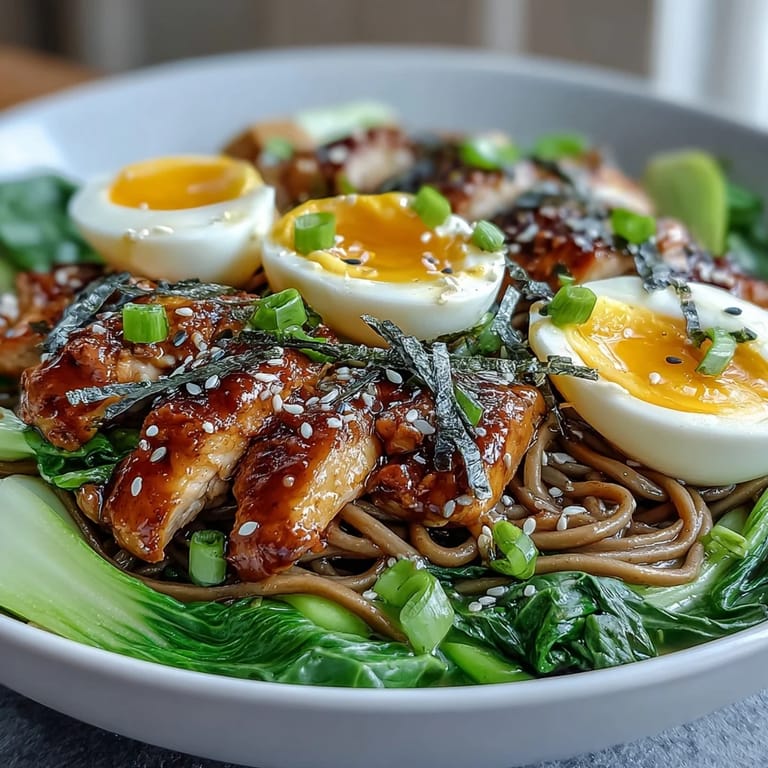
 One evening, I made this for a friend who was going through a breakup. She didn't want to talk, so we just sat there, slurping noodles and letting the warmth fill the silence. She texted me the next morning saying it was the first thing that had tasted like anything in days. That's when I realized this recipe isn't just about flavor; it's about comfort that doesn't ask for anything in return.
Making It Your Own
If you want to make this vegetarian, swap the chicken for extra-firm tofu and use vegetable broth instead of chicken broth. Press the tofu for at least 15 minutes, then marinate it the same way you would the chicken. You can pan-fry or bake it until golden and crispy on the edges. I've also added edamame, broccoli, and snap peas when I had them on hand, and the dish absorbed those changes without missing a beat.
Storage and Reheating
Leftover broth can be stored in an airtight container in the fridge for up to three days. Keep the noodles and toppings separate or the noodles will bloat and turn mushy. When you're ready to eat, reheat the broth gently on the stove, then pour it over fresh or reheated noodles. The chicken can be sliced and stored separately, then added cold or warmed briefly in the microwave. I sometimes eat the chicken cold on top of a salad the next day and it's just as good.
Final Touches
The toppings are where you can get creative and make this bowl feel special. I've used everything from pickled radishes to crispy fried shallots to leftover roasted seaweed snacks. A soft-boiled egg is non-negotiable for me because the jammy yolk melts into the broth and makes it taste richer. If you don't have nori, skip it, but if you do, those little strips add a briny pop that ties everything together.
- Toast your sesame seeds in a dry pan for 30 seconds to wake up their flavor.
- Slice your scallions on a sharp diagonal so they look restaurant-pretty.
- If you like spice, stir a spoonful of gochugaru or chili crisp directly into the broth.
 Pin to Board
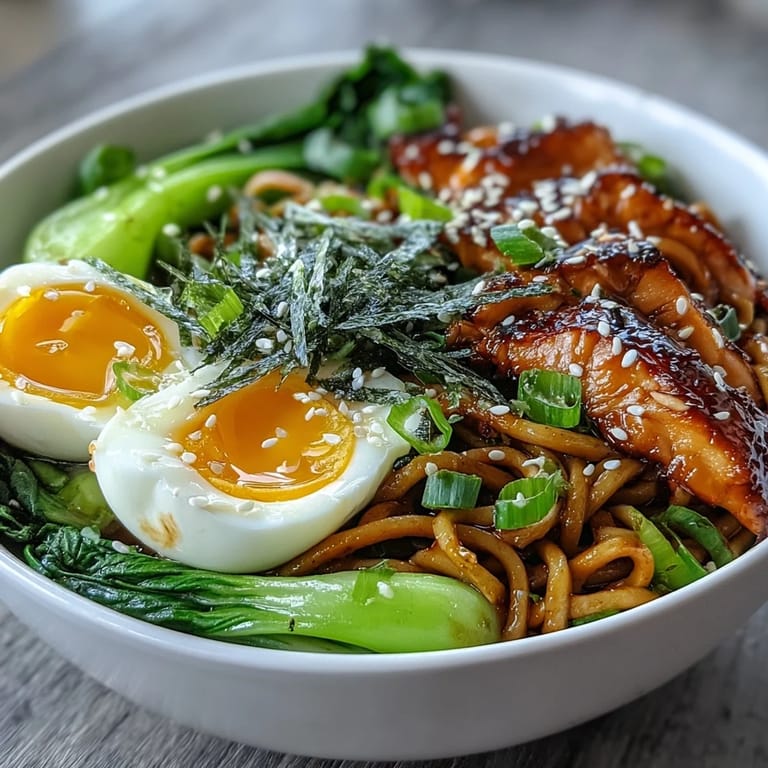
 This bowl has become my go-to whenever I need something that feels like a hug from the inside out. I hope it does the same for you.
Common Questions
- → Can I make this dish ahead of time?
Yes, you can marinate the chicken up to 8 hours in advance and prepare the broth ahead. Store noodles, broth, and toppings separately to prevent sogginess, then assemble when ready to serve.
- → What can I substitute for soba noodles?
Whole wheat spaghetti works well, or use rice noodles for a gluten-free option. For authentic texture, look for 100% buckwheat soba noodles at Asian markets.
- → How do I make this vegetarian?
Replace chicken with extra-firm tofu, marinated and pan-fried until golden. Use vegetable broth instead of chicken broth for a fully plant-based version.
- → Can I adjust the spice level?
Absolutely. Add chili oil, Sriracha, or fresh sliced chilies to the broth for heat. Start with a small amount and adjust to your preference.
- → What vegetables can I use instead of bok choy?
Broccoli florets, snap peas, edamame, or napa cabbage all work wonderfully. Choose vegetables that cook quickly and hold their texture in hot broth.
- → How long will leftovers keep?
Store components separately in airtight containers for up to 3 days. Reheat broth and vegetables together, then pour over fresh or reheated noodles and chicken.