 Pin to Board
 The first time I made bulgogi at home, I stood in my kitchen at dusk with the windows open, and the moment that beef hit the hot wok, the smell of caramelized soy and ginger filled every corner. My neighbor actually poked her head in to ask what I was cooking, and I realized right then that this wasn't just another weeknight dinner—it was the kind of dish that makes people stop and take notice. What started as curiosity about Korean food became something I'd crave regularly, especially on nights when I wanted restaurant-quality results without leaving home.
I made this for a small dinner party once, and one guest asked for thirds before anyone else had finished seconds. The thing about bulgogi is that it feels impressive and restaurant-worthy, but watching their faces light up when they realized I'd made it myself in under an hour was priceless. That's when I knew this recipe was a keeper, not just for taste but for the confidence it gave me in the kitchen.
Ingredients
- Beef sirloin or ribeye, thinly sliced (500g): Thin slices are everything here—they cook fast and soak up flavor like nothing else, so ask your butcher to slice it, or partially freeze it and use a sharp knife.
- Soy sauce (3 tbsp): The backbone of the marinade, bringing that salty-savory depth that makes people ask what your secret ingredient is.
- Brown sugar (2 tbsp): This isn't just sweetness; it caramelizes on the beef and creates those glossy, dark edges that make it look professional.
- Sesame oil (1 tbsp): A little goes a long way—use the good stuff, and you'll taste the difference in every bite.
- Rice vinegar (1 tbsp): Cuts through the richness and keeps everything balanced so it never feels heavy.
- Garlic and ginger (2 cloves garlic, minced; 1 thumb-sized piece ginger, grated): These two create that aromatic backbone that makes your kitchen smell like an actual restaurant.
- Pear or sweet apple, grated (1 whole): This is the secret weapon—it adds subtle sweetness and helps tenderize the meat at the same time.
- Gochujang (1 tbsp, optional): Only add this if you want heat; it transforms the dish into something spicier and more complex.
- Scallions and sesame seeds: Scallions go into the marinade and as garnish for freshness and bite, while sesame seeds add nuttiness and visual appeal.
- Jasmine or short-grain rice (2 cups cooked): The neutral base that lets the beef shine without competing for attention.
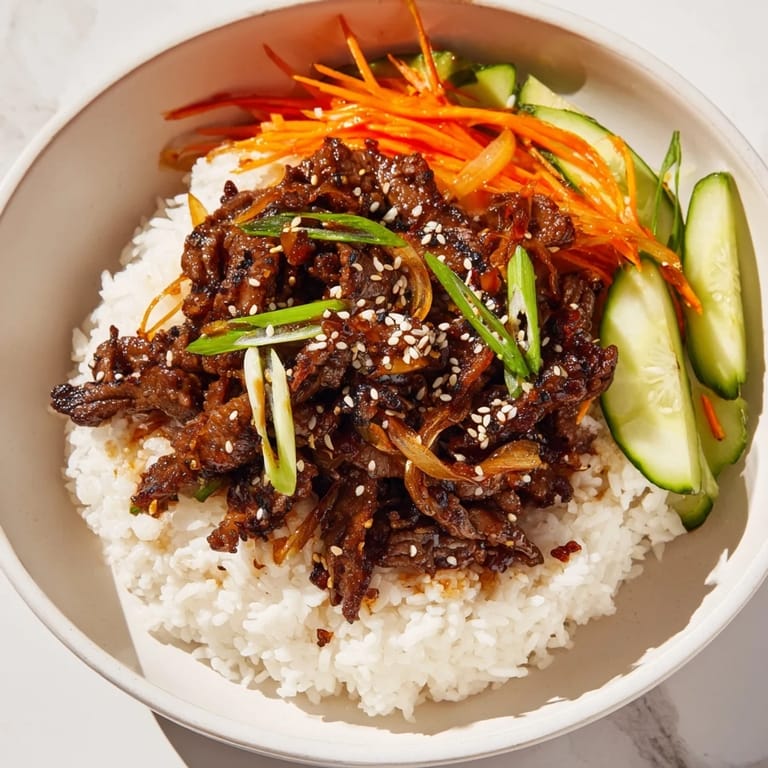
- Carrot, cucumber, bean sprouts (1 cup each): These crisp vegetables aren't just decoration—they provide texture contrast and keep every bite interesting.
- Kimchi (1 cup, optional): Add this if you want tangy, funky depth that elevates the whole bowl.
Tired of Takeout? 🥡
Get 10 meals you can make faster than delivery arrives. Seriously.
One email. No spam. Unsubscribe anytime.
Instructions
- Build your marinade foundation:
- In a large bowl, whisk together soy sauce, brown sugar, sesame oil, and rice vinegar until the sugar dissolves. Add minced garlic, grated ginger, grated pear, gochujang if you're using it, and a pinch of black pepper, then stir until everything is glossy and combined.
- Coat the beef:
- Add your thinly sliced beef to the marinade and toss it gently so every piece gets coated. This is the moment where patience pays off—let it sit for at least 15 minutes, though an hour is even better if you have time, as the flavors deepen and the meat becomes impossibly tender.
- Get your wok screaming hot:
- Heat a large skillet or wok over high heat until it's almost smoking. You want it hot enough that the beef sizzles the moment it hits the pan, creating those caramelized edges that make this dish sing.
- Sear the beef in batches:
- Add the beef and let it cook undisturbed for about 90 seconds so it can brown, then toss and cook for another minute or two until it's just cooked through but still tender. Don't crowd the pan—work in batches if you need to, because crowding steams the beef instead of searing it.
- Assemble your bowl:
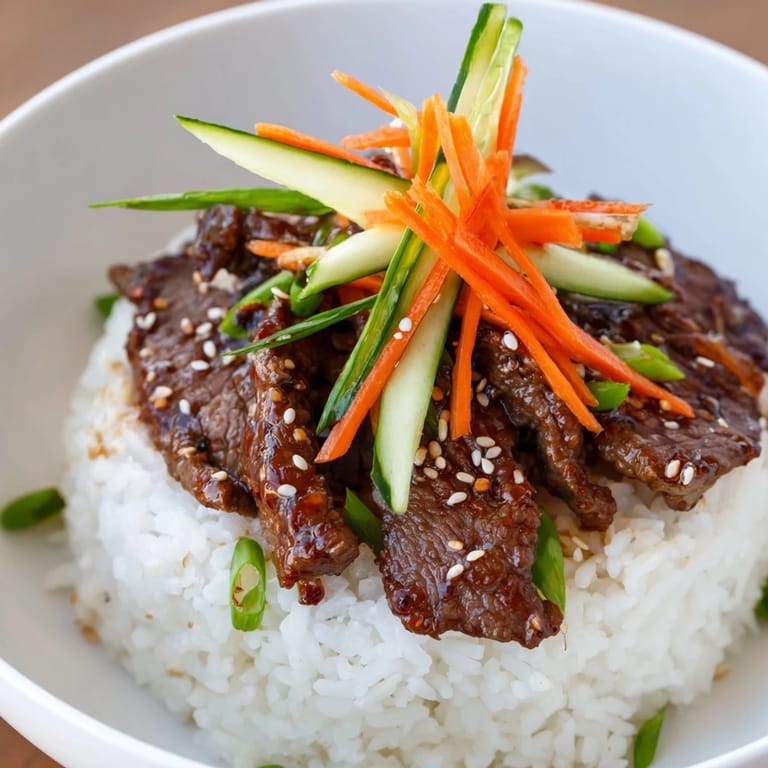
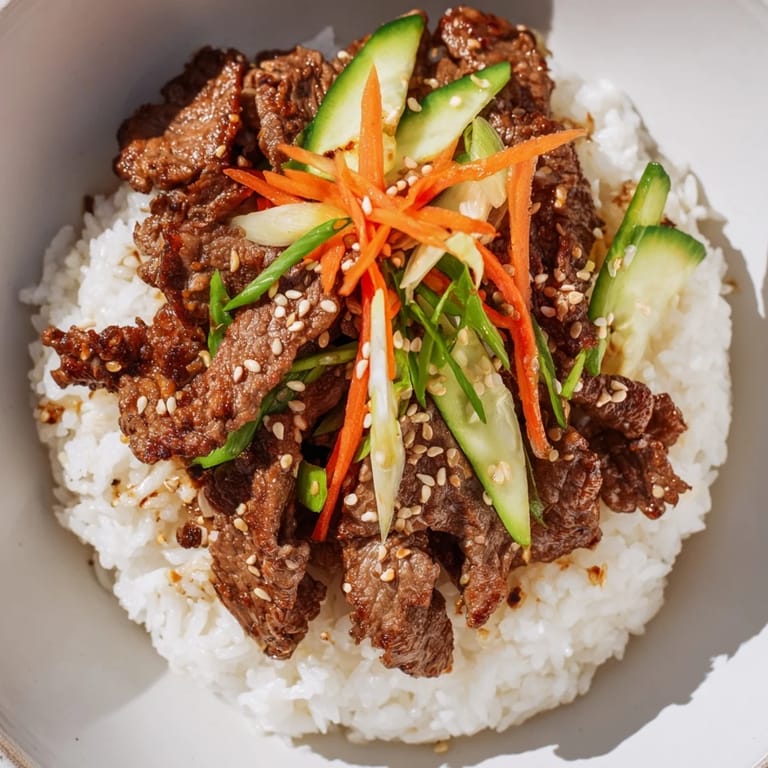
- Divide steamed rice among four bowls, then arrange the warm beef on top alongside the crisp vegetables you've prepped. The warm beef will slightly soften the vegetables, creating a textural contrast that keeps every spoonful interesting.
- Finish with garnish:
- Scatter extra scallions and toasted sesame seeds over the top, add a handful of kimchi if you're using it, and serve right away while the beef is still warm and the vegetables are still crisp.
 Pin to Board
 I learned something important the night I made this for my partner after a long day at work—how food can reset an entire mood. We sat down with these bowls, and halfway through the first bite, the stress just melted away. That's when I understood that this dish was about more than ingredients and technique; it was about creating a moment where everything else could pause.
Choosing the Right Beef Cut
The best cuts for bulgogi are ones that cook quickly and benefit from marinating, which means tender, quick-cooking muscles rather than tough ones that need long cooking times. Ribeye has enough fat to stay juicy, while sirloin leans toward leaner and more affordable. I've had success with flank steak too, though it's a bit chewier than ribeye—the point is finding something that won't resist a good sear and won't dry out in seconds. The thickness of the slice matters more than the specific cut, so ask your butcher to slice it thin, and you'll be golden.
The Pear Secret
Most people think the sweetness in bulgogi comes from brown sugar, but the real magic is the grated pear. It dissolves into the marinade and acts as both a tenderizer and flavor enhancer, adding a subtle fruit note that makes people ask what's in there. An Asian pear is ideal because it's not too juicy and has a mild sweetness, but a crisp apple works in a pinch. I once substituted kiwi out of desperation, and while it added an interesting tang, the pear is definitely the star player here.
Customization and Serving Ideas
The beauty of a bulgogi bowl is that it adapts to whatever you have on hand or whatever your mood calls for. Skip the kimchi if fermented foods aren't your thing, or double it if you want that tangy funk in every bite. I sometimes add a fried egg on top for richness, or use cauliflower rice when I'm keeping things lighter. The core of this dish—the marinated beef and the marinade—stays constant, but everything else is yours to play with.
- For extra richness and a runny yolk, crown your bowl with a fried egg that melts into the warm rice.
- Swap white rice for cauliflower rice if you want lower carbs, or try brown rice for more texture and nuttiness.
- Keep gochujang at the table so people can adjust heat to their own preference without affecting the base dish.
 Pin to Board
 Make this when you want to feel like you've accomplished something in the kitchen without spending half your evening there. It's the kind of meal that proves simple ingredients and a little patience create something genuinely special.
Common Questions
- → What cut of beef works best for this dish?
Ribeye or sirloin thinly sliced are ideal for quick cooking and tenderness.
- → Can I substitute the rice?
Yes, cauliflower rice makes a great low-carb alternative to traditional steamed rice.
- → How long should the beef marinate?
Marinating for at least 15 minutes allows flavors to develop; up to 1 hour deepens the taste.
- → What level of spice does gochujang add?
Gochujang adds a mild to moderate heat with a sweet and savory depth; adjust use to suit your spice preference.
- → Are there any gluten considerations?
Regular soy sauce and gochujang may contain gluten; use gluten-free versions for a safe alternative.