 Pin to Board
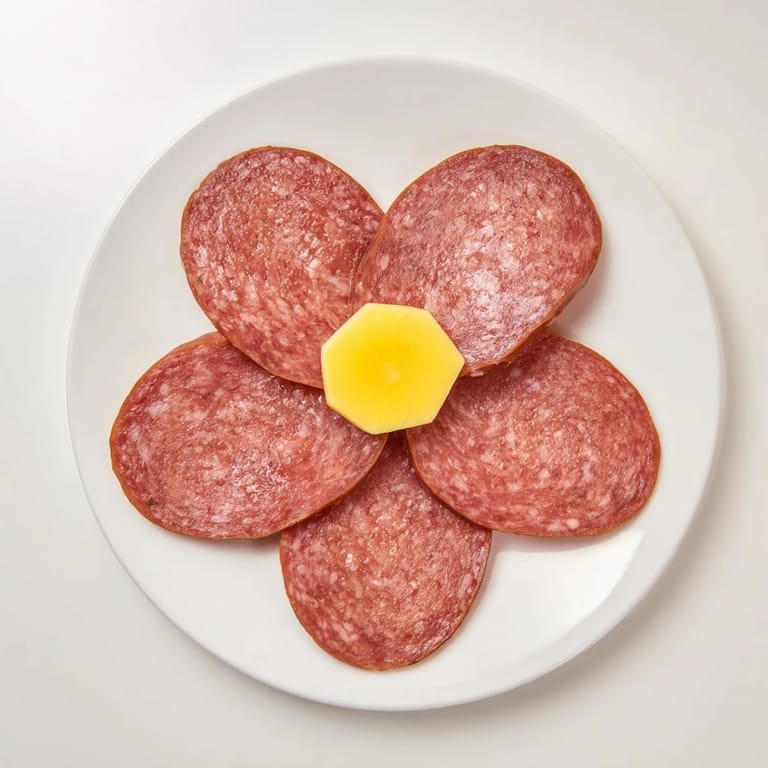
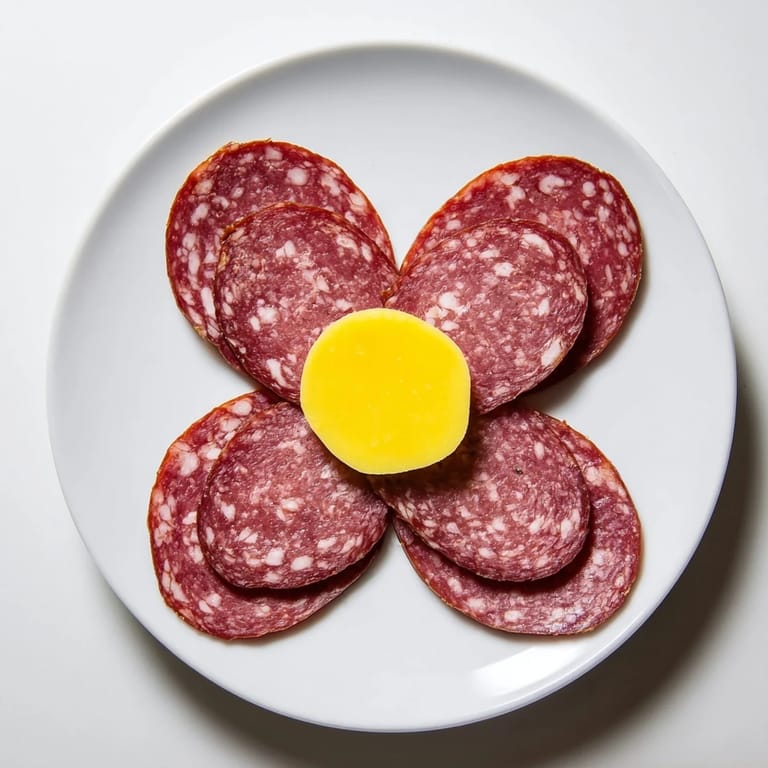
 I discovered the Tudor Rose at a friend's dinner party, and I couldn't stop staring at it. The five crimson salami petals arranged in perfect symmetry around a golden cheese center looked too elegant to eat, yet it was impossibly simple—just two ingredients arranged with intention. When she told me it took ten minutes, I realized this was the kind of appetizer that makes you look like you spent hours in the kitchen while you're actually just being clever. Now it's my secret weapon whenever I need something that feels fancy but doesn't demand anything from me.
I remember making three of these for a wine tasting my sister was hosting, and watching people photograph it before eating it felt oddly validating. One guest actually asked if it was too pretty to disturb, which made me laugh—because that's exactly when you know you've nailed the balance between form and function. The roses disappeared first from the board, which felt like a small victory.
Ingredients
- Salami slices: Look for slices around 6–8 cm in diameter—thin enough to curve slightly, thick enough to hold their shape and taste rich without being overpowering.
- Yellow cheese: Choose something with a bit of personality: Gouda brings a gentle sweetness, Cheddar adds a sharper note, and Gruyère elevates it completely if you're feeling indulgent.
Tired of Takeout? 🥡
Get 10 meals you can make faster than delivery arrives. Seriously.
One email. No spam. Unsubscribe anytime.
Instructions
- Arrange your petals:
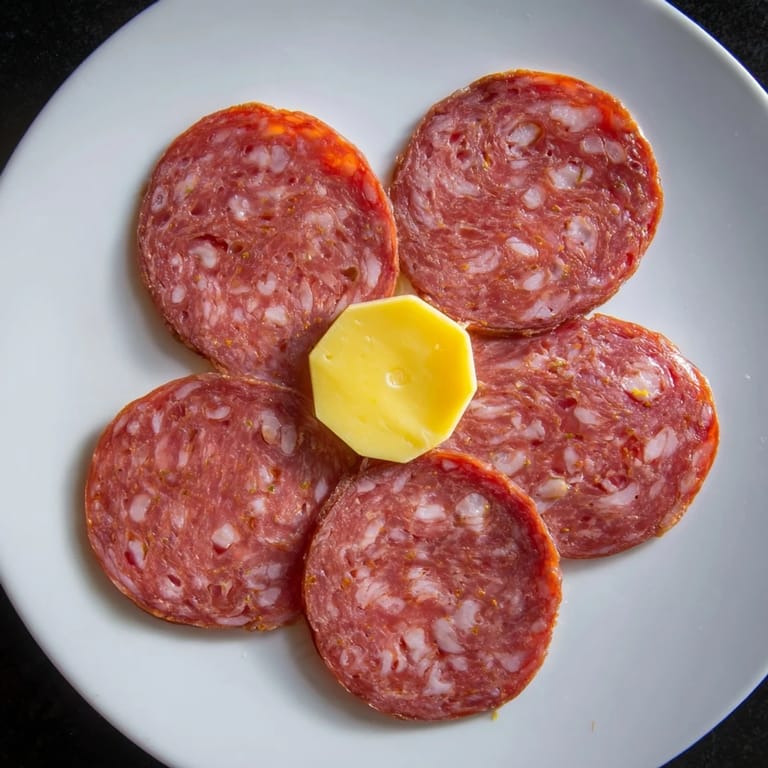
- Lay five salami slices in a circle on your serving plate, letting each one overlap its neighbor just enough to suggest a flower without looking crowded. You'll feel the rhythm of it—each petal leaning into the next, creating that natural symmetry that somehow looks accidental.
- Anchor with cheese:
- Place your yellow cheese disc in the center where all those overlapping edges meet, creating the rose's button. This covers the raw overlaps and brings visual closure to the whole thing.
- Adjust and polish:
- Step back and look at it from different angles; nudge petals if they need convincing into symmetry. This moment—when you're just tweaking, not rushing—is where the magic happens.
- Bring to the table:
- Serve it immediately while everything is at its best, either as a standalone piece or nestled among other charcuterie.
 Pin to Board
 This little rose became the thing I make whenever I need to remind someone that I'm thinking of them in a way that feels personal without being fussy. There's something about presenting food that's been arranged with this kind of intention—it says I noticed you, I took an extra moment, this matters.
The Beauty of Restraint
There's a lesson in cooking with just two ingredients: sometimes the most impressive things come from knowing what to leave out. The Tudor Rose taught me that not every recipe needs a long list or complicated techniques—sometimes what makes something memorable is the confidence to keep it minimal and let quality speak. I started noticing this pattern everywhere after, and it changed how I think about cooking entirely.
Playing with Variations
Once you've mastered the basic rose, the variations practically invite themselves. I've swapped the salami for prosciutto when I wanted something more delicate, and used aged Manchego for a Spanish twist. A friend suggested thinly sliced pepperoni for a spicier version, which absolutely worked. The framework stays the same, but the personality changes completely depending on what cured meat and cheese you choose.
Plating and Presentation
I've learned that how you present food changes how people experience it, and this rose is proof of that principle. The symmetry draws the eye, the color contrast creates visual interest, and somehow people slow down before eating it—they notice it rather than just consuming it. That moment of noticing is worth the extra thirty seconds it takes to arrange it properly.
- Tuck fresh basil or parsley between the petals for a pop of green that makes the red and gold even more striking.
- Serve it on a white or slate plate to make the colors really sing without competing with busy patterns.
- Add it to a charcuterie board as a small architectural detail that anchors the whole composition.
 Pin to Board
 The Tudor Rose taught me that elegant entertaining doesn't require hours of labor—just a moment of attention to detail and respect for good ingredients. It's become my go-to reminder that sometimes the simplest gestures make the biggest impression.
Common Questions
- → What type of cheese works best for the center?
Use semi-hard cheeses like Gouda or Cheddar, sliced into a small round shape about 3-4 cm wide and 0.5 cm thick to form the rose's button.
- → Can I substitute the salami with other meats?
Yes, feel free to try other cured meats such as prosciutto or soppressata for different flavor profiles while maintaining the floral arrangement.
- → How do I maintain the symmetry of the petals?
Arrange the five salami slices in a circle with slight overlapping edges, adjusting each petal gently until the flower shape looks balanced and uniform.
- → Are there recommended garnishes to add color?
Fresh herbs like basil or parsley tucked between the salami petals add a splash of color and a fresh aroma to enhance the presentation.
- → What should I serve alongside this appetizer?
Serve with crackers or slices of fresh bread to complement the savory salami and creamy cheese elements.