 Pin to Board
 Late one Thursday night, I stood in my kitchen with a craving for something warm and satisfying but without the energy for anything complicated. I'd just tossed together some noodles with peanut sauce on instinct, layering in soy sauce and sriracha until it tasted right, and the result was so unexpectedly good that I made it again the next day. Now it's become my go-to when I need comfort food that actually feels intentional, not like I'm settling for leftovers.
I remember bringing a big bowl of these noodles to a potluck and watching people go back for seconds without hesitation, even the ones who usually skip anything spicy. It was the moment I realized this wasn't just a quick weeknight fix—it was something people genuinely wanted to eat.
Ingredients
- Dried rice noodles or spaghetti (12 oz): Rice noodles give you that delicate, slightly chewy texture that takes sauce beautifully, but honestly, any pasta works if that's what you have.
- Creamy peanut butter (1/2 cup): Use the kind you'd actually eat on toast—no weird additives needed, and natural peanut butter works just as well if you stir it first.
- Soy sauce (1/4 cup): This is what makes the whole thing taste savory and deep, so don't skip it or swap it carelessly.
- Rice vinegar (2 tbsp): The little bit of brightness that keeps the sauce from feeling heavy; white vinegar works in a pinch but tastes slightly sharper.
- Toasted sesame oil (1 tbsp): A small amount goes far, and you can smell when it's good—that's how you know you got the right bottle.
- Honey or maple syrup (2 tbsp): Just enough sweetness to round out the spice without making it dessert.
- Sriracha or chili garlic sauce (2–3 tbsp): Start with 2 and taste as you go; this is where your personal heat tolerance takes over.
- Garlic and ginger (2 cloves and 1 tbsp): Fresh matters here—minced garlic and grated ginger add warmth that the dried stuff can't match.
- Warm water (1/4 cup, plus more): This is your consistency control, so add it slowly and adjust until the sauce flows but isn't thin.
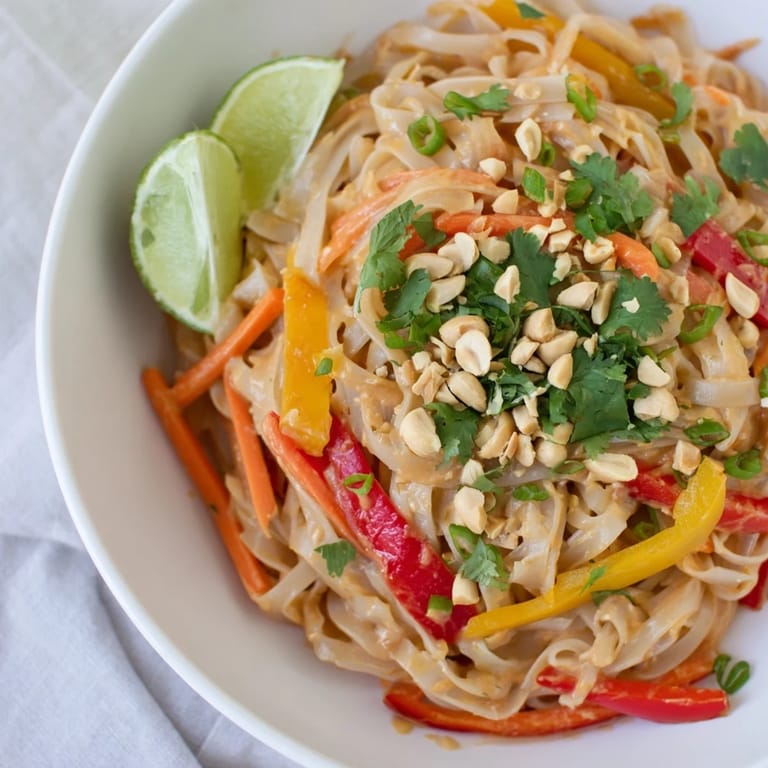
- Shredded carrots (1 cup): Sweet and crunchy, they soften slightly when tossed but hold their texture if you don't oversauce.
- Sliced bell pepper (1 cup): Adds brightness and snap, and the color makes the bowl actually look appetizing.
- Scallions, roasted peanuts, cilantro, and lime: These are the reason people notice the difference between a bowl of noodles and something worth remembering.
Tired of Takeout? 🥡
Get 10 meals you can make faster than delivery arrives. Seriously.
One email. No spam. Unsubscribe anytime.
Instructions
- Cook your noodles:
- Boil them in salted water until they're tender but still have a little give—not mushy. Drain them in a colander, rinse under cold water so they don't clump, and set them aside.
- Build the sauce:
- Whisk the peanut butter, soy sauce, vinegar, sesame oil, honey, sriracha, garlic, and ginger together in a bowl until it's smooth. Add the warm water gradually, tasting and adjusting as you go—if it's too thick, add a splash more water; if it's too thin, you've added too much.
- Toss everything together:
- Put the noodles in a large bowl with the carrots and bell pepper, then pour the sauce over and toss until every strand is coated. This is easier than it sounds and actually kind of satisfying to do by hand with two forks.
- Plate and garnish:
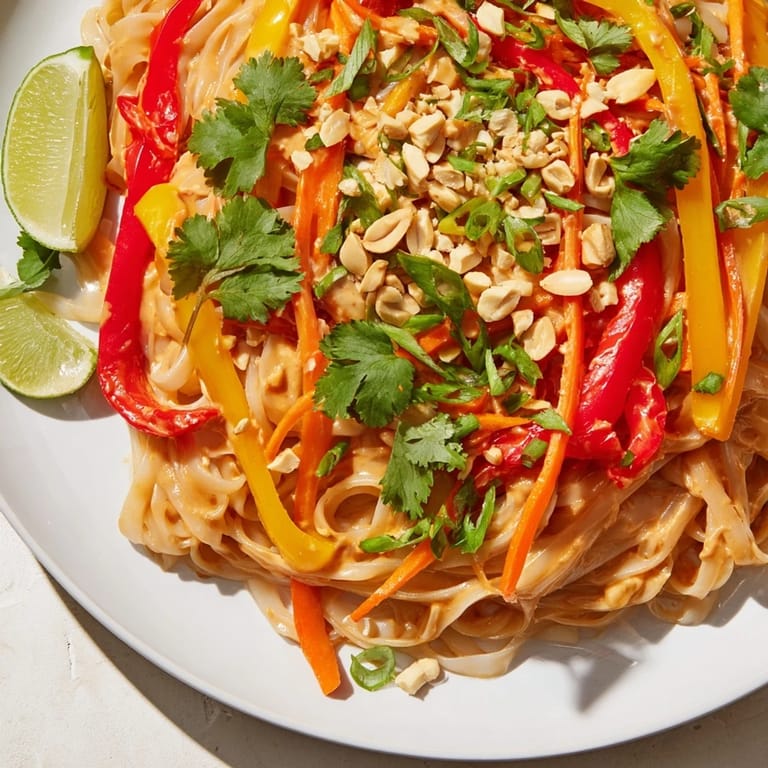
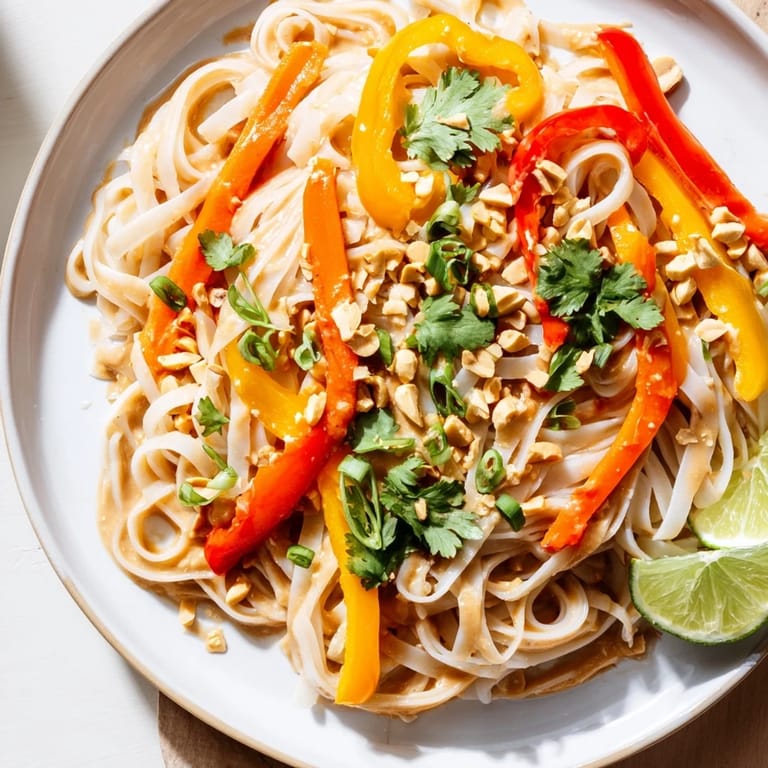
- Divide the noodles among bowls and top each with scallions, peanuts, cilantro, and a wedge of lime so people can squeeze in as much brightness as they want. Serve right away while the noodles are still warm, or refrigerate for a cold version.
 Pin to Board
 There's something grounding about standing at the stove, whisking peanut butter and soy sauce together and smelling that toasted sesame oil rise up—it's a small moment that makes dinner feel intentional. That's when I know this isn't just food, it's a choice I'm making for myself.
Making It Your Own
This recipe is a framework, not a rule, so feel free to shift things around based on what's in your fridge or what you're craving. Some nights I add shredded cabbage for more crunch, other times I toss in some cooked chickpeas for protein without thinking too hard about it. The sauce is forgiving enough to handle your experiments, and half the fun is discovering what tastes right to you.
Heat Level and Flavor Balance
The spice here is meant to warm you up without erasing your taste buds, but honestly, that's a personal line that only you can draw. I've learned that starting with 2 tablespoons of sriracha and tasting along the way saves you from making something too hot to enjoy. The honey and peanut butter are there to cushion the heat, but they also mean you need enough spice for it to matter—it's a dance more than a formula.
Beyond the Basic Bowl
Noodles are a canvas, and this sauce sticks to almost anything you want to build around it. Roasted tofu, shredded rotisserie chicken, boiled eggs, cooked shrimp—they all work without overshadowing what makes the noodles good in the first place. Even leftover roasted vegetables wake up in this sauce, suddenly tasting intentional instead of like something you need to use up.
- Try adding a fried egg on top for richness and a little something that breaks into the noodles as you eat.
- Cucumber slices add coolness and crunch if you want the texture balance to shift.
- A drizzle of chili oil at the very end gives you extra layers of heat and flavor without making the sauce watery.
 Pin to Board
 This dish lives in that sweet spot where it takes almost no skill to make but tastes like you know what you're doing. Come back to it whenever you need something fast that actually feels like dinner.