 Pin to Board
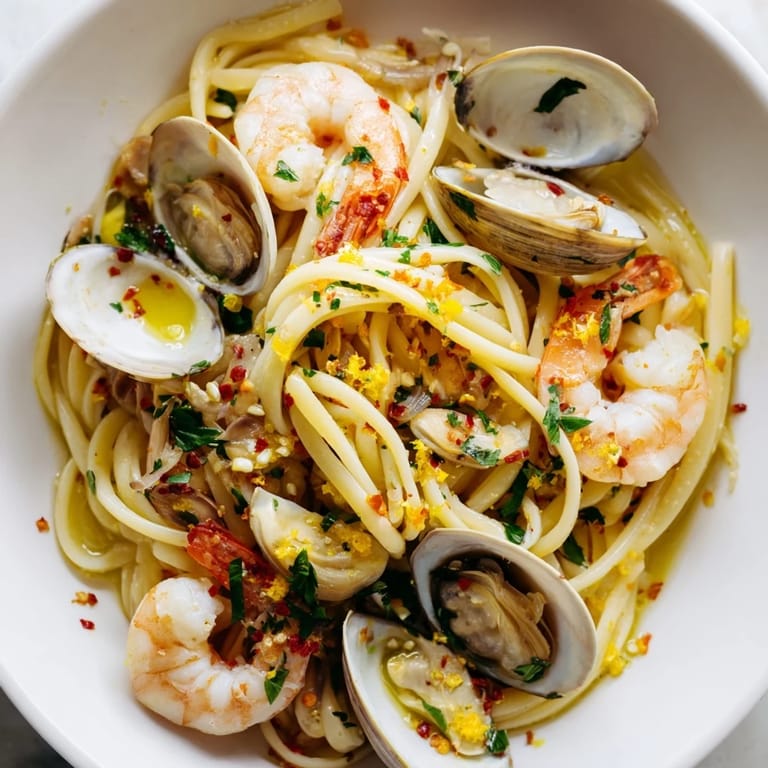
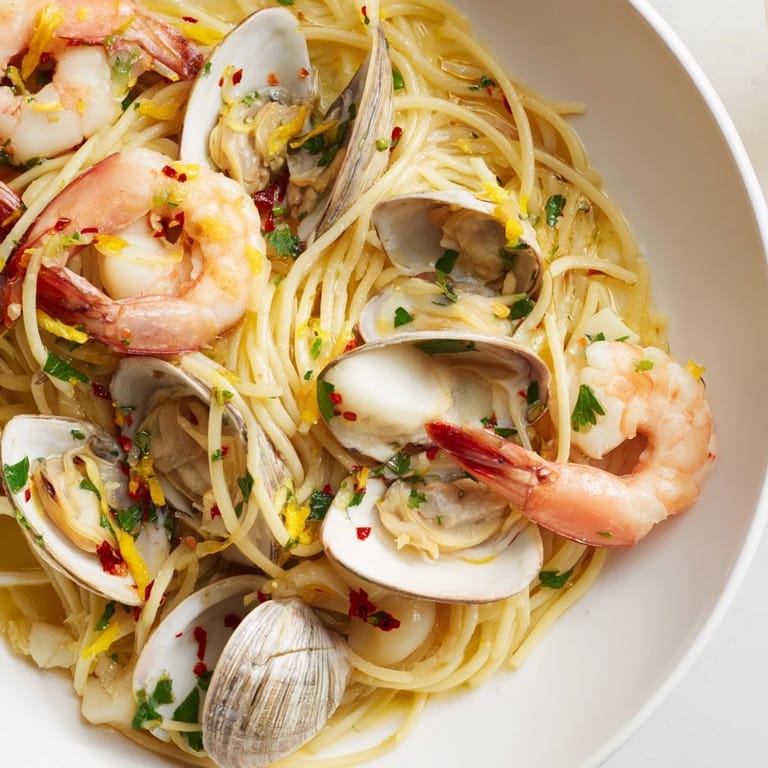
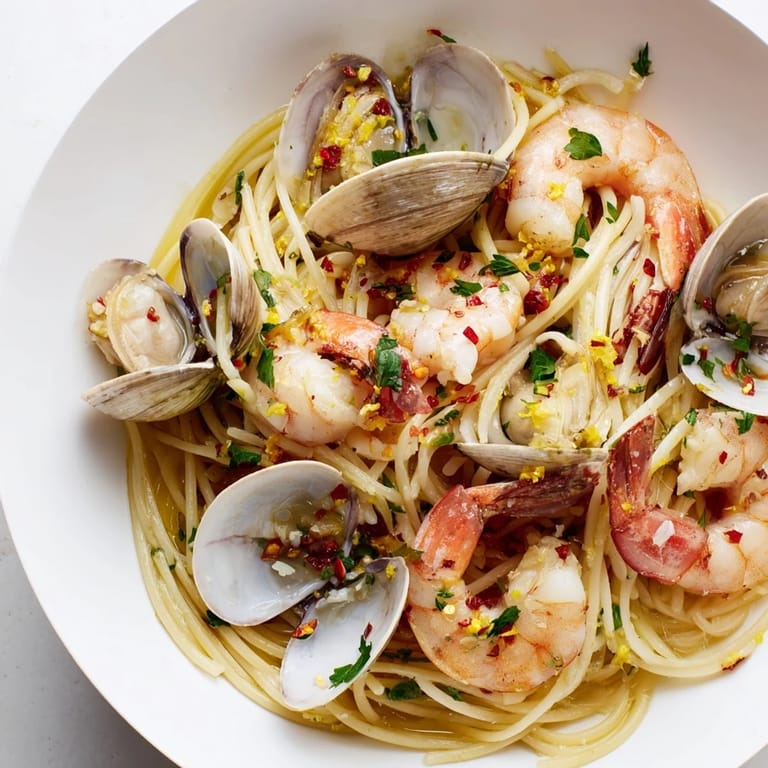
 There's something about the way garlic sizzles in hot oil that makes me feel instantly transported to a small kitchen in Rome, even though I've never actually been there. I first attempted this dish on a rainy Tuesday night when I was determined to prove to myself that seafood and pasta weren't as intimidating as they seemed. The clams opened like tiny treasures, the shrimp turned that perfect coral pink, and suddenly I understood why this simple Italian classic has survived centuries. It's not about complicated techniques—it's about respecting each ingredient and letting them speak for themselves.
I made this for my partner after we'd spent the afternoon at the farmer's market picking out the most beautiful clams we could find. We got home, opened that bottle of crisp white wine we'd been saving, and cooked together in our tiny kitchen. When we sat down to eat, the steam rising off the plate carrying those garlicky, lemony aromas felt like the whole afternoon had been leading to this exact moment. It reminded me that cooking isn't really about following steps—it's about creating space for the people you care about.
Ingredients
- Large shrimp, peeled and deveined (250 g / 9 oz): Fresh shrimp is worth seeking out because frozen ones release water and dilute your sauce—ask your fishmonger to devein them if you're squeamish about doing it yourself.
- Fresh clams, scrubbed and rinsed (500 g / 1 lb): Buy them the day you plan to cook and keep them on ice; they should smell briny and clean, and any that stay closed after cooking are the only ones you should discard.
- Spaghetti (400 g / 14 oz): The thin strands catch the oil and create that silky coating that makes this dish so irresistible.
- Extra virgin olive oil (6 tbsp): Don't use the cheap stuff here—this is where quality truly matters since it's the foundation of your sauce.
- Garlic cloves, thinly sliced (5): Slice them thin by hand; a food processor creates a paste that bruises too easily and becomes bitter.
- Red chili flakes (1/2–1 tsp): Start with half a teaspoon and adjust to your heat preference—you want warmth, not a fire alarm.
- Dry white wine (1/2 cup): Use something you'd actually drink, because that flavour lives in every bite of your finished dish.
- Lemon, zested and juiced (1): The brightness here is non-negotiable; it cuts through the richness and makes everything sing.
- Fresh flat-leaf parsley, chopped (1/4 cup): Save some of this for finishing—that final green garnish transforms the plate from plain to beautiful.
- Salt and freshly ground black pepper: Taste as you go and season gradually; the clams are naturally salty, so be cautious with additional salt.
Tired of Takeout? 🥡
Get 10 meals you can make faster than delivery arrives. Seriously.
One email. No spam. Unsubscribe anytime.
Instructions
- Start your pasta:
- Bring a large pot of generously salted water to a rolling boil and add your spaghetti, stirring gently to prevent sticking. Cook until just shy of al dente—the pasta will finish cooking when you toss it with the seafood. Don't skip reserving that pasta water; it's your secret weapon for creating a silky sauce.
- Build your garlic oil base:
- While the pasta cooks, pour olive oil into a large skillet and set it over medium heat—you want the oil warm, not smoking. Add your sliced garlic and chili flakes, watching as the kitchen fills with that intoxicating aroma. Listen for the gentle sizzle; the moment the garlic turns pale gold and smells fragrant, you've hit the sweet spot, so remove it from heat for a few seconds to prevent burning.
- Sear the shrimp:
- Return the skillet to medium heat and add your shrimp in a single layer, letting them sit undisturbed for about a minute before stirring. They'll shift from grey to that lovely coral colour in just two minutes—don't overcook or they'll toughen into rubber.
- Open the clams:
- Pour in your white wine and add the clams, then cover the skillet with a lid and let the steam do the work. Shake the pan every minute or so to ensure even cooking, and you'll hear them pop open one by one—it's oddly satisfying. After three to five minutes, they should all be gaping; any stragglers that refuse to open should be discarded.
- Bring it all together:
- Return the shrimp to the pan, then add your drained pasta along with the lemon zest and juice, tossing everything gently and generously. Pour in reserved pasta water a splash at a time until the whole dish becomes silky and glossy—this isn't a soup, but there should be enough liquid to coat every strand.
- Taste and serve:
- Season with a pinch of salt and grind of black pepper, keeping in mind that the seafood carries saltiness. Garnish with fresh parsley and lemon wedges, and serve immediately while the steam carries all those beautiful flavours up to your nose.
 Pin to Board
 I once brought this dish to a friend's dinner party where we ate it standing up in her kitchen because we were too impatient to wait for the table to be cleared. We passed around the lemon wedges and torn bread, trading bites and talking until the pasta had gone cold and no one cared. That's when I realized that aglio e olio—in its seafood form—isn't complicated because it doesn't need to be; the ingredients are speaking louder than any technique.
Why This Version Deserves a Spot in Your Rotation
The beauty of seafood aglio e olio is its honesty. There are no hidden flavours or rescue sauces to cover mistakes—everything is visible and tasting. When you nail it, you're not making dinner, you're having a conversation with your ingredients. I've learned that pescatarian cooking doesn't mean less flavour; it means being more intentional about the seafood you choose and treating it with the respect it deserves. This dish taught me that simplicity and quality always win.
Choosing Your Seafood Wisely
The first time I made this, I grabbed whatever shrimp and clams were on sale, and I could taste the difference immediately. Now I make friends with the fishmonger, asking about sourcing and freshness. Good seafood shouldn't smell fishy—it should smell briny and clean, like the ocean on a calm day. If you're uncertain, it's better to ask questions and build a relationship with someone who can guide you than to guess and end up with a mediocre dish.
Timing and Temperature Matter More Than You Think
This dish is a lesson in respecting heat and knowing when to turn it off. I've learned the hard way that aggressive heat burns garlic and toughens seafood, while gentle, steady warmth coaxes out all the best flavours. The entire cooking process is about balance—not too hot, not too cold, and knowing the exact moment each ingredient has given everything it can.
- Taste the pasta before draining it; it should have a slight firmness when you bite it, since it finishes cooking in the pan.
- If your sauce seems thick once it's plated, that's often residual cooking heat; wait 30 seconds before deciding to add more water.
- Serve immediately on warm bowls—this isn't a dish that waits patiently, and it's best eaten while the first spoonful is still steaming.
 Pin to Board
 Every time I cook this, I'm reminded that the best recipes are the ones that ask you to slow down and pay attention. This seafood pasta aglio e olio is proof that dinner doesn't need to be complicated to be memorable.
Common Questions
- → What type of pasta works best for this dish?
Spaghetti is ideal as its long strands hold the light garlic and olive oil sauce well, coating each bite evenly.
- → Can other seafood be used instead of shrimp and clams?
Yes, mussels or calamari can be substituted or added for variety while maintaining the dish’s seafood essence.
- → How do you prevent the garlic from burning?
Sauté garlic over medium heat just until golden and fragrant, about one minute, stirring constantly to avoid burning.
- → What is the purpose of reserved pasta water in the sauce?
Adding reserved pasta water helps bind the sauce, creating a silky texture that clings smoothly to the pasta.
- → Is this dish suitable for gluten-free diets?
Using gluten-free pasta variants ensures the dish can be enjoyed by those avoiding gluten without altering the flavor profile.