 Pin to Board
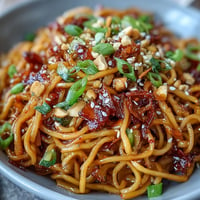
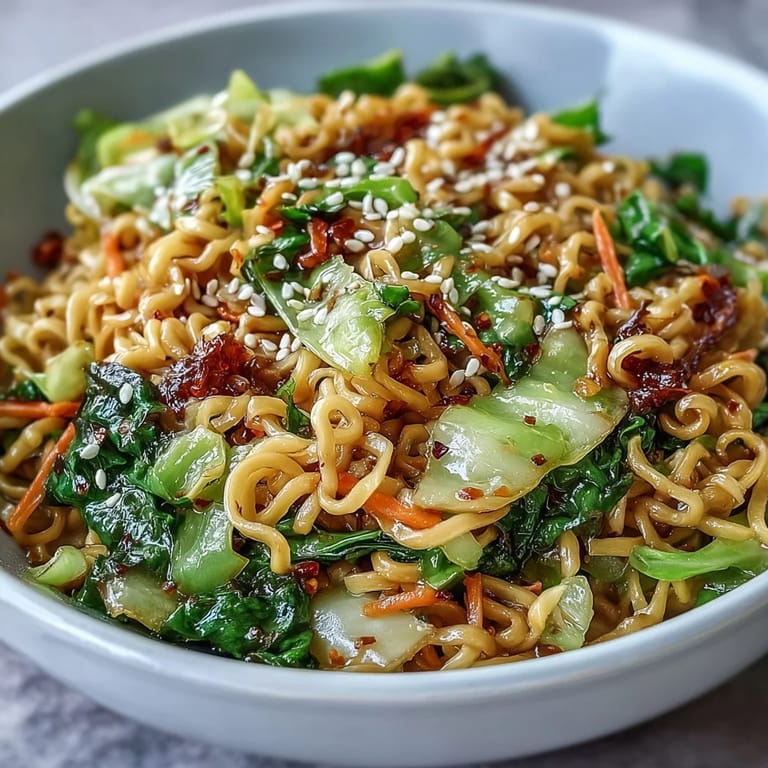
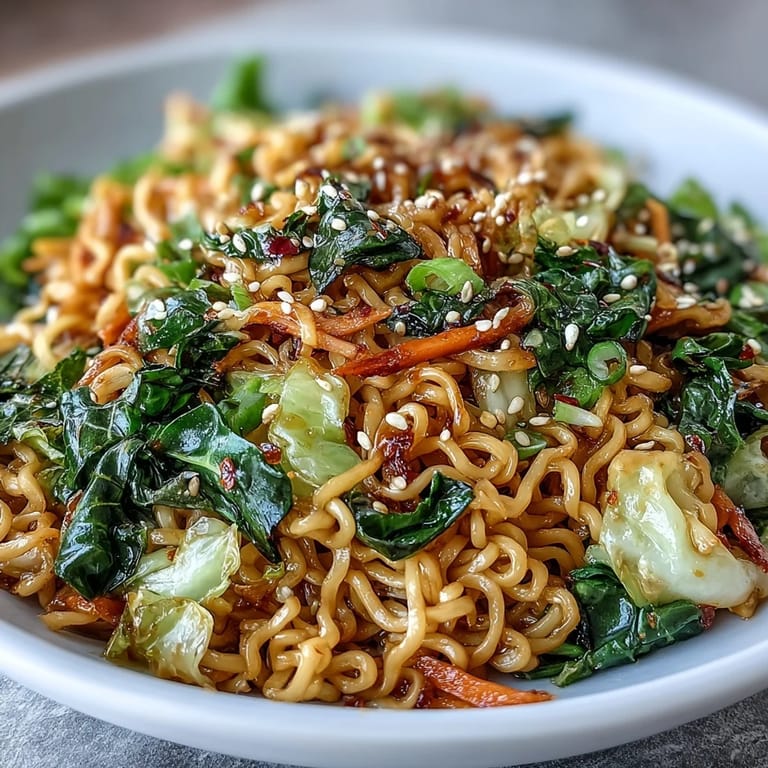
 The steam rising from the wok on a Tuesday night after work, that sharp hiss when cold noodles hit hot oil. I threw this together one evening when the fridge was nearly empty, just a sad wedge of cabbage and a forgotten pack of ramen shoved in the back of the pantry. What started as desperation cooking turned into something I crave constantly now. The cabbage gets these crispy, caramelized edges that taste nothing like the boiled stuff I grew up avoiding.
My neighbor knocked on my door once while I was making this, following the smell of garlic and ginger down the hallway. I ended up doubling the recipe on the spot, and we ate straight from the wok at my kitchen counter, laughing about how something this simple had no business tasting this good. She still texts me every few weeks asking if its ramen night.
Ingredients
- Green cabbage: Slice it thin so it cooks fast and gets those crispy browned bits, the thicker pieces just steam and you lose all the texture.
- Carrot: Julienne gives you those perfect little matchsticks that cook at the same rate as the cabbage and add a pop of color.
- Scallions: Keep the whites and greens separate, the whites go in early for sweetness, the greens stay bright and sharp as garnish.
- Garlic and ginger: Fresh is everything here, the jarred stuff just doesnt bloom the same way in hot oil.
- Instant ramen noodles: Toss those seasoning packets, you are making your own sauce that actually tastes like food.
- Soy sauce: This is your salt and umami base, use low sodium if you are worried about oversalting.
- Oyster sauce: Adds a deep savory sweetness, swap for mushroom sauce if you want to keep it vegan.
- Toasted sesame oil: A little goes a long way, this is what makes everything smell like your favorite noodle shop.
- Rice vinegar: Cuts through the richness and wakes up all the other flavors.
- Sugar: Just a pinch to balance the salty and sour, you wont taste sweetness but you will notice if its missing.
- Chili flakes: Optional but I always add them, that little tingle on your tongue makes you keep going back for more bites.
- Vegetable oil: You need something neutral that can take high heat without smoking out your kitchen.
Tired of Takeout? 🥡
Get 10 meals you can make faster than delivery arrives. Seriously.
One email. No spam. Unsubscribe anytime.
Instructions
- Boil the noodles:
- Get your water rolling and cook the ramen just until the blocks break apart, maybe a minute less than the package says. Drain them well and set aside, they will finish cooking in the wok later.
- Mix your sauce:
- Whisk everything together in a small bowl so its ready to go. Once you start stir frying, things move fast and you dont want to be measuring while your garlic burns.
- Bloom the aromatics:
- Heat your oil until it shimmers, then add the garlic, ginger, and white parts of the scallions. Stir constantly for about a minute until your kitchen smells amazing and the garlic just starts to turn golden.
- Fry the vegetables:
- Toss in the cabbage and carrot, then leave them alone for a minute before stirring. Let them get some color on the bottom, that caramelization is where all the flavor lives.
- Toss with noodles and sauce:
- Add your cooked noodles and pour the sauce over everything. Use tongs or two spatulas to toss it all together, making sure every strand gets coated.
- Finish and serve:
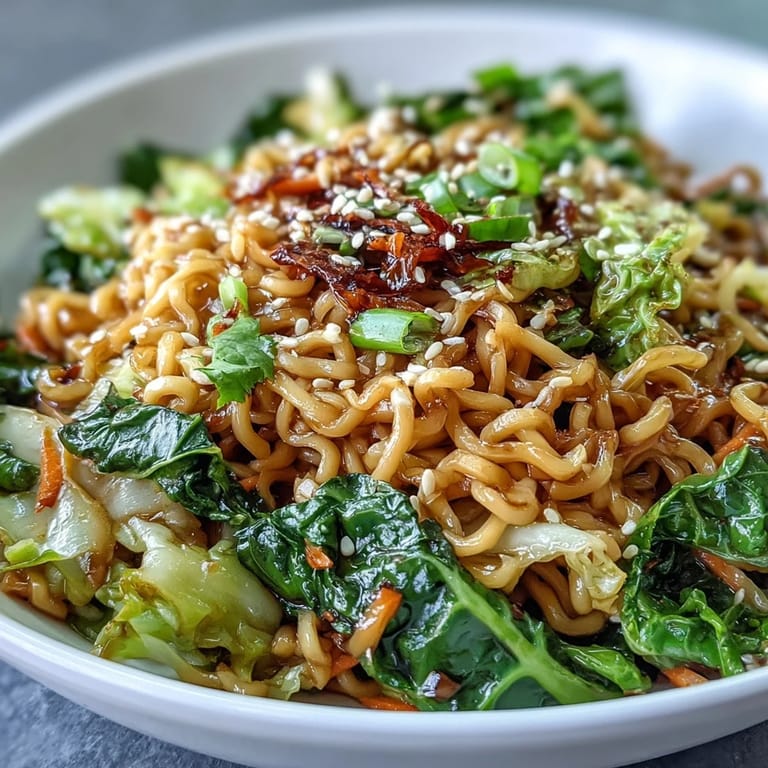
- Pull it off the heat while everything still has some bite. Scatter the green scallions on top and eat it straight away while its steaming hot.
 Pin to Board
 There was a night last winter when the power went out and I made this on a camping stove by headlamp, standing in my cold kitchen. My partner held the flashlight while I stir fried in the dark, both of us laughing at the absurdity. When we finally sat down to eat, the noodles tasted like an adventure, proof that good food does not need perfect conditions.
Making It Your Own
This recipe is more of a template than a rule. I have thrown in whatever vegetables were wilting in the crisper drawer, from bell peppers to snap peas to zucchini, and it always works as long as you cut everything the same size. A fried egg on top turns it into breakfast, and crispy tofu makes it filling enough for meal prep. Sometimes I double the sauce and keep extra in a jar for quick weeknight stir fries.
The Secret to Great Texture
The difference between okay stir fry and great stir fry is heat. Your pan needs to be hot enough that everything sizzles when it hits the surface, but not so hot that the garlic turns black in three seconds. I learned this after months of soggy vegetables, finally realizing my stove was never cranked high enough. Listen for that constant sizzle and adjust your heat to keep it going.
Storage and Leftovers
This keeps in the fridge for about three days in an airtight container, though the noodles soak up the sauce and soften as they sit. Reheating in a hot skillet with a splash of water brings back some of the texture, way better than the microwave which turns everything to mush. I actually like the leftovers cold sometimes, straight from the container at midnight when I am too tired to cook again.
- Store in a glass container to avoid staining from the soy sauce.
- Add a squeeze of lime or fresh herbs when reheating to wake up the flavors.
- Double the batch and pack it for lunch, it travels well and tastes good at room temperature.
 Pin to Board
 This dish taught me that fancy ingredients do not make good food, attention does. I hope it becomes one of those recipes you make without thinking, the kind that saves you on busy nights and tastes like home.
Common Questions
- → Can I use fresh noodles instead of instant ramen?
Yes, fresh Asian noodles work wonderfully. Cook according to package directions and proceed with the stir-fry as directed.
- → How do I make this dish vegan?
Replace oyster sauce with mushroom sauce or hoisin sauce, and ensure all other ingredients are plant-based. The dish remains just as flavorful.
- → What vegetables can I add or substitute?
Bell peppers, snap peas, mushrooms, bok choy, or broccoli all work well. Add them when stir-frying the cabbage for consistent cooking.
- → How can I add protein to this dish?
Top with a fried egg, scrambled tofu, edamame, or cooked chicken. For integrated protein, stir-fry cubed tofu or sliced chicken before adding vegetables.
- → Can I prepare components ahead of time?
Yes, slice vegetables and mix the sauce up to a day ahead. Store separately in the refrigerator, then cook noodles and stir-fry when ready to serve.
- → How do I store and reheat leftovers?
Store in an airtight container for up to 3 days. Reheat in a skillet over medium heat with a splash of water to restore moisture, or microwave in 30-second intervals.