 Pin to Board
 I still remember the first time I stood in a tiny trattoria in Tuscany, watching the owner arrange an enormous wooden board with such casual confidence—chunks of cheese still bearing the marks of rough breaks, prosciutto draped like silk, bread torn by hand moments before serving. It wasn't fancy, but it felt like the most generous thing I'd ever seen. That moment taught me that the best Italian meals aren't about precision or perfection. They're about abundance, generosity, and the simple joy of eating together. Now whenever I make this farmhouse board, I'm transported back to that countryside kitchen, and I want everyone at my table to feel that same sense of unhurried abundance.
I learned to make this properly when my Italian neighbor, Maria, caught me arranging a board too neatly, too symmetrically. She laughed and said, 'You're thinking like an American. Just tear, pile, scatter—let it look like abundance, like you didn't overthink it.' That simple instruction changed everything. Now when I build these boards for dinner parties, I can see people visibly relax when they approach the table. There's something about the casual generosity of a farmhouse board that makes everyone feel welcome.
Ingredients
- Parmigiano-Reggiano, 200 g broken into chunks: This is the backbone of Italian cheese boards. Breaking it rather than slicing respects its crystalline structure and creates those beautiful irregular pieces that feel authentic. Choose one aged at least 24 months for proper complexity.
- Pecorino Toscano, 200 g in wedges: Sharper and more assertive than Parmigiano, it adds necessary contrast. The creamy paste and salty finish keep the board interesting.
- Taleggio, 150 g in rustic pieces: This washed-rind cheese brings funk and creaminess. Let it sit out 30 minutes before serving so its full aroma and softness emerge.
- Prosciutto di Parma, 150 g loosely piled: Buy it sliced fresh from the butcher counter if possible, never pre-packaged. It dries out quickly, so arrange it last or loosely covered until serving.
- Finocchiona salami, 120 g thickly sliced: This fennel-scented salami is Tuscan tradition itself. The thick slices make a bolder statement than thin ones.
- Coppa, 120 g arranged in rustic folds: The marbling in coppa is gorgeous, and draping it creates visual drama. Its richness balances the sharper cheeses.
- Rustic Italian loaf such as ciabatta, 1 large torn into rough pieces: Don't slice this with a knife. Tear it by hand just before serving so the interior stays tender and the crust stays crispy. Day-old bread actually works beautifully here.
- Castelvetrano olives, 1 cup: Their buttery, almost green-apple flavor is essential. Keep these in their own small bowl so their brine doesn't seep onto the cheeses.
- Sun-dried tomatoes in olive oil, 1 cup drained: The oil they're packed in is liquid gold for drizzling, but drain them well before adding to the board so excess oil doesn't make the bread soggy.
- Marinated artichoke hearts, 1 cup quartered: These add necessary acid and brightness. Quarter them so they feel like part of the landscape, not an afterthought.
- Fresh grapes or figs, halved: The sweetness is crucial for balance. Grapes stay fresher longer, but fresh figs are magic if you can find them. Add them closest to serving time.
- Extra-virgin olive oil, 1/4 cup for drizzling: This is your finishing touch. Use something you actually love drinking, not a cooking oil.
- Fresh rosemary sprigs for garnish: A few sprigs scattered across the board add aroma and visual texture. Don't go overboard—they're decoration, not flavor.
- Coarse sea salt and cracked black pepper to taste: Season the bread pieces lightly before serving. The meats and cheeses are already quite salty.
Tired of Takeout? 🥡
Get 10 meals you can make faster than delivery arrives. Seriously.
One email. No spam. Unsubscribe anytime.
Instructions
- Begin with the cheeses:
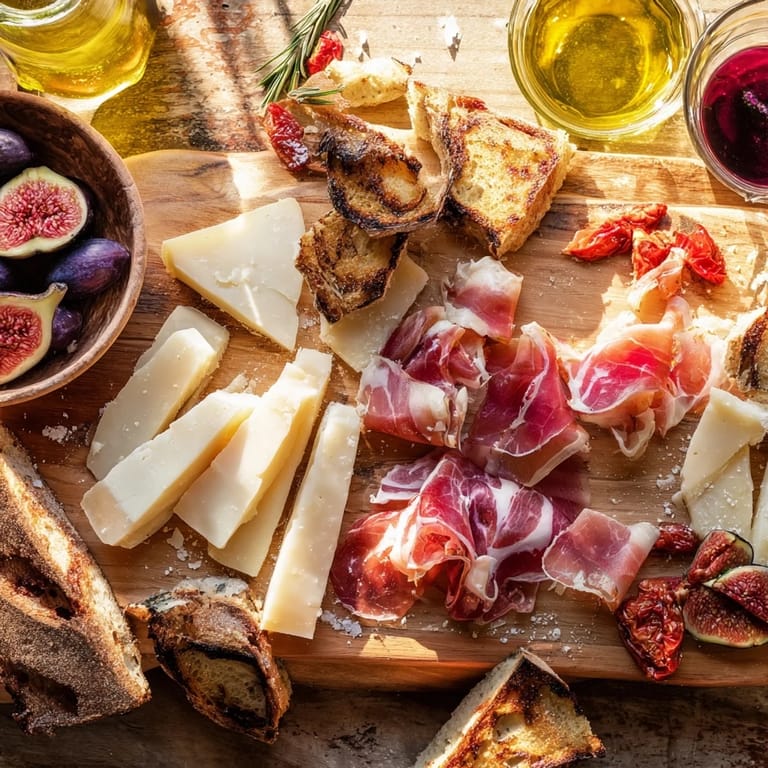
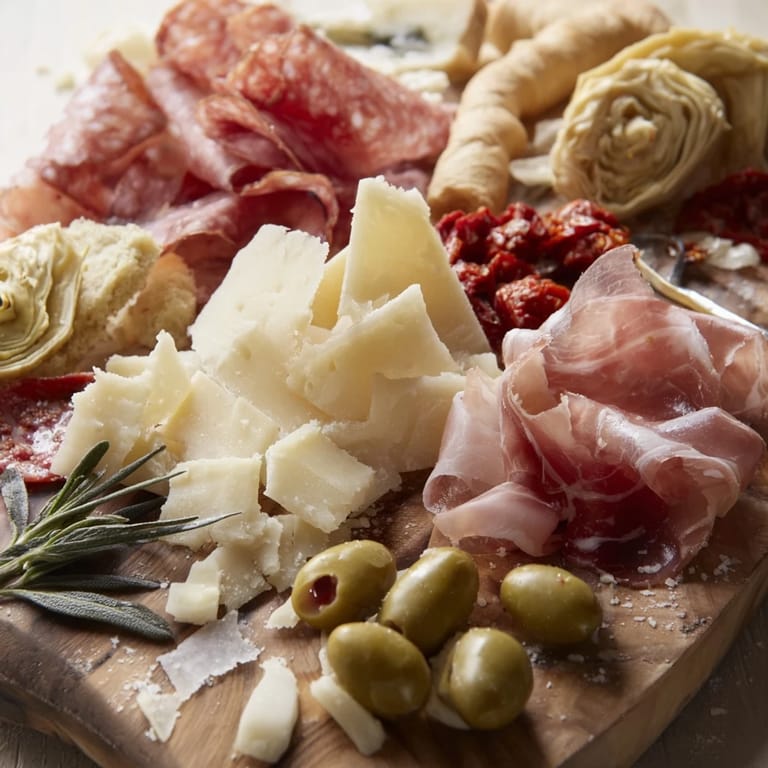
- Take your largest wooden board and start by breaking the Parmigiano-Reggiano into large, irregular chunks—let them shatter unevenly, which creates those beautiful crystalline pieces. Cut the Pecorino into wedges, tear the Taleggio into rustic pieces. The goal is visual interest through varied shapes and sizes. Arrange these across the board with generous spacing, as if you're leaving room for the story to unfold.
- Add the cured meats with drama:
- Now for the prosciutto—this is where you embrace chaos. Loosely pile it rather than laying it flat, letting it bunch and fold naturally. The wrinkles and folds create shadow and depth. Layer the salami slices in generous, slightly overlapping waves. Arrange the coppa in rustic folds, letting it catch the light. These meats should look abundant, almost overflowing.
- Scatter the bread with intention:
- Tear your Italian loaf into rough, uneven pieces—some crusty, some with soft interior exposed. Scatter these across the board like you're creating pockets of texture and places for people to taste the cheese and meat together. Don't arrange them in neat lines. Let them fall naturally into the gaps.
- Build the supporting elements:
- Now add your olives, sun-dried tomatoes, artichoke hearts, and fruit in ample piles between the cheese and meats. These aren't garnish—they're essential flavor notes. Give each element its own visual territory. Small bowls work beautifully for anything with excess liquid.
- Add the finishing layers:
- Drizzle a little of that excellent olive oil over the bread and across some of the cheeses—not everywhere, just strategic touches. Scatter fresh rosemary sprigs across the board for aroma and greenery. Finally, add coarse sea salt and cracked pepper, especially over the bread where it'll be tasted with every bite.
- Serve immediately:
- A farmhouse board is best within 30 minutes of assembly. The cheese softens, the bread begins to dry, and the flavors settle. But that's the point—it should feel alive, present, made for this specific moment with these specific people.
 Pin to Board
 The moment I knew I'd nailed this was watching my father, who is skeptical of anything that isn't a proper cooked meal, stand at the table for nearly two hours just grazing, talking, and reaching for another piece of bread with cheese. He kept saying, 'You know, this is the way eating should be.' That's when I understood—this isn't just a board. It's permission to slow down, to taste deliberately, to let a meal be about company instead of courses.
The Art of Arrangement
There's a reason Italian farmhouse boards look so effortlessly beautiful, and it's not actually effortless. The key is understanding visual balance through contrast rather than symmetry. Group similar colors together and let opposite colors balance them—the pale cream of Taleggio against the deep red of Coppa, the green of olives against the amber of sun-dried tomatoes. Think of it like composing a painting where every element has a reason to be exactly where it is, even if it looks casual. The board should tell a story of Italian regions and seasons, each ingredient representing a place and a moment. When you step back and look at your work, you should feel the same sense of abundance you felt standing in that countryside trattoria.
Wine Pairing and Serving
This board is built for wine in a way that few dishes are. The salted cured meats make you want to drink something with tannin and structure. A robust Chianti brings earthy notes that echo the bread and herbs. Sangiovese, with its bright acidity, cuts through the fat of the cheese and prosciutto beautifully. If you're building this for a larger gathering, a natural wine or even a dry rosé works surprisingly well, offering freshness without competing. Serve everything at cool room temperature—not cold from the fridge, but cool enough to taste clean and alive. Pour the wine about 15 minutes before people start eating, which gives it a chance to open while you're making final adjustments to the board.
Adapting and Building Your Own Version
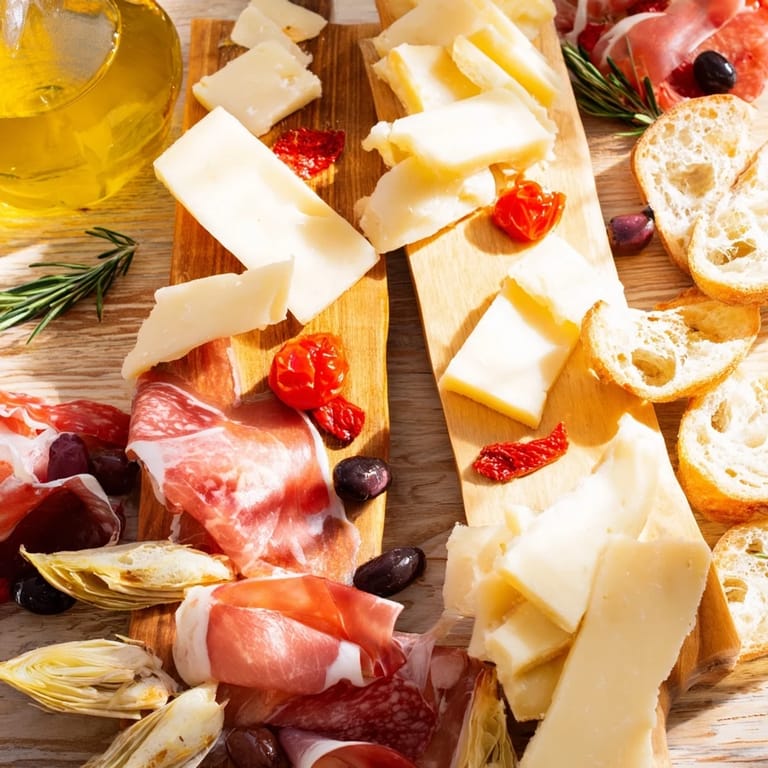
This recipe is a template, not a prescription. The genius of an Italian farmhouse board is that it adapts to what's available in your market and what your guests love. If your cheese counter has a beautiful Asiago or Gorgonzola, use that instead of Pecorino. If you find roasted hazelnuts or marcona almonds, scatter them across the board for texture. Some people love adding pickled vegetables—pickled onions, pickled peppers, even pickled mushrooms—which add brightness and a welcome sharpness. Others include fresh herbs like basil or oregano, or scatter fresh ricotta in a small dish for dipping bread. The structure stays the same: cheeses, cured meats, bread, bright elements, finishing touches. But your version should reflect your neighborhood, your season, and your people.
- Swap cheeses without hesitation—this board celebrates regional Italian cheese, so trust your palate and what excites you.
- Seasonal fruit changes everything: fresh figs in late summer, grapes in fall, pomegranate in winter, strawberries in spring.
- Don't skip the step of removing cheese from the fridge early—this 45-minute step is more important than any ingredient swap.
 Pin to Board
 This farmhouse board is my love letter to the way Italians eat—without ceremony, with generosity, and with complete trust in the goodness of simple, excellent ingredients. Make it for people you want to linger with.
Common Questions
- → What cheeses are used on the farmhouse board?
Parmigiano-Reggiano, Pecorino Toscano, and Taleggio are arranged in rustic chunks and wedges to create texture and flavor variety.
- → Which cured meats complement this board?
Prosciutto di Parma, Finocchiona salami, and Coppa are piled loosely to provide savory layers and a rich taste contrast.
- → How should the bread be prepared?
Tear a large rustic Italian loaf like ciabatta into rough, uneven pieces to maintain a natural, farmhouse feel that’s perfect for scooping and pairing.
- → What accompaniments enhance the flavors?
Castelvetrano olives, sun-dried tomatoes in olive oil, marinated artichoke hearts, fresh grapes or figs, and a drizzle of extra-virgin olive oil add complexity and balance.
- → How is seasoning applied to the board?
Lightly season the assembled board with coarse sea salt and cracked black pepper, then garnish with fresh rosemary sprigs for an aromatic finish.
- → Can I substitute any ingredients?
Yes, cheeses like Gorgonzola or Asiago can replace the originals, and extras such as roasted nuts or pickled vegetables add texture variety.