 Pin to Board
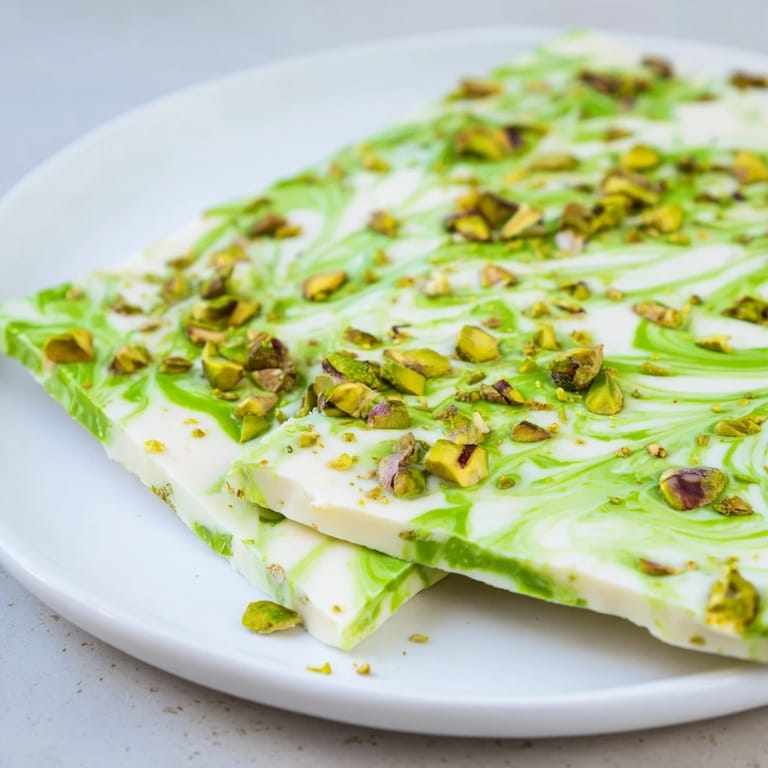
 There's something about making chocolate bark that feels like you're creating edible art rather than just dessert. I stumbled onto this particular combination on a quiet Sunday afternoon, standing in front of my open pantry wondering what to do with a tin of matcha I'd been nervous to use. The white chocolate caught my eye next, and then I remembered a handful of pistachios hiding in the back. What started as an experiment—testing whether these three ingredients could actually work together—became something I now make whenever I want to feel a little fancy without the stress.
I made this for friends who were skeptical about the matcha-and-white-chocolate pairing, and watching their faces when they tasted it—that quick surprise, then satisfaction—made me realize this wasn't just a nice snack, it was a small gift. One friend even asked for the recipe, which almost never happens, and that's when I knew I'd stumbled onto something worth keeping.
Ingredients
- High-quality white chocolate, chopped (300 g): This is where you can't compromise—cheap white chocolate will seize or break when tempered, leaving you with a grainy mess instead of glossy, snappy bark. Look for real cocoa butter in the ingredient list.
- Matcha powder, sifted (2 tsp): Ceremonial or culinary grade matters here; grocery store matcha can taste dusty and bitter, undoing all your work with the chocolate.
- Shelled unsalted pistachios, roughly chopped (60 g): The nuttiness anchors everything and gives you that satisfying crunch that makes people reach for another piece.
- Flaky sea salt (optional): A tiny pinch transforms this from sweet to complex; it's the move that makes people sit up and pay attention.
Tired of Takeout? 🥡
Get 10 meals you can make faster than delivery arrives. Seriously.
One email. No spam. Unsubscribe anytime.
Instructions
- Set up your stage:
- Line your baking tray with parchment paper or a silicone mat—this small step saves you from sticky frustration later and makes breaking the bark into pieces feel effortless.
- Temper the white chocolate carefully:
- Place two-thirds of the chocolate in a heatproof bowl over barely simmering water, stirring gently until smooth and melted. Remove from heat, add the remaining third, and stir until glossy and the temperature sits around 31°C—this is the secret to chocolate that snaps when you bite it instead of feeling greasy on your tongue.
- Spread with intention:
- Pour the tempered chocolate onto your tray and use a spatula to create a rough rectangle about 1 cm thick; imperfect edges are part of the charm here.
- Paint with matcha:
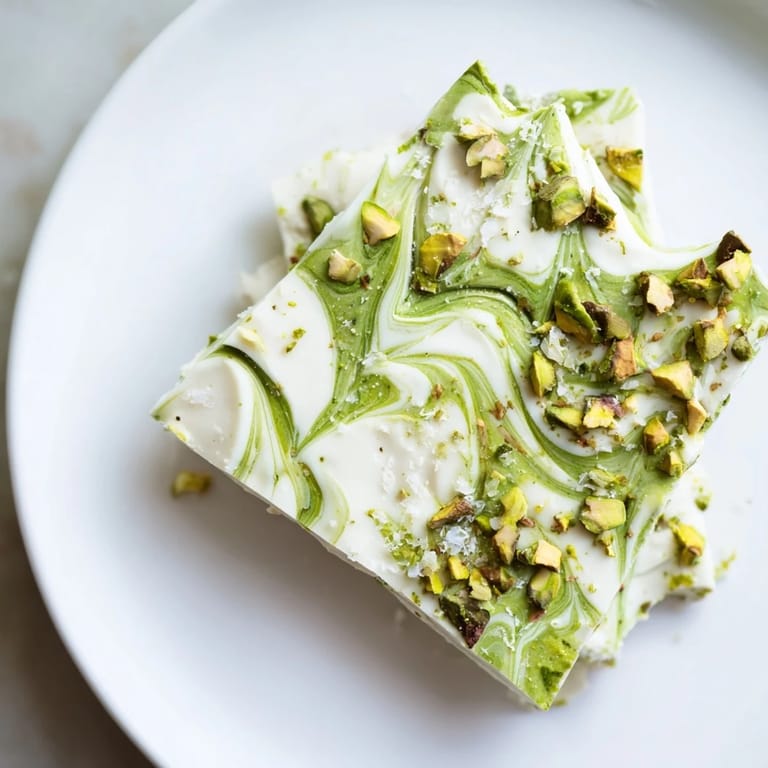
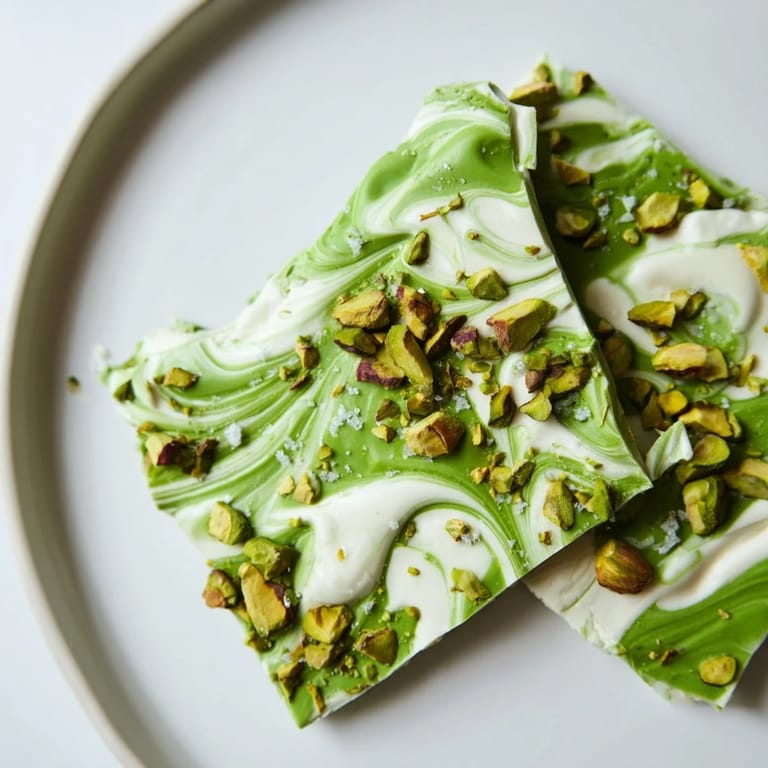
- While the chocolate is still warm, sift matcha powder in small patches across the surface—think of it like watercolor, not total coverage. Use a skewer or toothpick to swirl the powder into patterns that make you happy.
- Crown with pistachios:
- Sprinkle the chopped pistachios evenly over the top, add a whisper of flaky sea salt if you're feeling it, then gently press everything down so it adheres to the chocolate.
- Let it rest:
- Allow the chocolate to set at cool room temperature or refrigerate for 20-30 minutes until firm to the touch.
- Break and enjoy:
- Once set, break or cut into pieces and store in an airtight container in a cool, dry place where it will keep for several weeks (though it rarely lasts that long).
 Pin to Board
 The moment it's fully set and you crack off the first piece, hearing that clean snap as the chocolate breaks cleanly, there's a little rush of satisfaction. This bark became my go-to gift for people I wanted to impress without seeming like I'd tried too hard, which is its own kind of magic.
On Tempering and Why It Matters
The first time I skipped the tempering step, thinking it was just fancy technique, I ended up with chocolate that looked dull and felt chalky on my tongue. Tempered chocolate is what gives you that snap and shine—it's the difference between homemade bark that looks store-bought beautiful and chocolate that looks like it melted in the sun. The double boiler method keeps things gentle and precise, which is exactly what white chocolate needs to cooperate.
Playing With Flavor Combinations
Once you've made this once, you'll start seeing possibilities everywhere. I've swapped the pistachios for chopped hazelnuts, tried dried cranberries for tartness, and even experimented with a touch of cardamom sifted along with the matcha. The framework stays the same—tempered white chocolate, a swirl of something earthy, a topping for texture—but the variations are where you get to play and make it your own.
Serving and Storage Secrets
This bark shines when it's served at room temperature on a simple plate, maybe with a cup of green tea or a glass of something sparkling alongside. It's the kind of dessert that doesn't need ceremony, just the right moment.
- Keep it in an airtight container in a cool, dry spot away from direct sunlight, and it stays crisp and beautiful for three weeks, though you'll probably finish it faster.
- If you live somewhere warm, refrigerating it until just before serving keeps the chocolate snappy and prevents any bloom or dullness from humidity.
- Break it into pieces ahead of time and layer them between parchment in the storage container so they don't stick together.
 Pin to Board
 This bark has become my favorite proof that simple ingredients and a little care create something that tastes like you spent all day thinking about it. Make it once, and it'll find its way back onto your table whenever you want to feel a little bit special.
Common Questions
- → How do I temper white chocolate properly?
Melt two-thirds of the chopped white chocolate over simmering water without exceeding 31°C (88°F). Remove from heat, add the remaining chocolate, and stir until glossy and fully melted.
- → Can I substitute pistachios with other nuts?
Yes, almonds, hazelnuts, or dried cranberries can be used as alternatives for different flavors and textures.
- → What type of matcha is best for this dish?
Use high-quality ceremonial or culinary grade matcha for vivid color and balanced earthiness.
- → How should I store the finished bark?
Store in an airtight container in a cool, dry place to maintain freshness and crunch.
- → Is flaky sea salt necessary?
Flaky sea salt is optional but enhances flavor contrast by bringing out the sweetness and nuttiness.