 Pin to Board
 I discovered this dish during a misty morning hike through the Cascade foothills, where I was mesmerized by the forest floor—a living tapestry of mushrooms, moss, and wild berries. That evening, I recreated what I'd seen on a plate, and it felt like bringing the forest indoors. Now, whenever I make this, I'm transported back to that peaceful moment among the towering firs and damp earth.
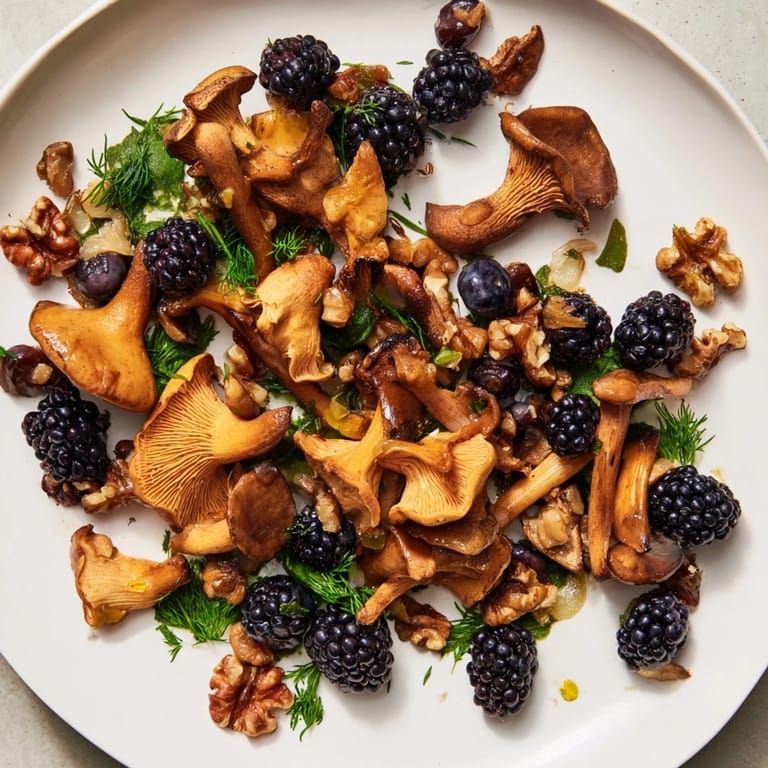
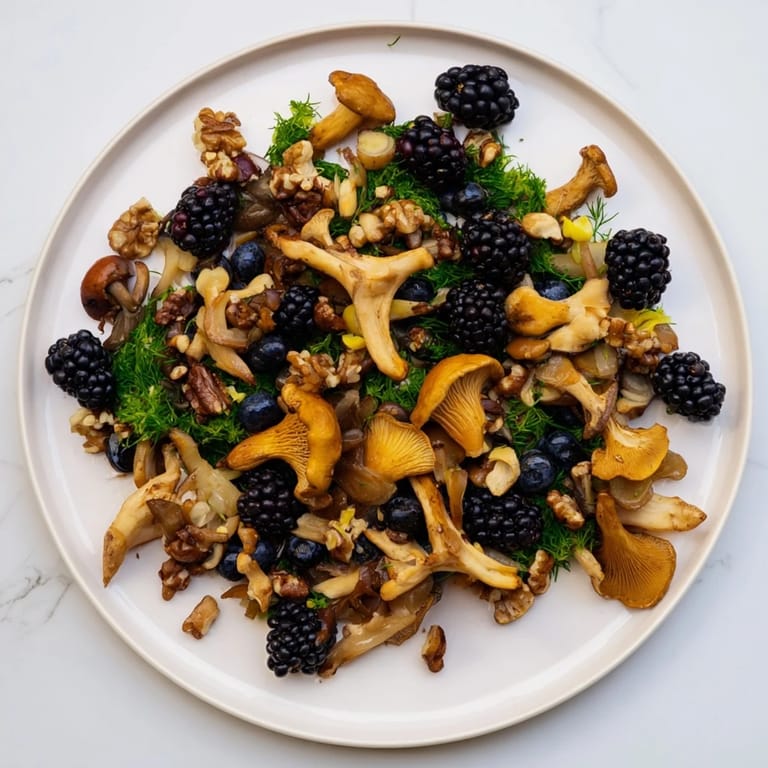
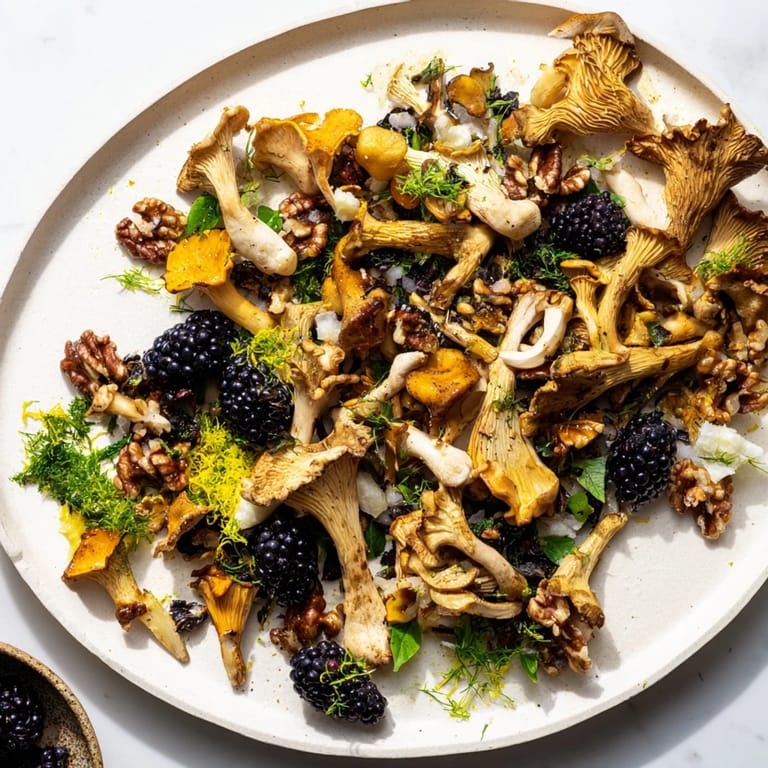
I'll never forget making this for my sister's dinner party last autumn. She brought friends who were skeptical about a vegetarian starter, but when I set down that plate with its clusters of golden mushrooms and jewel-like berries nestled in vibrant herb moss, the whole table went quiet. They weren't just eating—they were experiencing something that felt more like nature than food.
Ingredients
- Mixed wild mushrooms (chanterelle, shiitake, oyster), 200 g: These earthy varieties bring depth and umami richness. Wild mushrooms have a meatier texture than button varieties, which is key to making this dish feel substantial. Look for them at farmers markets in fall—they're at their peak then.
- Olive oil and unsalted butter, 1 tbsp each: The combination gives the mushrooms a golden, nutty crust while keeping them tender inside. Butter adds richness that regular oil alone can't achieve.
- Garlic clove, minced, 1: Just enough to whisper in the background without overpowering the delicate mushroom flavors. Don't skip this—it ties everything together.
- Toasted hazelnuts and walnuts, 50 g and 30 g: Toasting your own nuts transforms them from ordinary to extraordinary. The crunch and earthiness ground the dish and add textural contrast.
- Fresh blackberries and blueberries, 80 g and 60 g: The berries aren't just pretty—they add bright, tart notes that cut through the richness of the nuts and mushrooms. Choose berries at their firmest for best presentation.
- Fresh flat-leaf parsley, dill, chervil, and chives, as specified: These herbs are the soul of the dish. Finely chopping them and mixing with oil creates an herb moss that tastes fresh and vibrant. Don't use dried herbs here—you need that fresh, grassy intensity.
- Lemon zest, 1 small lemon: A pinch of brightness that awakens all the other flavors. It's subtle but essential.
Tired of Takeout? 🥡
Get 10 meals you can make faster than delivery arrives. Seriously.
One email. No spam. Unsubscribe anytime.
Instructions
- Clean and slice your mushrooms:
- Gently wipe each mushroom with a damp cloth to remove forest debris. Slice them into pieces about a quarter-inch thick—thick enough to hold their shape, thin enough to cook quickly and evenly. You want them to feel substantial in your mouth.
- Build a golden crust:
- Heat your skillet over medium heat and let the oil and butter foam together until fragrant. Add that single minced garlic clove—listen for it to sizzle gently, and count to 30 before adding the mushrooms. This brief moment lets the garlic perfume the cooking fat. Now add your mushroom slices in a single layer. Don't stir them constantly; let them sit for a minute or two so they can develop that golden-brown exterior that tastes almost caramelized. Stir occasionally until they're tender and golden, about 6 to 8 minutes. Season generously with salt and pepper, then transfer to a plate to cool.
- Create your herb moss:
- Finely chop all your fresh herbs until they're almost paste-like. Place them in a small bowl and fold in the olive oil, lemon zest, and a pinch of flaky sea salt. The mixture should look vibrant and clumped together, like moss you'd find on a forest floor. Taste it—this is your chance to adjust the salt and lemon. It should taste bright and alive.
- Toast your nuts:
- Spread hazelnuts and walnuts on a baking tray and toast at 180°C (350°F) for 8 to 10 minutes. You'll know they're ready when the kitchen fills with a warm, toasty aroma and the nuts have deepened in color. Let them cool for a few minutes, then coarsely chop them. This step transforms plain nuts into something with real character and crunch.
- Arrange with intention:
- This is where your dish becomes art. On a large platter or individual plates, create dense, organic clusters—scatter mushrooms, then nuts, then berries in little groups, as if they've naturally fallen to forest floor. Don't overthink it; nature isn't symmetrical, and neither should your plate. Generously spoon the herb moss around and between these clusters, filling the spaces like real moss. Top with edible flowers or microgreens if you have them.
- Serve and savor:
- Bring everything to the table at room temperature. This is a dish meant to be admired before it's eaten, so give your guests that moment.
 Pin to Board
 I remember my mother tasting this dish and closing her eyes. She said it reminded her of walking through the woods as a child, before everything became so complicated. That's when I realized this wasn't just about plating or technique—it was about capturing a feeling of simplicity and wonder on a plate.
Choosing Your Mushrooms Wisely
The three mushrooms in this recipe each bring something different to the table. Chanterelles have a delicate, fruity edge. Shiitakes offer deep umami and a firm bite. Oyster mushrooms are tender and mild, bridging the other two. Together, they create complexity without any single flavor dominating. If you can't find all three, choose any two—the dish will still be stunning. The key is using something labeled wild rather than common button mushrooms, which lack the earthiness this dish needs to shine.
The Power of Room Temperature Service
Serving this dish at room temperature rather than hot changes everything. The mushrooms' flavors become more nuanced, the berries' tartness more pronounced, and the herb moss's delicate aromatics aren't burned away by heat. It's also practical—you can plate everything just before guests arrive and not worry about things getting cold.
Making It Your Own
This dish is a canvas for your own forest floor. I've added roasted root vegetables like beets and parsnips, pickled shallots for tang, even crispy chickpeas for extra substance. The structure stays the same—clusters of textured elements, herb moss filling the gaps—but the ingredients can shift with seasons and what's in your pantry.
- Substitute pecans or pine nuts for hazelnuts and walnuts if you prefer—they'll shift the flavor profile but maintain that earthy character
- For a vegan version, simply omit the butter or swap it for good quality plant-based butter; the dish remains stunning
- Try pairing it with a light Pinot Noir or crisp dry cider to elevate the experience
 Pin to Board
 This dish reminds me why I love cooking—it's a moment where nature, memory, and the simple act of arranging beautiful ingredients come together. Serve it with joy.
Common Questions
- → What types of mushrooms are best for this dish?
Mixed wild mushrooms like chanterelle, shiitake, and oyster provide a rich, earthy flavor and varied textures.
- → How should the nuts be prepared?
Toast hazelnuts and walnuts in a preheated oven until golden and fragrant, then roughly chop to add crunch and warmth.
- → What is herb moss and how is it made?
Herb moss is a finely chopped mix of fresh parsley, dill, chervil or tarragon, and chives tossed with olive oil, lemon zest, and flaky sea salt for vibrant, fresh notes.
- → Can this dish be served warm or cold?
It is best served at room temperature, allowing the flavors of the sautéed mushrooms and fresh elements to blend harmoniously.
- → Are there any suitable substitutions for nuts?
To vary earthy flavors, pecans or pine nuts can be used instead of hazelnuts and walnuts.
- → What drink pairings complement this dish?
Light Pinot Noir or a crisp dry cider pairs well with the earthy and fruity components.