 Pin to Board
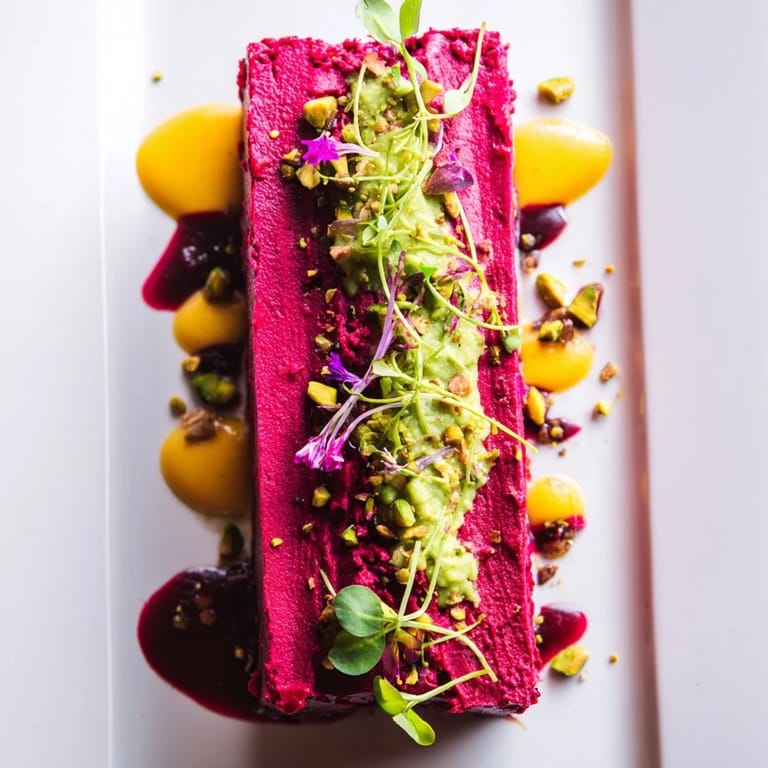
 I was flipping through a modernist cookbook at a friend's apartment when I saw a photograph that stopped me cold—a single, impossibly vibrant stripe of purées laid across a white board like abstract art you could actually eat. Something about its confidence, that bold minimalism, made me want to try it immediately. I'd never attempted anything quite so deliberately theatrical in my own kitchen, but there was something magnetic about the challenge. That evening, I started gathering beets, carrots, and avocados, wondering if I could pull off something that looked effortless and felt intentional all at once.
I made this for my sister's book club dinner, and I remember standing in my kitchen at 6 p.m., spatula in hand, trying to get the beet stripe perfectly centered while the clock ticked toward her arrival. When I finally set the board on the table, there was this moment of quiet where everyone just looked at it before anyone touched anything. That pause—that hesitation before diving in—felt like I'd actually accomplished something. By the end of the evening, one guest was asking if I did this professionally, and another was already mentally redesigning their dinner party menu.
Ingredients
- Medium beets: Choose ones roughly the same size so they roast evenly; the deep earthiness becomes almost sweet when roasted, which is why you want them tender enough to fall apart with a fork.
- Large carrots: Fresh carrots have a natural sweetness that intensifies through cooking, and steaming keeps them lighter than roasting, which matters when you're layering delicate flavors.
- Ripe avocado: Let it sit at room temperature for a few minutes before mashing; cold avocado resists smoothness and creates little lumps that mess with the silky texture you're after.
- Greek yogurt: It adds creaminess without making the avocado slick, and the tang it brings is subtle but noticeable against the earthiness of the beet.
- Fresh ginger: Grated, not minced, so it distributes evenly through the carrot purée; it won't overpower anything but adds a quiet warmth that wakes up the whole stripe.
- Microgreens and edible flowers: These aren't just decoration—they're texture and a whisper of freshness that cuts through the richness of the purées.
Tired of Takeout? 🥡
Get 10 meals you can make faster than delivery arrives. Seriously.
One email. No spam. Unsubscribe anytime.
Instructions
- Roast the beets until they soften:
- Toss diced beets with olive oil and sea salt, spread them on a baking tray in a single layer, and slide them into a 400°F oven for 30–35 minutes. You'll know they're ready when a fork glides through without resistance and the edges have darkened slightly.
- Gently cook the carrots:
- While beets roast, steam or boil sliced carrots until they're completely soft, about 15–20 minutes. They should break apart easily when pressed; if there's any resistance, give them another few minutes.
- Blend the beet purée into silk:
- Place roasted beets and lemon juice in a blender and pulse to combine, then blend on high until it's completely smooth—no flecks, no texture. If it's too thick, add water a splash at a time until you reach a spreadable consistency.
- Transform carrots into velvet:
- Blend cooked carrots with grated ginger, butter, and salt until absolutely smooth. The butter adds a subtle richness that keeps the purée from feeling lean or one-dimensional.
- Make the avocado cream:
- In a bowl, mash the avocado with Greek yogurt, lime juice, and a pinch of salt, stirring until it's silky and holds its shape when scooped. If you want precision, transfer it to a piping bag; if you prefer loose, artistic strokes, keep it in the bowl.
- Build the stripe with intention:
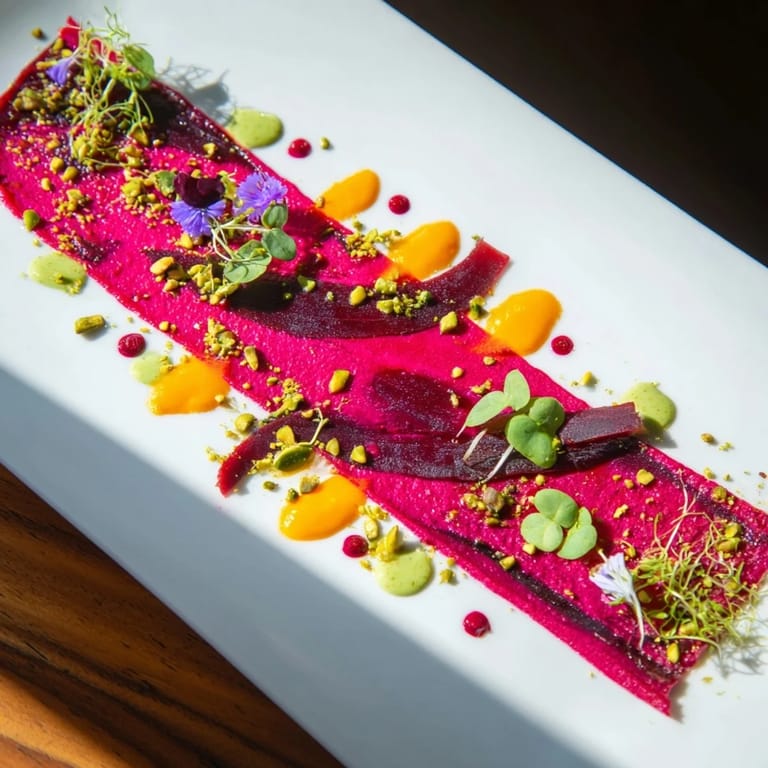
- On a clean board, use an offset spatula or the back of a large spoon to spread a thick line of beet purée down the center, about 3 inches wide. Press gently and draw your tool in one confident motion; hesitation shows.
- Layer the other purées artfully:
- Pipe or spread the carrot purée along the beet stripe in whatever pattern feels right—thin lines, thick bands, or scattered dots. Follow with the avocado cream, filling gaps and adding contrast.
- Garnish with intention:
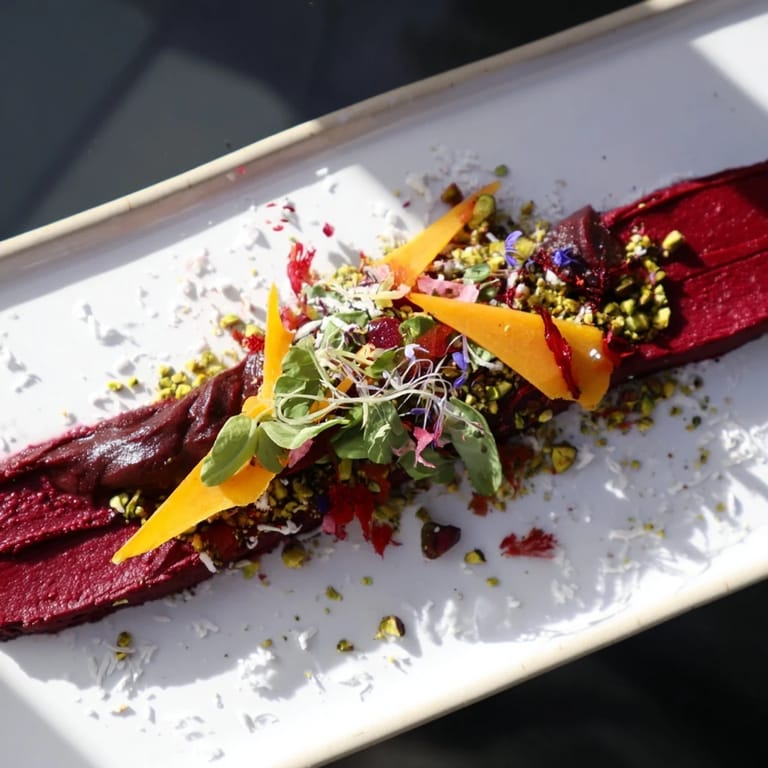
- Scatter microgreens, edible flowers, crushed pistachios, and a pinch of flaky sea salt across the entire stripe. The garnish isn't afterthought; it's the final note of the dish.
- Serve immediately:
- Bring the board to the table while everything is still at its best, and let guests scoop directly from the stripe onto their plates or into their hands.
 Pin to Board
 The most surprising part happened when I realized this dish isn't really about perfection—it's about confidence. My second attempt had a slightly crooked stripe and uneven layering, but my friends said it looked better than my first, more careful try. Turns out there's something honest about a dish that looks handmade, where the artist's hand is visible. That realization changed how I cook now.
Color as Flavor
I learned that when you commit to a single-stripe presentation, the colors become part of the conversation about what you're eating. The deep magenta of the beet purée isn't just pretty; it signals earthiness and sweetness. The orange carrot tells you there's warmth and subtle spice. The pale cream of avocado promises richness and mild, almost grassy notes. Before your guests even taste anything, their eyes are already guiding them through the flavor journey. This is why the colors matter as much as the taste—they're flavor translated into visual language.
Playing with Variations
After making this a few times, I started experimenting with different purées, and the concept stays just as striking. Sweet potato purée creates an almost peachy stripe with a deeper, more caramel-like flavor. Pea purée is bright and almost shocking in its green intensity, with a fresher, more herbaceous taste. Roasted red pepper adds smokiness, and roasted squash brings butteriness that rounds out any other purée you pair it with. The magic isn't locked into these three specific vegetables—it's in the principle of bold, single-stripe simplicity. Once you understand that, you start seeing possibilities everywhere.
Making It Your Own
The best part about this dish is how much room it gives you to play while keeping the core concept intact. You can adjust the garnishes based on what's in your garden or what you find at the market—toasted breadcrumbs, crispy shallots, pomegranate seeds, or even candied citrus peel all add their own texture and personality. The purées can be made hours in advance, which means most of the work happens quietly before anyone arrives. The actual plating feels theatrical but takes maybe two minutes once you're comfortable with it.
- Make extra avocado cream and keep it in a squeeze bottle in the fridge for whenever you want a luxe addition to other meals.
- If any of your purées break or separate, blend them again with a touch of cream or oil; they'll come back together.
- Serve this with something crisp and mineral-driven, like a Sauvignon Blanc or a dry sparkling wine, to cut through the richness.
 Pin to Board
 This dish taught me that sometimes the most impressive things aren't complicated—they're just intentional. There's something deeply satisfying about showing up to the table with something that looks like you spent hours on it when you actually just understood the idea and executed it with care.
Common Questions
- → How do I achieve a smooth purée texture?
Ensure vegetables are well cooked until soft, then blend thoroughly in a food processor, adding a bit of water or juice to reach a silky consistency.
- → Can the butter in the carrot purée be substituted?
Yes, use olive oil or a plant-based butter alternative to keep the dish vegan while maintaining richness.
- → What is the best way to plate the purées?
Spread the beet purée in a thick, even stripe on a clean board, then layer carrot-ginger purée and avocado cream with precision using a piping bag or spoon.
- → Are there suggested garnishes for texture and flavor?
Microgreens, edible flowers, crushed pistachios, and flaky sea salt enhance both visual appeal and taste with fresh and crunchy notes.
- → Can other vegetables be used?
Yes, other colorful purées like sweet potato, pea, or squash work well for varied textures and flavors.