 Pin to Board
 I still remember the first time I assembled a proper Mediterranean mezza platter at home—it was inspired by a late afternoon spent at a small taverna in Athens, where the owner casually arranged an incredible spread of dips, cheeses, and vegetables right before our eyes. He made it look so effortless, tossing olives into a wooden bowl, drizzling olive oil with the confidence of someone who'd done it a thousand times. I came home determined to recreate that magic, and what I discovered was that a mezza platter isn't really about precision or fancy techniques. It's about abundance, color, and the joy of sharing food that tastes like the Mediterranean itself—without spending hours in the kitchen.
I'll never forget the first dinner party where I served this platter to friends who'd been traveling through the Mediterranean that summer. As soon as I set it down, the table went quiet—not in a disappointed way, but in that moment of pure visual appreciation. Someone said it looked like a still life painting, and we all just started reaching in, talking over each other, discovering flavor combinations as we went. That night taught me something important: sometimes the most memorable meals aren't the most complicated ones.
Ingredients
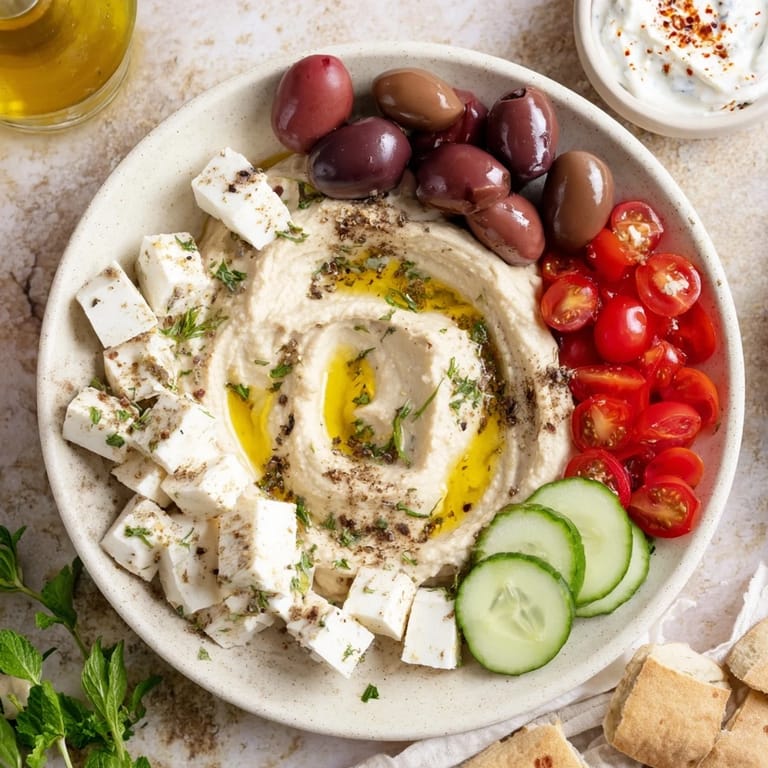
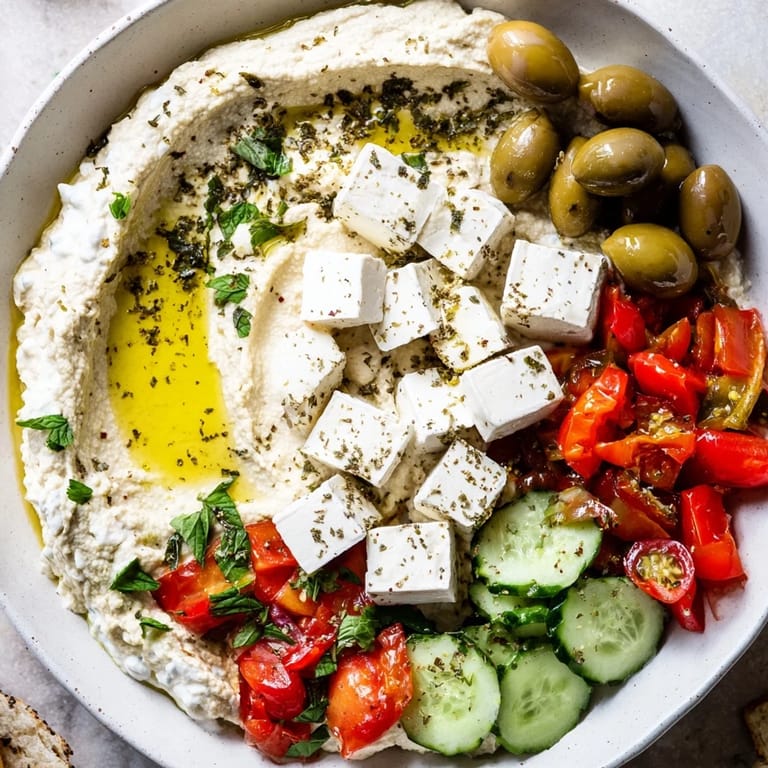
- Classic hummus: The creamy foundation of any respectable mezza platter. Buy a really good one if you're short on time—there's no shame in it, and it frees you up to focus on the beautiful arrangement itself
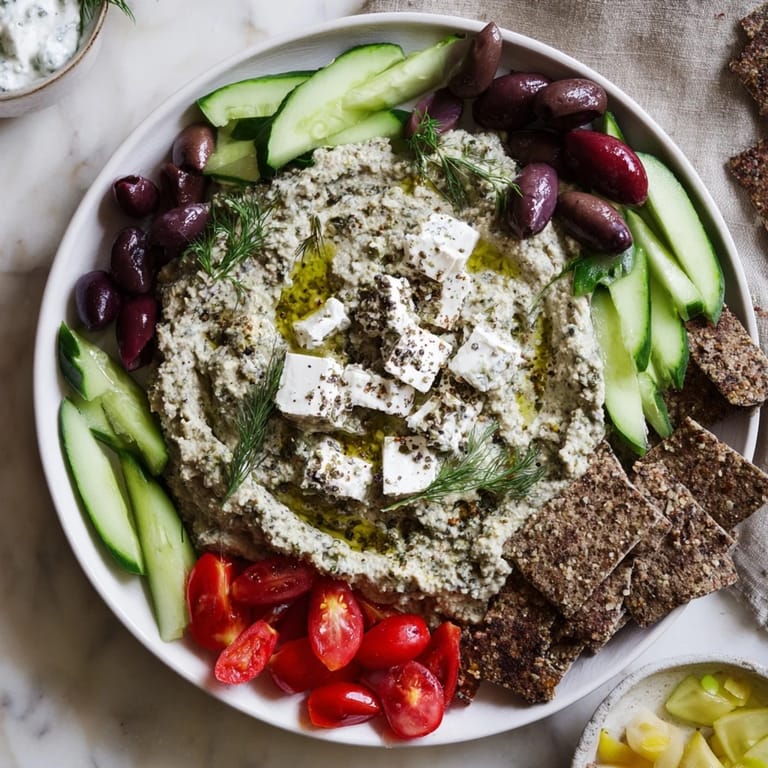
- Baba ganoush: This smoky eggplant dip brings an earthy depth that hummus can't match on its own. The two together create a beautiful color contrast too
- Tzatziki: Cool, herbaceous, and slightly tangy—it's the refreshing counterpoint that makes people reach for it again and again
- Feta cheese: Cut into rustic, irregular cubes rather than perfect squares. Those rough edges catch the light and look more inviting
- Cherry tomatoes: Halve them to expose their jewel-like centers. The sweetness balances the saltiness of the olives and feta beautifully
- Cucumber: Slice into rounds that are thin enough to be delicate but thick enough to hold up under the weight of toppings. These provide a cooling, crisp element
- Assorted olives: The mix of varieties—Kalamata's dark earthiness, green olives' briny punch, Castelvetrano's buttery sweetness—creates complexity in every bite
- Roasted red bell pepper: If you can't find roasted ones, roast your own or use the jarred version. The sweet, slightly smoky flavor bridges the gap between the vegetable and dip elements
- Red onion: Slice it paper-thin and let it sit for a few minutes before serving. It mellows slightly and becomes beautifully translucent
- Pita breads: Cut into triangles and warm them gently in a dry pan just before serving—they're infinitely better warm than cold from the package
- Fresh parsley and mint: These aren't just garnish; they're flavor. The herbs wake everything up and add that just-picked Mediterranean garden feeling
- Extra-virgin olive oil: Use one you actually like drinking. The drizzle at the end isn't just decorative—it's essential flavor
- Sumac or zaatar: Optional but transformative. That lemony tartness from sumac or the herbaceous warmth of zaatar adds a professional finishing touch
Tired of Takeout? 🥡
Get 10 meals you can make faster than delivery arrives. Seriously.
One email. No spam. Unsubscribe anytime.
Instructions
- Start with the foundation:
- Find a large platter—something with some space to work with, ideally something with gentle edges or organic shape rather than aggressively modern. Using small bowls for the dips, arrange your hummus, baba ganoush, and tzatziki in three distinct areas, spacing them out so there's room to build around them. Think of them as anchors rather than centerpieces.
- Create your cheese cluster:
- Cube your feta into irregular, rustic pieces and gather them in one small area. Don't spread them out evenly—they look more appealing clustered together, almost like they belong to each other.
- Build with vegetables in organic mounds:
- This is where arrangement becomes intuitive rather than technical. Group your halved cherry tomatoes together, create another mound of cucumber rounds, another of olives. These loose clusters feel Mediterranean rather than fussy. Let them touch and overlap naturally. Tuck the roasted pepper slices and red onion into the gaps, creating visual flow and balance.
- Position your bread:
- Warm your pita triangles in a dry pan for just a minute or two on each side—they should be flexible but warm. Either pile them in one area of the platter or fan them around the edge. Warm bread smells incredible and signals to guests that this is fresh and ready.
- Scatter the extras if using them:
- If you've chosen to include artichoke hearts, dolmas, or toasted pine nuts, scatter them in small clusters in any gaps. These add texture and surprise to each bite.
- Anoint with olive oil:
- Drizzle your best extra-virgin olive oil generously over the dips, across the cheese, and scattered over the vegetables. Don't be shy—this is the moment that makes everything shine and pulls all the flavors together.
- Season and finish:
- Scatter your fresh parsley and torn mint leaves across the entire platter. Dust with sumac or zaatar if using. Finish with sea salt and freshly ground black pepper scattered over everything. Step back and look at it—you've created something that looks like it took much longer than it actually did.
- Serve immediately:
- Bring it to the table while everything is still at its best. Let guests reach in, build their own combinations, and discover their favorite flavor pairings.
 Pin to Board
 There's a moment right before a dinner party when you're still arranging the platter and a family member comes in, sees it, and just breathes out 'wow'—that moment is the real reward. It's when you realize that simple, thoughtful food arranged with care looks exactly like something people want to gather around. That moment is why I keep coming back to this platter.
Building Your Perfect Platter
The secret to an impressive mezza platter isn't about exotic ingredients or complicated techniques—it's about understanding contrast and balance. Every texture on your platter should have a reason for being there. The creamy dips need the crisp vegetables. The soft cheese needs the briny olives. The whole thing needs the warm, slightly charred bread. When you think about it this way, even improvisation becomes intentional. If you don't have roasted red peppers, sun-dried tomatoes work beautifully. No tzatziki? Whipped labneh is just as delicious. The framework stays the same, but your personal touches make it uniquely yours.
Timing and Preparation Strategy
Because this platter comes together so quickly, you can actually prepare most of it while your guests are arriving. Cut and arrange everything except the bread 30 minutes ahead, cover it loosely with plastic wrap, and keep it in a cool place. Warm your bread in the last few minutes—that warm, toasted aroma signals freshness and care. The whole process teaches you something about hospitality: sometimes the best thing you can offer isn't complicated food, but food that's clearly been thought about and prepared with attention. Your guests will taste that care in every bite.
Variations and Seasonal Adjustments
The beauty of a mezza platter is its flexibility. In summer, I lean heavier on fresh tomatoes, cucumbers, and lighter herbs like dill and basil. In winter, roasted vegetables like zucchini and eggplant feel more appropriate, and I add pomegranate seeds for brightness and festive color. Spring invites fresh radishes and early peas if you can find them. The dips stay constant—they're the reliable friends—but the vegetables can absolutely reflect what's in season where you live. This adaptability is part of why the platter never feels stale, even if you make it frequently.
- For a vegan version, swap the tzatziki for a cashew-based yogurt or hummus variation, and use plant-based feta or just skip it entirely in favor of extra nuts and seeds
- If you want to make this more substantial for a main course, add grilled halloumi, warm falafel, or spiced lamb—these turn the platter from appetizer to the centerpiece of the meal
- Wine pairing isn't complicated: crisp white wines, light rosés, or even a chilled natural wine all work beautifully because they complement rather than compete with the fresh flavors
 Pin to Board
 A mezza platter is generous in the best way—it feeds people literally and emotionally because it says 'there's plenty here, and you're worth the effort.' That abundance, that openness, is what makes it feel so Mediterranean. Make it for people you care about, and watch how the simplicity becomes the sophistication.
Common Questions
- → What dips are included in the platter?
The platter features classic hummus, baba ganoush, and tzatziki arranged in small distinct mounds for variety and texture.
- → Can this mezza platter be made vegan?
Yes, by omitting tzatziki and feta or substituting with plant-based alternatives, the platter can easily cater to vegan diets.
- → What breads work best with this arrangement?
Pita bread triangles are ideal, with gluten-free flatbreads as an alternative for gluten-sensitive guests.
- → Which herbs enhance the flavors on the platter?
Fresh parsley and torn mint leaves are used to garnish and add aromatic freshness to the platter.
- → Are there optional ingredients to add more variety?
Yes, marinated artichoke hearts, dolmas, and toasted pine nuts can be scattered in small clusters to diversify flavors and textures.