 Pin to Board
 The idea for these mason jar noodle meals hit me during a particularly chaotic work week when my lunch breaks kept shrinking. Standing in my kitchen surrounded by takeout containers, I realized I could create something portable but fresh. Honestly, the first attempt was a soggy disaster - I'd layered everything wrong and ended up with wilted veggies. But that kitchen mishap led to this perfect layering system that's transformed my midday meals.
Last summer, my friend Mei came over for what was supposed to be a quick coffee, but ended up turning into an impromptu meal prep party. The afternoon sun streamed through my kitchen window as we chopped vegetables, chatting about work while assembling our jars. She texted me three days later from her office with a picture of her empty jar, claiming it had made her the most envied person in the break room.
Ingredients
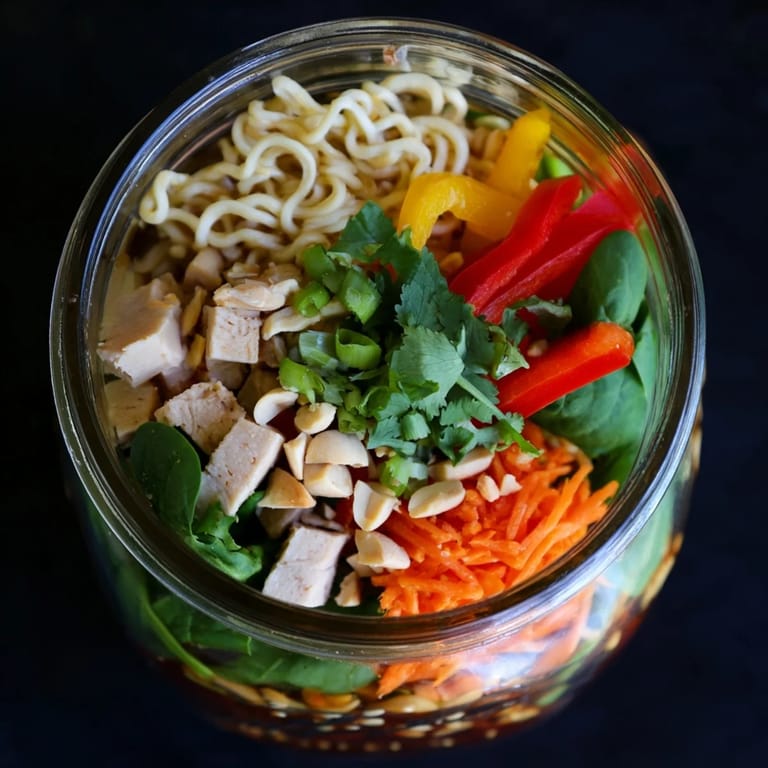
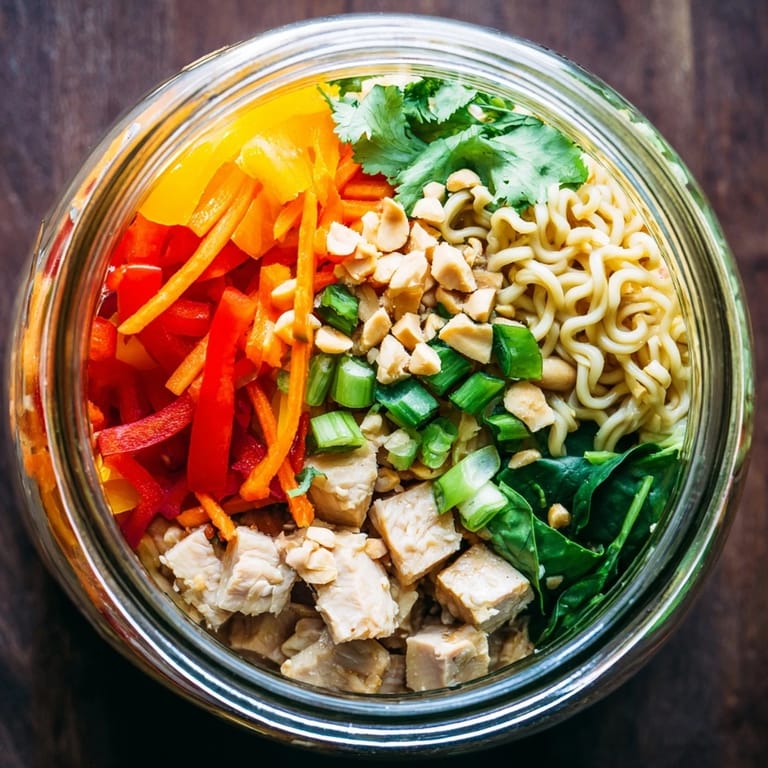
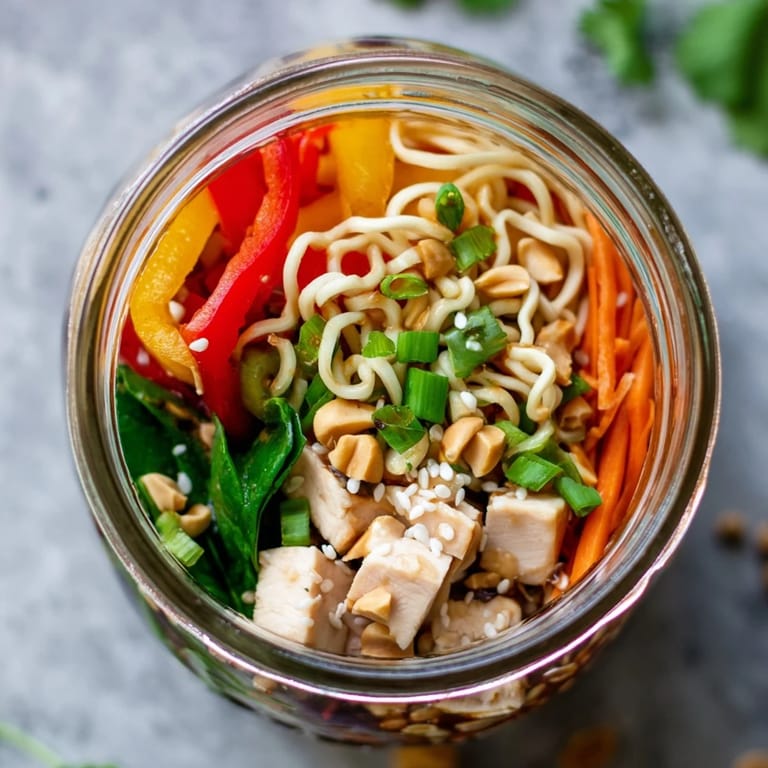
- Noodles: I prefer rice noodles because they soak up the flavors beautifully without getting mushy, but ramen works wonderfully too if youre craving that slightly chewy texture.
- Protein: Rotisserie chicken is my weeknight shortcut, but I discovered that marinating tofu in a bit of the sauce mixture overnight before adding it creates an incredible flavor boost.
- Vegetables: The carrots and bell peppers provide necessary crunch while spinach wilts perfectly when the hot water hits it, creating different textures in every bite.
- Sauce: This sauce is basically liquid gold - the balance of soy sauce, rice vinegar, and sesame oil creates this umami base that the honey or maple syrup rounds out beautifully.
- Toppings: Fresh cilantro brightens everything, while the nuts add that satisfying crunch that makes you forget youre eating a pre-prepped meal.
Tired of Takeout? 🥡
Get 10 meals you can make faster than delivery arrives. Seriously.
One email. No spam. Unsubscribe anytime.
Instructions
- Prepare the noodles:
- Cook your noodles just shy of the package instructions - theyll continue softening slightly in the jar. The cold water rinse is crucial here to stop the cooking process and prevent them from clumping together.
- Create your flavor base:
- Whisk the sauce ingredients until the honey fully dissolves, which helps it distribute evenly. You might catch yourself wanting to drink this mixture straight - its that good.
- Build your jars:
- Think of each jar as a little ecosystem where the hearty ingredients that can handle sitting in sauce go at the bottom, with more delicate items placed further away. The noodles create a protective cap on top, keeping everything fresh.
- Storage strategy:
- Make sure those lids are on tight to keep everything fresh. I like to place them upright in the refrigerator door where I can see my colorful creations every time I open it.
- The magic moment:
- When youre ready to eat, the hot water transforms everything into a steaming, fragrant meal. Give it those full 2-3 minutes to work its magic as the noodles soften and the vegetables warm through.
 Pin to Board
 The true beauty of these jars revealed itself during a weekend hike with friends. We reached the summit around noon, everyone digging through backpacks for squished sandwiches while I pulled out these colorful jars. I had packed a thermos of hot water, and watching my friends faces as I poured it in and transformed these layered ingredients into steaming, aromatic meals made me feel like some sort of culinary magician. The mountain air seemed to enhance every flavor.
Customization Ideas
These jars have become my weekly canvas for creativity. Sometimes I go for a Thai-inspired version with peanut sauce and lime, other days I crave something more reminiscent of Vietnamese flavors with extra herbs and fish sauce. The versatility of this method means you can travel the world culinarily speaking while sitting at your desk or wherever life takes you.
Meal Planning Strategy
Sunday afternoons have become my sacred jar-prepping time. I lay out all my ingredients assembly-line style on the counter, with four jars lined up ready to receive their colorful layers. Theres something deeply satisfying about watching your week of lunches come together in under 30 minutes, each jar slightly different from the next to avoid meal fatigue.
Troubleshooting Tips
After making these jars weekly for months, Ive encountered and solved nearly every possible issue. The most common problem is texture - getting that perfect balance between tender noodles and crisp vegetables takes practice. If your noodles seem too firm after adding hot water, try adding slightly more water or giving them an extra minute to sit before mixing.
- If your vegetables are wilting too quickly, try placing them closer to the top of the jar, further from the moisture.
- For extra protein without bulk, sprinkle in chia or hemp seeds just before serving.
- Keep additional sauce components in tiny containers to customize the flavor profile right before eating.
 Pin to Board
 These mason jar meals have transformed not just my lunches but my relationship with meal prep entirely. In a world of sad desk lunches and expensive takeout, theres something revolutionary about unscrewing that lid and having a freshly-assembled, vibrant meal waiting just for you.
Common Questions
- → How do I prevent the noodles from getting soggy?
Keep noodles as the top layer and separate from the sauce until serving. Add hot water just before eating to soften them slightly while maintaining texture.
- → Can I make this vegetarian or vegan?
Absolutely. Replace the chicken, tofu, or shrimp with edamame, chickpeas, or extra tofu. Substitute honey with maple syrup or agave for the sauce to keep it fully plant-based.
- → What proteins work best?
Cooked chicken breast, firm tofu, and cooked shrimp are ideal. You can also use grilled turkey, cooked beef, or plant-based alternatives for variety.
- → How long do mason jar meals stay fresh?
Properly sealed and refrigerated, these meals last up to 4 days. The sauce preserves ingredients while cold storage keeps everything fresh and crisp.
- → Can I prepare sauce in advance?
Yes, make the sauce up to 5 days ahead and store in an airtight container. This makes assembly even quicker throughout the week.
- → What are good low-carb noodle alternatives?
Try shirataki noodles, spiralized zucchini, or kelp noodles for lower carbohydrate options. Adjust cooking time based on your chosen noodle type.