 Pin to Board
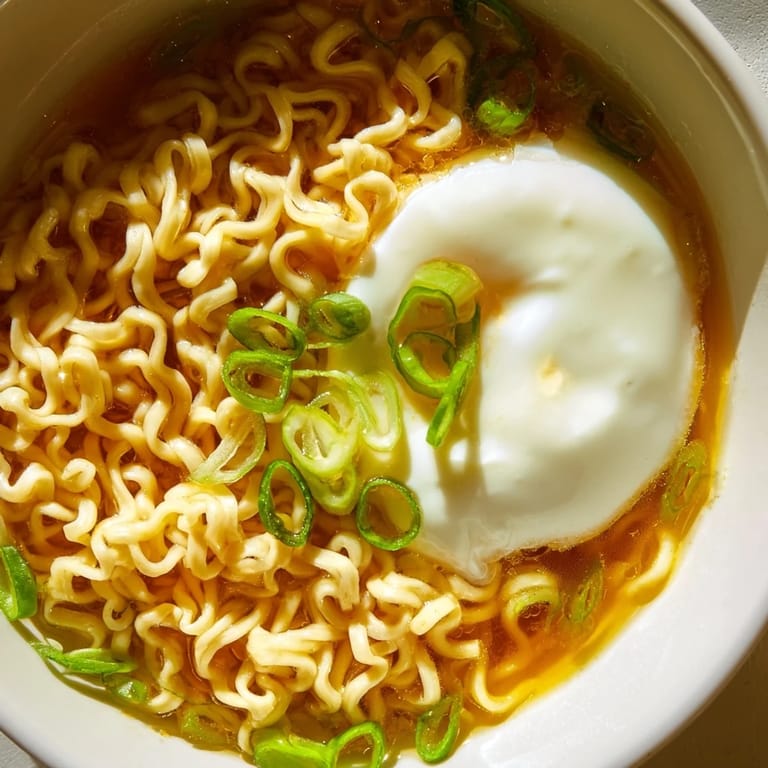
 There's something honest about instant ramen that fancy cooking sometimes misses. One Tuesday night when my fridge was practically empty, I stood at the stove with a single pot and a package of noodles, thinking how to make it feel less like a shortcut and more like dinner. The moment I cracked that egg into the simmering broth and watched it transform into something silky and golden, I realized the best meals aren't about complexity—they're about knowing exactly what to do with what you have.
I made this for a friend who'd just moved to the city and was living on whatever he could afford. Watching his face when he tasted that creamy broth—how he got quiet for a moment before nodding—taught me that sometimes the simplest things show respect. We sat at my kitchen counter slurping noodles at midnight, and he asked me why ramen could taste this good. I told him it was because we weren't rushing it, even though the whole thing took ten minutes.
Ingredients
- Instant Ramen Noodles: One package of whatever brand you trust—the seasoning packet matters more than the noodles themselves.
- Water: Two cups, measured or eyeballed, as long as it covers the noodles with breathing room.
- Ramen Seasoning Packet: The whole thing goes in, salt and all.
- Unsalted Butter: One tablespoon turns this from survival food into comfort food; use good butter if you have it.
- Large Egg: Room temperature works best because it cooks gently instead of scrambling into the broth.
- Scallion: One stalk, sliced thin, adds brightness and a small textural contrast that changes everything.
- Chili Flakes or Chili Oil: Optional but worth having nearby for that warming heat.
- Soy Sauce: A splash if you want deeper flavor, but taste first—the seasoning packet already salts things well.
Tired of Takeout? 🥡
Get 10 meals you can make faster than delivery arrives. Seriously.
One email. No spam. Unsubscribe anytime.
Instructions
- Boil Water Like You Mean It:
- Fill a small saucepan with two cups of water and turn the heat to high. Listen for that rolling boil—you'll know it when you hear it, and there's no rushing this part.
- Add Noodles and Let Them Open Up:
- Crack the brick into the boiling water and let it soften according to the package, usually two to three minutes. Stir occasionally so nothing sticks.
- Lower the Heat and Prepare for the Egg:
- Once the noodles are almost tender, turn the heat down to low. The water should be at a gentle simmer, not a rolling boil, so the egg cooks slowly and stays soft inside.
- Slip in the Egg Without Fear:
- Crack the egg directly into the simmering broth, trying not to break the yolk. Cover the pan and leave it alone for one to two minutes while the white sets around that perfect soft center.
- Stir in Butter and Seasoning:
- Add the seasoning packet and the butter, stirring until everything melts and turns creamy. Taste it; this is when you adjust.
- Move Everything to a Bowl:
- Pour the noodles and broth into your favorite bowl, being careful with that egg.
- Top and Serve Right Away:
- Scatter the sliced scallions across the top and add chili flakes or a splash of soy sauce if that's your style. Eat while it's hot.
 Pin to Board
 My sister called me once from her apartment, and I could hear the kettle in the background while we talked. She made this ramen while we were on the phone, and somehow that ordinary moment—her telling me about her day while she cooked something I'd shown her—felt important. It's not fancy, but it's the kind of meal that brings people together, even across a phone line.
The Secret of the Soft Egg
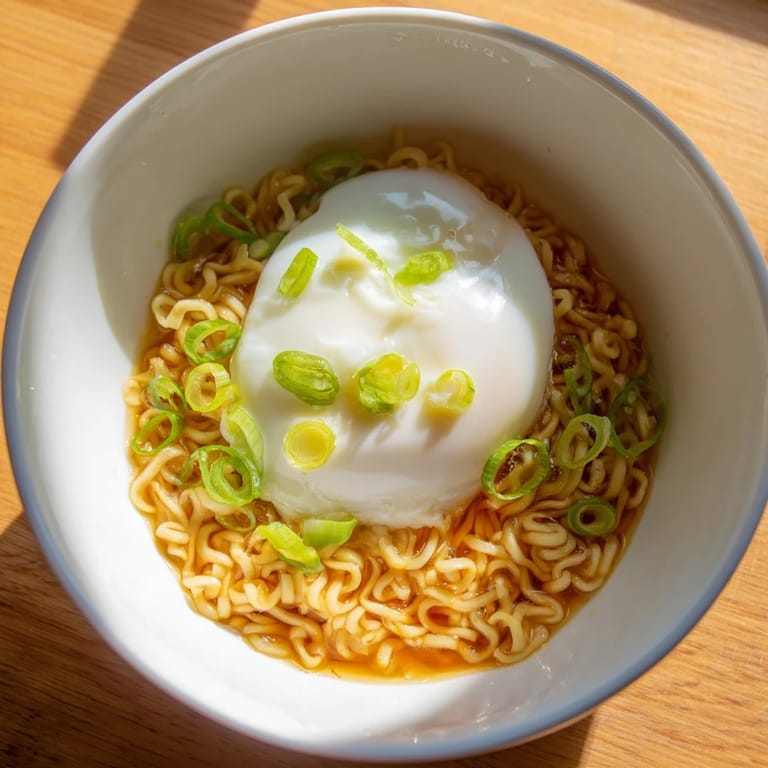
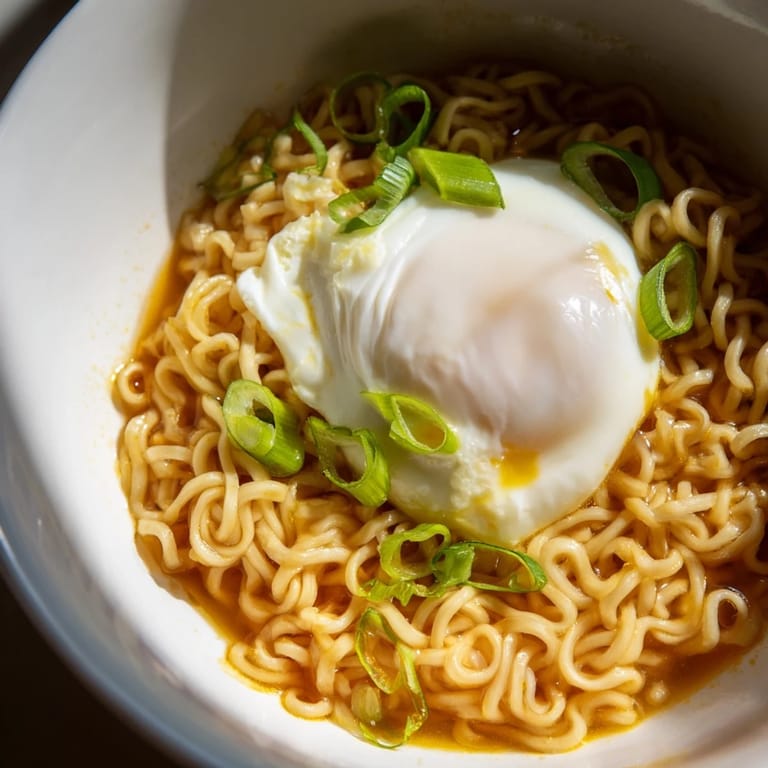
The egg is where this dish lives or dies, and it's not complicated once you understand the timing. Lower heat and patience make all the difference—the yolk needs to stay liquid while the white firms up, and that only happens if you're gentle. I've learned to listen to the broth more than watch it, knowing when that quiet simmer has started and counting the minutes from there. The moment the white turns opaque but the yolk jiggles slightly when you nudge the pan, that's when you stop.
Butter and Broth: The Foundation
Butter does something simple but profound to instant ramen—it makes the salty broth feel richer without changing what it is. I used to think this was cheating, like I should be making stock from scratch if I wanted real flavor, but then I realized the point isn't to hide what the noodles are. The butter acknowledges the simplicity and makes it luxurious instead. It's the same reason a good sandwich is just bread and butter and something honest in the middle.
Making It Your Own
This recipe is a foundation, not a rule book, and that's what makes it useful for the way most of us actually cook. I've made it with mushrooms stirred in at the end, with spinach that wilts into the broth, with corn that adds sweetness. One night I drizzled in toasted sesame oil and suddenly it tasted like something from a restaurant. The point is you're starting somewhere solid and building from there.
- Spinach, corn, mushrooms, or whatever vegetables are in your crisper drawer will cook in the residual heat of the broth.
- A splash of toasted sesame oil at the end changes the entire character of the dish in the best way.
- If you want it spicier, hot chili oil adds heat and flavor in one move, better than chili flakes alone.
 Pin to Board
 What started as a shortcut turned into something I make on purpose, not out of desperation. That's when you know you've found something real.
Common Questions
- → How do you achieve a silky soft egg in the broth?
Crack the egg directly into the simmering broth, cover, and let it cook gently for 1-2 minutes until the white is set but the yolk remains soft.
- → Can I customize the flavor profile of the broth?
Yes, add chili flakes, soy sauce, or toasted sesame oil to enrich or spice the broth according to your taste preferences.
- → What vegetables work well as additions?
Spinach, corn, mushrooms, or scallions complement the noodles and provide extra nutrition and texture.
- → Is butter necessary in this dish?
Butter adds a creamy richness that balances the broth’s seasoning, but it can be omitted for a lighter version.
- → Can any instant noodle brand be used?
Yes, this method works well with any instant noodles, adapting easily to different seasoning packets and cooking times.