 Pin to Board
 The first time I truly understood the appeal of a scythe platter was at my cousin's garden wedding, where someone had arranged breads and fruits in this graceful arc across a weathered wooden board. I watched people linger over it longer than any hot appetizer, drawn in by how the colors caught the afternoon light and the way everything seemed to invite fingers and conversation. That moment stuck with me, and I realized this wasn't just about feeding people—it was about creating an edible landscape that felt intentional and generous, the kind of thing that makes people slow down.
I made this for my book club once, and someone whispered that it looked too beautiful to eat—then promptly ate three slices of pear and a handful of almonds while standing in front of it. That's when I knew the real magic wasn't just the arrangement, but that it gave people permission to graze thoughtfully, to pair things as they pleased, and to feel like they were part of something special.
Ingredients
- Baguette, sliced: The toasted edges catch the honey beautifully, and thin slices mean more surface area for toppings without overwhelming the board.
- Multi-grain crackers: These add visual texture and a slight earthiness that balances the sweetness of the fruits.
- Seeded rye bread: The seeds give you something visually distinctive and a subtle nuttiness that works with aged cheddar.
- Cooked farro or barley: This is the surprise—cool grains scattered across the board add a grain-forward element that feels complete, not snacky.
- Red grapes, seedless: They stay plump and juicy if you chill them for an hour before serving, and the color is unbeatable.
- Pears and apples, sliced: Toss these in a tiny bit of lemon juice right before serving to keep them from browning and to brighten their flavor.
- Dried apricots and fresh figs: These are your sweet anchors—the chew of dried fruit against fresh fruit is what makes people reach for seconds.
- Brie and aged cheddar: Cold cheese softens just slightly from the room temperature board, becoming almost spreadable; skip these if you prefer fully plant-based.
- Honey or fig jam: A drizzle transforms everything, so use something you actually love tasting on its own.
- Fresh mint and roasted nuts: Mint cools things down and adds brightness, while nuts give you that final textural contrast.
Tired of Takeout? 🥡
Get 10 meals you can make faster than delivery arrives. Seriously.
One email. No spam. Unsubscribe anytime.
Instructions
- Lay your foundation with breads:
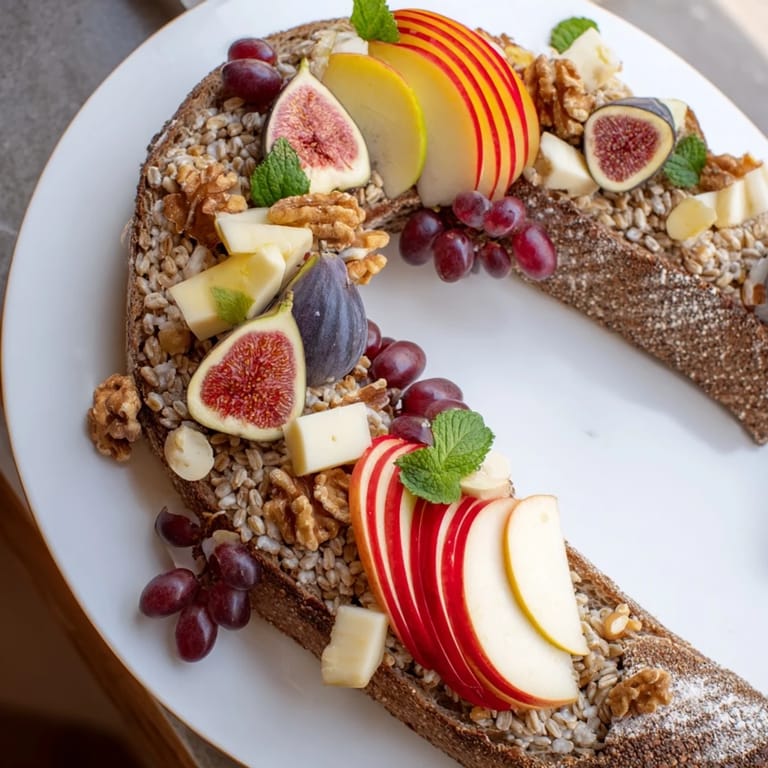
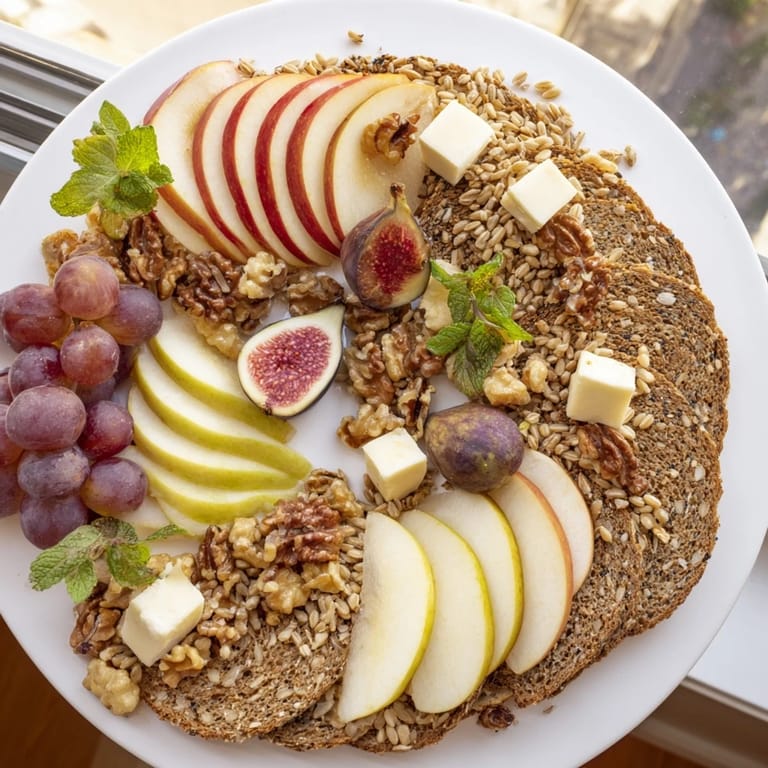
- Arrange baguette slices, crackers, and rye in a sweeping curve across your board, leaving space in the middle for the grain pile. Think of this as your blade shape—trust your instinct on whether it feels intentional.
- Create the grain field:
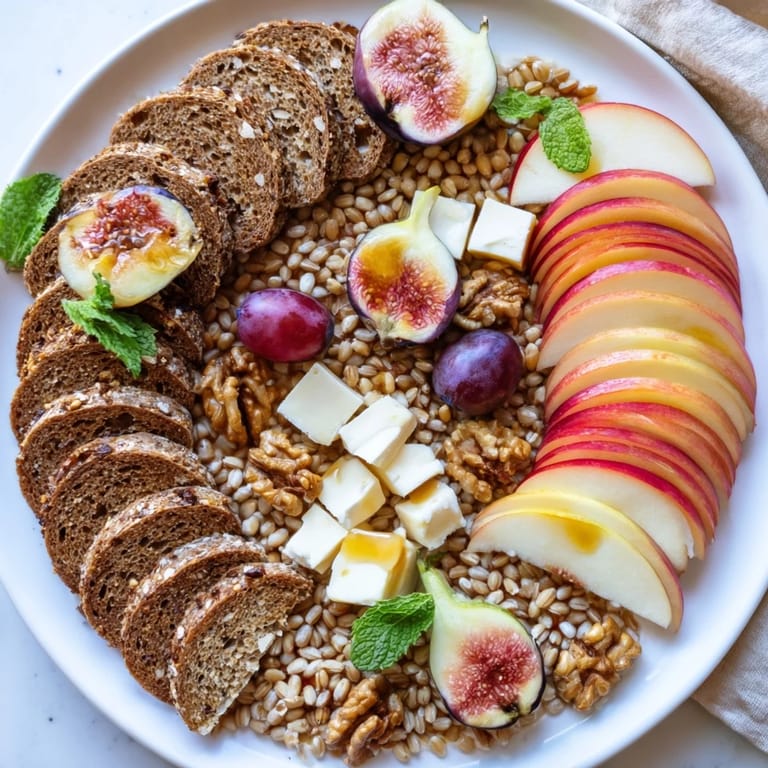
- Scatter your cooled farro or barley down the inner curve in a soft, uneven layer, almost like you're suggesting rippling grain rather than filling a measured space. A thin spread feels more elegant than a pile.
- Arrange fruits with color in mind:
- Fan your sliced pears and apples first, since they're the largest elements, then tuck grapes into gaps, letting the colors blend naturally rather than sorting them into neat sections.
- Add cheese in small clusters:
- If using cheese, create three or four small heaps near the breads, spacing them so people can easily grab cheese with bread without dismantling the whole board.
- Set out honey and jam:
- Use small shallow bowls or ramekins placed along one edge so people can dip or drizzle without reaching too far across other elements.
- Finish with garnishes:
- Scatter mint leaves and roasted nuts across the whole board just before serving, which keeps them from wilting and makes everything feel fresh and alive.
- Serve right away:
- The beauty of this platter is that it should feel just-made, so bring it to the table while everything is at its crispest and most vibrant.
 Pin to Board
 What surprised me most about serving this platter at gatherings is that it became a conversation starter without trying—people would point out the shape of the arrangement, share which fruit and bread pairing was their favorite, and suddenly there was this warmth in the room that didn't come from a cooked dish. Food that invites you to slow down and choose what you want feels more personal somehow.
Arranging for Impact
The scythe shape is just a starting point; what matters is creating a visual flow that makes sense to your eye and feels intentional. I've found that odd numbers and asymmetrical placement look more natural than perfect symmetry, and leaving small gaps between ingredients gives the board room to breathe. The arrangement should feel generous but not overcrowded, like you're inviting people into a landscape rather than dumping everything on a surface.
Seasonal Flexibility
This platter truly shines when you work with what's in season and abundant in your market, because that's when fruits taste brightest and prices make sense. Summer calls for stone fruits and berries, fall leans into apples and pears, and winter is perfect for dried fruits and citrus. The breads and grains stay constant, but the fruits can shift entirely from season to season, keeping this platter feeling fresh even if you make it dozens of times.
Pairing and Serving Wisdom
This platter works beautifully as the opening move at a gathering, before you bring out heavier foods, or as a sophisticated snack board for an afternoon with friends. Wine pairings lean toward crisp whites and light sparkling wines, but honestly, this is flexible enough to work alongside almost anything. The bread provides substance, the fruits bring brightness, and the cheese (if included) adds richness, so together they're a complete small meal.
- Chill your grapes for an hour before serving so they stay plump and cold throughout the gathering.
- If you're making this ahead, keep cut fruits in the fridge and assemble on the board no more than two hours before serving.
- Add a small knife next to the cheese so people can cut their own pieces rather than trying to grab pre-sliced pieces that inevitably slide around.
 Pin to Board
 There's something deeply satisfying about creating something beautiful with your hands that everyone gets to enjoy immediately, no cooking required. This platter is exactly that kind of magic.
Common Questions
- → What breads work best for the platter?
Small baguette slices, multi-grain crackers, and seeded rye bread provide a variety of textures and flavors that complement the fruits well.
- → Can the grains be substituted?
Yes, farro or barley can be replaced with other cooked grains like quinoa or bulgur depending on preference.
- → How can the platter be adapted for dietary restrictions?
Gluten-free breads and crackers can be used, and cheeses may be swapped for vegan alternatives or omitted entirely.
- → What is the best way to arrange the platter?
Arrange breads and crackers in a sweeping curve, scattering grains along the inner edge and fanning fruits between for a natural, flowing presentation.
- → How should the platter be served to maintain freshness?
Serve immediately after assembly to preserve the crispness of breads and the freshness of the fruits, garnished with fresh mint and nuts.