 Pin to Board
 I still remember the first time I stepped into a small bistro on Rue de Rivoli, tucking into a corner table where the afternoon light filtered through lace curtains. The waiter arrived with a simple wooden board—nothing fancy, yet somehow everything felt precious. There were three cheeses I'd never heard of, bread that still held warmth from the morning bake, and figs so perfect they looked like jewels. I realized that day that French elegance isn't about complexity; it's about knowing exactly what matters and presenting it with intention. That experience shaped how I think about entertaining at home.
Last spring, I assembled this platter for a small dinner party with some friends I hadn't seen in months. As they arrived and saw the board, there was this moment—a collective pause—where the whole room seemed to slow down. We spent the next two hours doing nothing but talking, tasting, sipping wine, and occasionally reaching for another fig or bit of Comté. That's when I understood: this isn't really a recipe. It's permission to stop rushing and just be together.
Ingredients
- Fresh French baguettes (2 long): The foundation of everything—I learned the hard way that day-old bread is too hard to slice cleanly, so buy these the morning you plan to serve. The slight give in fresh bread means your diagonal slices will be elegant rather than crumbly.
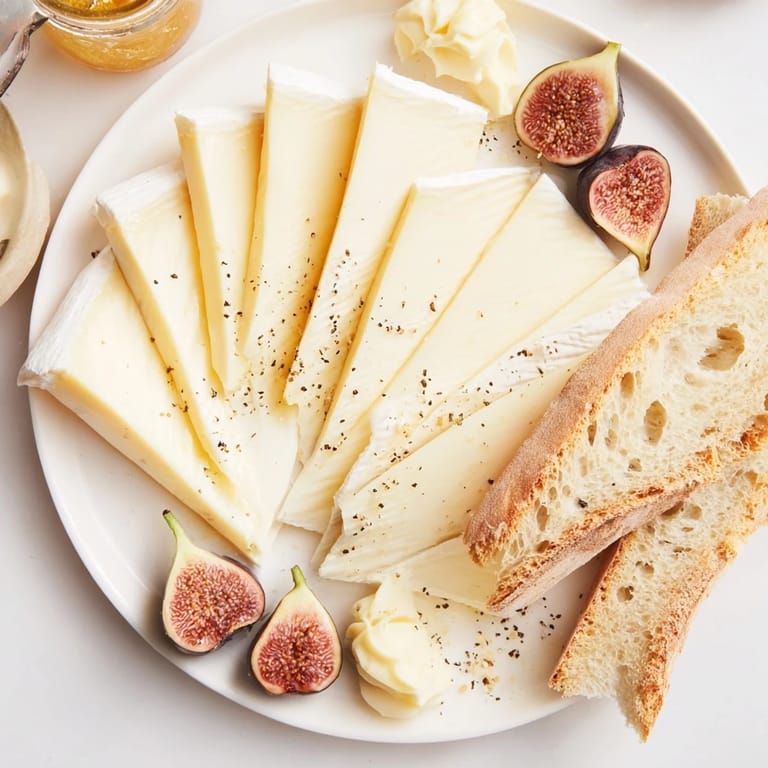
- Brie cheese (150 g, sliced and fanned): This is your creamy anchor. The fanning isn't just for looks; it signals to guests that they can peel off a single slice without guilt. I always let it sit at room temperature for ten minutes before slicing so it doesn't crack.
- Comté cheese (150 g, sliced and fanned): Nutty and complex, this is what makes people pause mid-conversation and say "what is this?" Its crystalline texture adds dimension that softer cheeses can't provide.
- Chèvre (100 g, sliced): The tangy counterpoint, brighter than the other cheeses and somehow more approachable. A little goes a long way in terms of flavor impact.
- Fresh figs or grapes (12): These are your jewels—the moment of color and sweetness that makes the whole board sing. Figs especially feel indulgent; grapes feel fresh and playful.
- Unsalted butter (50 g, softened): The spread that lets bread become something more. Softened means guests don't have to fight with it.
- High-quality honey (2 tbsp): A drizzle on cheese or bread transforms the entire experience. Cheap honey tastes like sweetness; good honey tastes like a place—I use acacia or chestnut.
- Whole grain Dijon mustard (1 tbsp): The secret whisper of sophistication. Just enough to make you wonder what you're tasting, not enough to overwhelm.
- Flaky sea salt and freshly ground black pepper: These finishing touches are essential—they wake up the cheeses and make everything taste more like itself. Don't skip them, and don't use table salt.
Tired of Takeout? 🥡
Get 10 meals you can make faster than delivery arrives. Seriously.
One email. No spam. Unsubscribe anytime.
Instructions
- Slice your baguettes with intention:
- Hold the bread at a 45-degree angle and use a sharp serrated knife with a gentle sawing motion—no crushing or hacking. Aim for quarter-inch thickness so each slice is sturdy enough to hold toppings but thin enough to feel refined. As you slice, arrange them along the edge of your platter, leaving breathing room between each piece. Negative space is what separates a board from a platter.
- Fan the cheeses like you're telling a story:
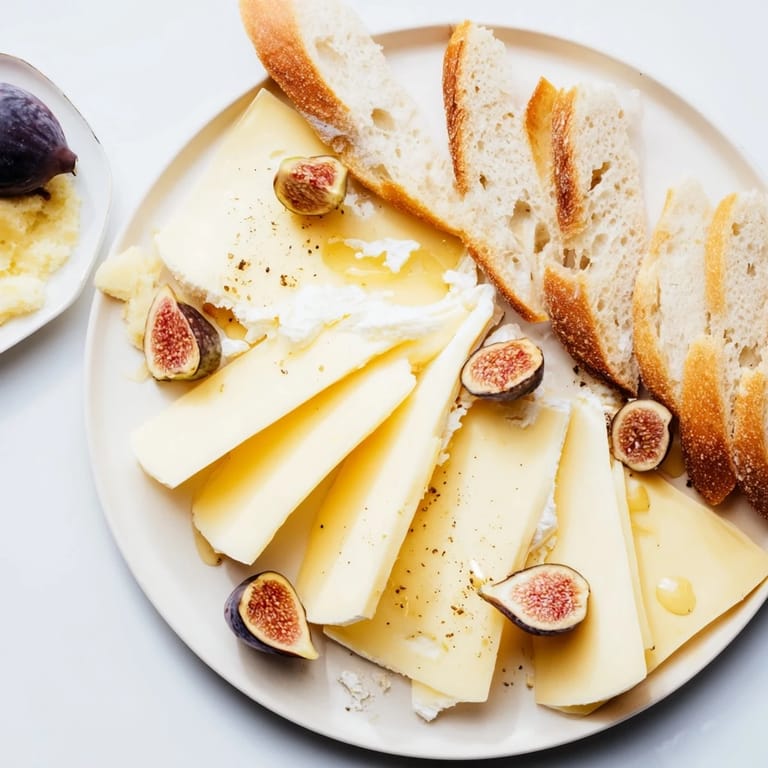
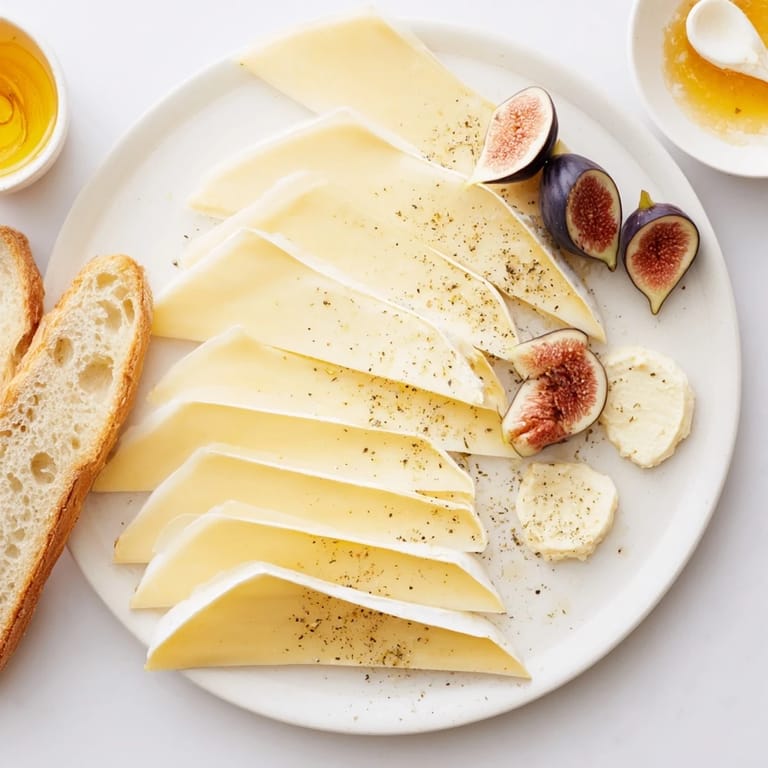
- Lay each cheese variety in overlapping rows, keeping Brie with Brie, Comté with Comté, Chèvre with Chèvre. Overlap them slightly so they cascade like pages turning. The fanning isn't random—it's a signal to guests that each slice is meant to be taken individually. This is where your board starts to feel intentional rather than hasty.
- Place figs and grapes with purpose:
- Add small clusters in the negative spaces you deliberately left. Think of them as punctuation marks—they should feel placed, not scattered. A group of three or four together is more striking than figs dotted everywhere.
- Arrange your condiments as if they're part of the art:
- Spoon butter, honey, and mustard into small ramekins or create small artful pools directly on the platter itself. I prefer ramekins because they feel more intentional, and guests know exactly where to dip. If you're placing them directly on the board, use the back of a spoon to create gentle swirls.
- Season and finish:
- A light sprinkle of flaky sea salt and a few grinds of black pepper over the cheeses is all you need. The salt catches the light; the pepper adds flecks of elegance. Don't oversalt—you can always add more at the table.
- Serve with grace:
- Set this down in front of your guests and step back. Let them discover it. Encourage them to build their own bites—a smear of Brie, a dot of honey, a grain of mustard, a bite of fig. That act of creation is part of the experience.
 Pin to Board
 Years ago, I made this board with cheeses straight from the refrigerator, thinking the cold would keep them fresh. My elegant platter tasted like... cold cheese. A French friend watched me struggle and simply said, "Temperature is respect." She was right. Now every time I arrange a board, I give myself that extra half hour to let everything breathe. It's become my favorite kind of waiting—the anticipation builds, and somehow the food tastes better because of it.
The Art of Arrangement
What I've learned is that a French bistro board is as much about what you leave empty as what you fill. Every empty space is a breath, a moment for the eye to rest. This is actually harder than it sounds—our instinct is to cover everything, to show abundance. But restraint is what signals luxury. When you're arranging, imagine you're composing a photograph. Create triangles with your cheeses, let bread arc along one edge, scatter fruit strategically. The visual balance makes everything taste better because your guests are already delighted before the first bite.
Pairing and Timing
This is meant to be eaten slowly, almost meditatively. The wine pairing isn't decoration—Sancerre or Champagne actually completes the experience. The acidity cuts through the richness of the Brie, the bubbles refresh your palate between bites. I've learned that the best entertaining isn't about feeding people quickly; it's about creating moments where time slows down. Serve this when you have nowhere else to be, when conversation matters more than efficiency. If you're making this for an afternoon gathering, give yourself and your guests at least an hour. The board will stay beautiful, and the experience will be something people remember.
Variations and Personal Touches
This foundation is just a starting point for your own interpretation. The joy of a bistro board is that it belongs to you—it should reflect what you love, what's in season, what speaks to your style. A few things I've discovered along the way that make this entirely your own:
- Fresh herbs scattered over the cheeses—thyme, rosemary, or even edible flowers—add fragrance and color without changing the flavor
- Pears or sliced apples can replace figs beautifully, especially in autumn when fresh figs aren't perfect
- A drizzle of good olive oil over the Chèvre transforms it into something almost creamy and new
 Pin to Board
 This isn't really a recipe you master—it's an experience you create. Every time you make it, you'll understand a little better what elegance actually means: not fussiness, but intention. Not expense, but thoughtfulness. It's my favorite way to say "I'm glad you're here."
Common Questions
- → What cheeses are best for this platter?
Brie, Comté, and chèvre provide a balanced mix of creamy, nutty, and tangy flavors that complement each other beautifully.
- → Can I substitute the fresh figs?
Yes, sliced pears or apples work well as alternatives, maintaining the fresh, subtle sweetness of the platter.
- → How should the baguette be prepared?
Slice the baguette diagonally into thin, even pieces for easy arrangement and elegant presentation.
- → What accompaniments enhance the platter?
Softened butter, high-quality honey, and whole grain Dijon mustard add creamy, sweet, and tangy layers that enrich the flavors.
- → How to serve for best effect?
Arrange cheeses and fruits with space on a large platter, and present butter, honey, and mustard in ramekins or dollops to encourage personalized bites.
- → Are there seasoning recommendations?
Lightly sprinkle flaky sea salt and freshly ground black pepper over the cheeses to amplify their natural flavors.