 Pin to Board
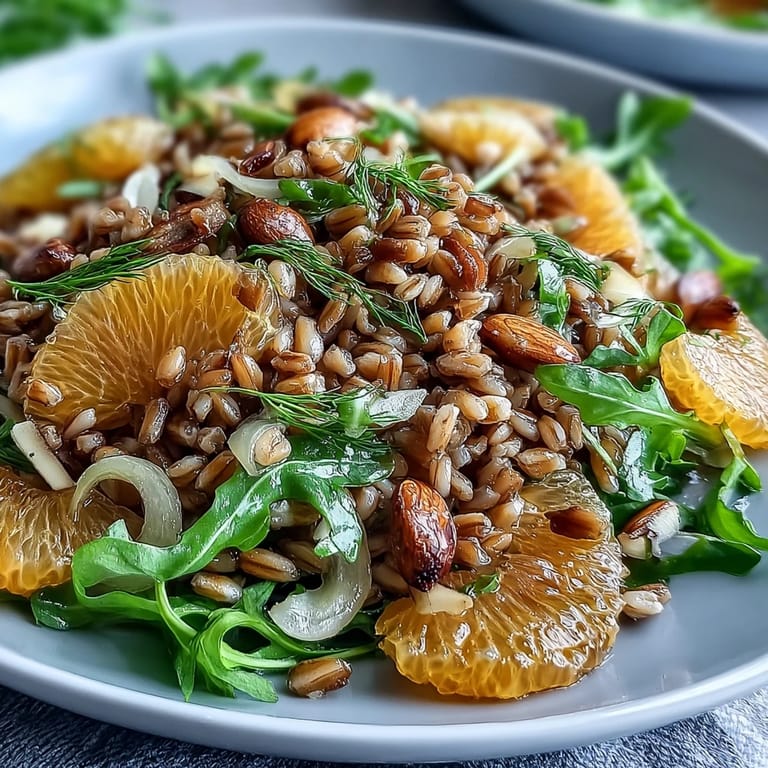
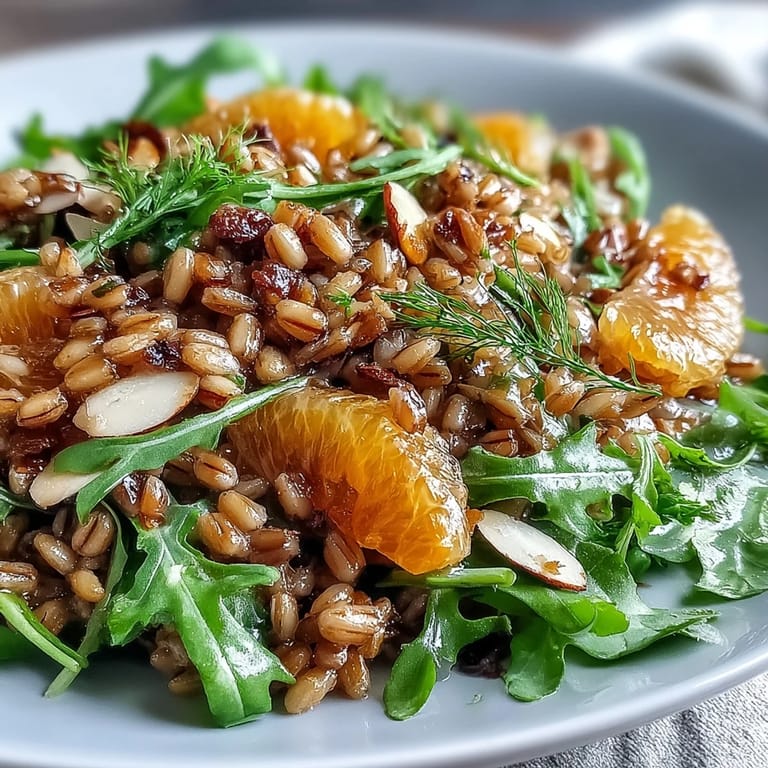
 There's something about the way fennel smells when you first slice into it—sharp and anise-forward, almost surprising. I discovered this salad on a Tuesday afternoon when my farmer's market haul included a beautiful fennel bulb I wasn't quite sure what to do with, and oranges that were begging to be part of something more interesting than juice. The combination felt like a small experiment, but the moment the citrus vinaigrette hit the nutty farro, I knew I'd stumbled onto something that would become a regular rotation in my kitchen.
I made this for a potluck at work once, not expecting much fanfare, and someone actually asked for the recipe before they'd even finished their first serving. That's when I realized it wasn't just delicious—it was the kind of dish that makes people stop mid-conversation and actually pay attention to what's on their plate. Now whenever I bring it somewhere, I make a double batch because I know at least one person will want seconds.
Ingredients
- Whole grain farro: 1 cup uncooked. This is the heart of the salad—nutty and chewy with a satisfying bite that regular rice or pasta can't quite match. Rinse it first to remove any dust.
- Water: 3 cups, plus 1/2 teaspoon kosher salt. The salt goes directly into the cooking water so the grains are seasoned from the inside out.
- Fennel bulb: 1 medium, thinly sliced with fronds reserved. The fennel adds brightness and a subtle licorice note that sounds odd but works beautifully with citrus—don't skip slicing it thin or it'll overpower everything else.
- Oranges: 2 large, peeled and segmented. Use whatever's in season; I've had success with blood oranges, regular navels, and even clementines when I'm feeling lazy about peeling.
- Fresh arugula or baby spinach: 2 cups. This adds a peppery note and keeps the salad from feeling too heavy.
- Fresh parsley: 2 tablespoons, chopped. It's a subtle addition but makes the whole thing feel intentional and bright.
- Sliced almonds, toasted: 1/2 cup. Toasting them yourself makes a real difference—they go from bland to deeply nutty in just a few minutes, and the smell is incredible.
- Extra-virgin olive oil: 3 tablespoons. Don't use the cheap stuff here; this is where you taste the quality.
- Orange juice and lemon juice: 1 tablespoon each, freshly squeezed. Bottled won't work as well—fresh juice makes the dressing taste alive.
- Honey or maple syrup: 1 teaspoon. This balances the acidity and adds subtle depth.
- Dijon mustard: 1 teaspoon. It acts as an emulsifier and brings a sharp, sophisticated edge.
- Sea salt and black pepper: 1/4 teaspoon each. Taste as you go because citrus can mask seasoning.
Tired of Takeout? 🥡
Get 10 meals you can make faster than delivery arrives. Seriously.
One email. No spam. Unsubscribe anytime.
Instructions
- Start with the grain:
- Rinse your farro under cold water—this removes surface starch and prevents mushiness. Combine it in a medium saucepan with 3 cups of water and salt, bring everything to a boil, then drop the heat to low, cover, and let it simmer gently for 25 to 30 minutes until the grains are tender but still have a slight chew to them. Drain any excess water and spread it on a plate to cool faster.
- Toast the almonds while farro cooks:
- Heat a dry skillet over medium heat and add your sliced almonds, stirring constantly for about 2 to 3 minutes until they're golden and smell absolutely irresistible. Transfer them to a plate immediately so they don't overcook and turn bitter.
- Prep everything else:
- Thinly slice your fennel bulb, trying to keep some of those delicate fronds for garnish. Peel and segment your oranges, working over a small bowl to catch any juice that might be useful for the dressing. Chop your parsley and tear or roughly chop your greens.
- Build the salad base:
- In a large bowl, combine your cooled farro, sliced fennel, orange segments, greens, and parsley. This is where it starts to look beautiful—all those colors coming together.
- Make the dressing:
- In a small bowl or jar, whisk together olive oil, citrus juices, honey, mustard, salt, and pepper until everything emulsifies and comes together into something glossy and balanced. Taste it on a small piece of fennel or farro to make sure you like it before committing to the whole batch.
- Bring it together:
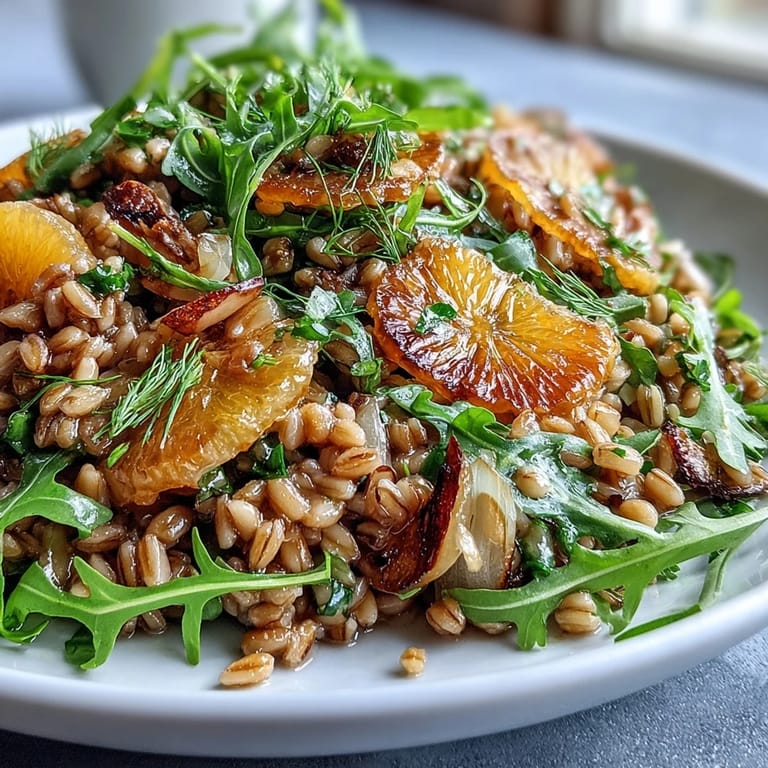
- Pour the dressing over the salad and toss gently so everything gets coated evenly without crushing the farro grains. Fold in the toasted almonds and reserved fennel fronds, then serve immediately while it still has some contrast between warm and cool, or chill it for later if that works better for your timing.
 Pin to Board
 There's a moment that happens almost every time I make this where someone tastes it and their eyes light up with surprise—they weren't expecting a grain salad to be this lively and complex. That reaction, more than anything else, is why this recipe has become such a reliable favorite in my rotation.
Why Farro Belongs in Your Salad Bowl
Farro has this wonderful chewy texture that holds up beautifully to bold dressings without falling apart or becoming mushy like softer grains might. I used to think grain salads were boring until I realized the grain choice made all the difference—farro's nutty flavor actually plays well with citrus instead of disappearing under it. It also has enough substance to make the salad satisfying on its own, so you can serve it as a light lunch without needing to add protein unless you want to.
The Fennel and Citrus Magic
Fennel can be intimidating if you've never cooked with it before, but sliced thin it becomes delicate and almost sweet, especially when paired with bright citrus. The anise notes don't scream at you—they whisper underneath everything else, adding complexity without being overwhelming. Once you taste how these two ingredients play together, you'll start looking for reasons to use them in other dishes.
Making It Work for You
The beauty of this salad is how adaptable it is to what you have on hand or what you're craving. I've made it with barley instead of farro, tried it with pomegranate seeds instead of oranges, and once used toasted walnuts when I was out of almonds—everything worked beautifully. The core structure—a hearty grain, crisp vegetables, bright citrus, and a balanced vinaigrette—stays the same while the details can shift based on your mood or pantry.
- Add grilled chicken, chickpeas, or crumbled feta if you want to bump up the protein for dinner instead of lunch.
- Make the dressing in a jar you can seal so you can shake it instead of whisking, which is faster on a weeknight.
- This salad keeps well in the fridge for three days as long as you keep the greens and almonds separate until you're ready to eat.
 Pin to Board
 This salad has become one of those recipes I turn to when I want to feel like I'm nourishing myself while still enjoying every bite. It's proof that wholesome food doesn't have to feel like a compromise.
Common Questions
- → How do I know when farro is properly cooked?
Farro is done when it's tender but still retains a pleasant chewy texture, similar to al dente pasta. This typically takes 25-30 minutes of simmering. Taste a few grains toward the end of cooking time—the texture should be soft but not mushy, with a slight bite in the center.
- → Can I prepare this ahead of time?
Absolutely. The flavors actually improve after a few hours as the dressing permeates the grains. Store in an airtight container in the refrigerator for up to 3 days. Add the toasted almonds just before serving to maintain their crunch, and bring to room temperature before eating for the best texture.
- → What can I substitute for farro?
Whole wheat berries, spelt, barley, or brown rice work well. For a gluten-free option, use quinoa or sorghum. Cooking times may vary, so adjust accordingly and aim for that tender-but-chewy texture.
- → How do I properly slice fennel?
Trim the stalks and save the frilly fronds for garnish. Cut the bulb in half lengthwise, remove the tough core, then place the flat side down and slice thinly crosswise. A mandoline creates perfectly even slices, but a sharp knife works perfectly fine.
- → Can I add protein to make it a complete meal?
Grilled chicken, shrimp, or salmon pair beautifully. For plant-based protein, try chickpeas, white beans, or crumbled feta cheese. Adding protein transforms this from a side dish into a satisfying main course that still comes together in under an hour.
- → What's the best way to segment oranges?
Cut off the top and bottom of the orange to expose the flesh. Following the curve of the fruit, slice away the peel and white pith. Hold the orange over a bowl and cut between the membranes to release the segments. Catch any juices to add to your dressing.