 Pin to Board
 There was a Tuesday evening when the fridge looked bare, but the crisper held a massive bag of spinach I'd forgotten about. I grabbed a handful of walnuts from the pantry, boiled some pasta, and threw everything into the blender without much of a plan. What came out was this shockingly green, impossibly creamy sauce that tasted like I'd spent an hour on it. My partner walked in, took one bite, and asked if I'd ordered takeout.
I started making this for friends who'd just gone vegan and were mourning creamy pasta. The first time I served it, there was silence around the table, then someone asked for the recipe before they'd even finished their plate. Now it's the dish I bring to potlucks when I want to prove that plant based food doesn't mean compromise. It's also the meal I turn to when I need comfort but don't want to feel weighed down afterward.
Ingredients
- Dried pasta: Use whatever shape you love most, though I find that long noodles like spaghetti or linguine catch the sauce beautifully, and short shapes like penne hold little pockets of green in every bite.
- Raw walnuts: Toasting them is non negotiable because it brings out a deep, almost buttery flavor that raw walnuts just don't have, and it makes the sauce taste richer without adding anything heavy.
- Fresh baby spinach: It wilts down to almost nothing in the blender, so don't be intimidated by the volume, and it gives the sauce that vibrant color and a slight earthy sweetness.
- Unsweetened plant based milk: Oat milk makes it extra creamy, soy adds body, and almond keeps it lighter, so pick based on what you're craving.
- Garlic cloves: Raw garlic gives the sauce a little bite, but if you're sensitive, you can roast it first or use just one clove.
- Nutritional yeast: This is what makes the sauce taste cheesy and umami rich without any dairy, and it adds a slight nuttiness that plays well with the walnuts.
- Extra virgin olive oil: It helps the sauce emulsify and adds a fruity richness that rounds out the sharper flavors from the lemon and garlic.
- Lemon juice: Freshly squeezed is best because it brightens the whole dish and keeps the sauce from feeling too heavy or one note.
- Salt, black pepper, and nutmeg: These small additions make a huge difference, especially the nutmeg, which adds a subtle warmth that reminds me of classic Italian spinach dishes.
Tired of Takeout? 🥡
Get 10 meals you can make faster than delivery arrives. Seriously.
One email. No spam. Unsubscribe anytime.
Instructions
- Boil the pasta:
- Bring a big pot of salted water to a rolling boil and cook your pasta until it's just al dente, with a slight chew in the center. Before you drain it, scoop out about half a cup of that starchy pasta water because it's liquid gold for making the sauce cling.
- Toast the walnuts:
- While the pasta cooks, toss the walnuts into a dry skillet over medium heat and stir them often, watching closely because they go from perfect to burnt in seconds. When they smell nutty and turn a shade darker, pull them off the heat and set a few aside for topping.
- Blend the sauce:
- Add the toasted walnuts, spinach, plant milk, garlic, nutritional yeast, olive oil, lemon juice, salt, pepper, and a pinch of nutmeg to your blender. Blend on high until it's completely smooth and creamy, stopping to scrape down the sides if needed.
- Adjust the flavor:
- Taste the sauce and see if it needs more salt, lemon, or nutritional yeast. If it's too thick, add a splash more milk until it's pourable but still luscious.
- Toss it all together:
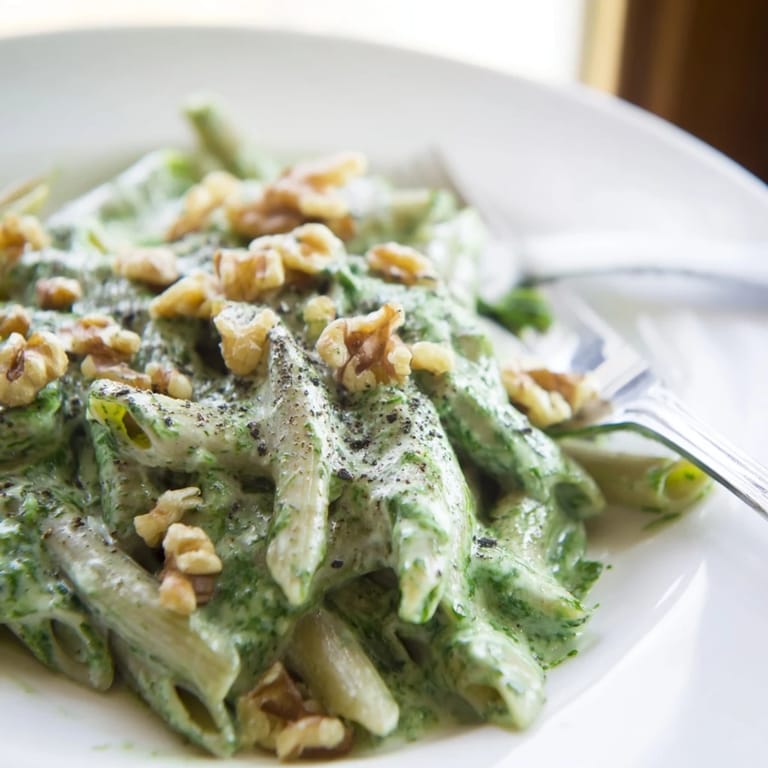
- Pour the green sauce over the drained pasta in the pot and toss everything together with tongs, adding splashes of pasta water until the sauce coats every piece. It should look glossy and creamy, not dry or clumpy.
- Serve it hot:
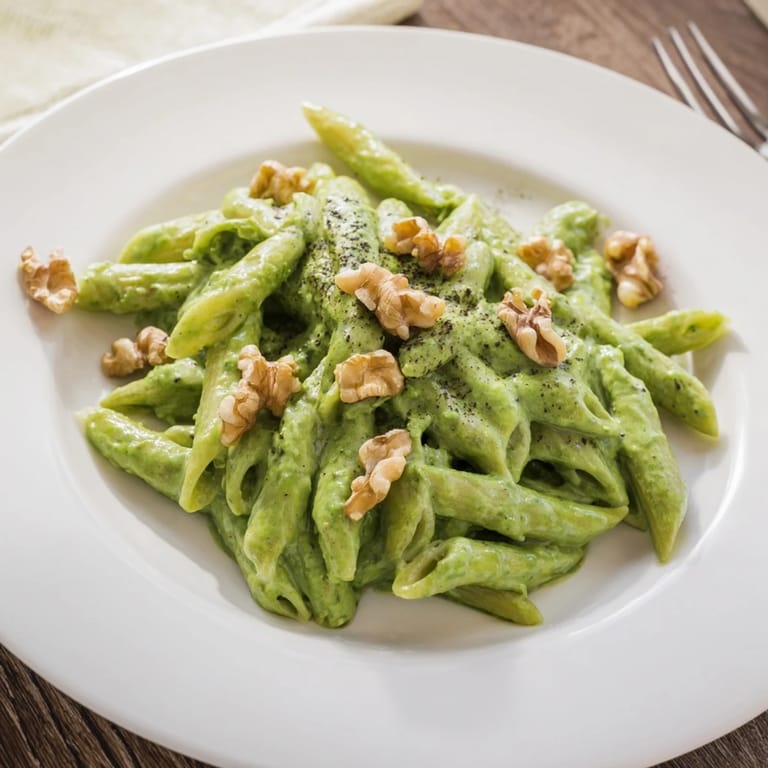
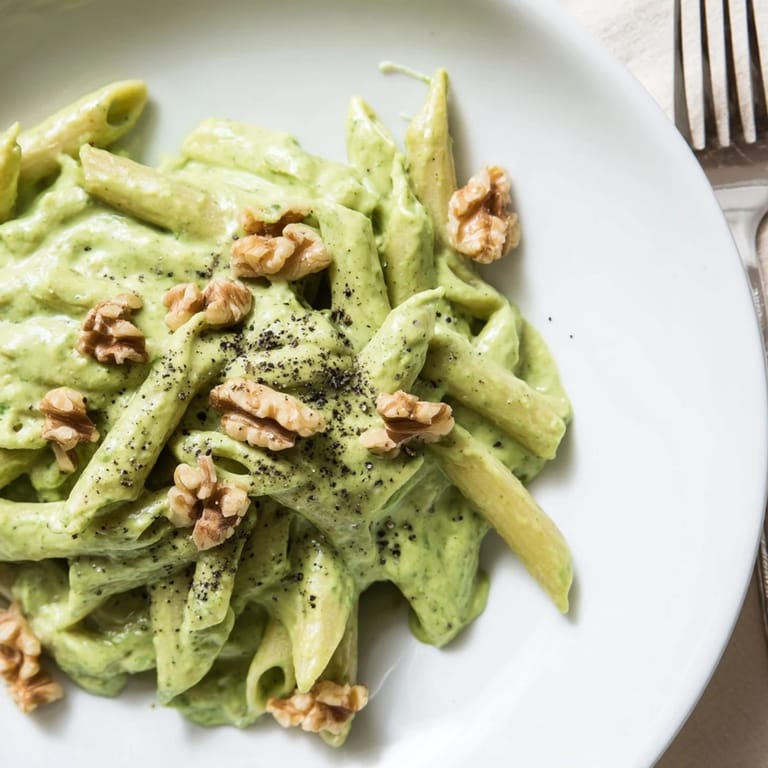
- Plate the pasta immediately and top with the reserved chopped walnuts, a few grinds of black pepper, and lemon zest if you want a little extra brightness.
 Pin to Board
 One night I made this for a friend who swore she hated anything green and leafy. She was skeptical when I set the bowl in front of her, but halfway through she looked up and said it tasted like spring. That's when I realized this dish isn't just about feeding people, it's about changing their minds. Now every time I make it, I think about how food can surprise us when we let it.
Making It Your Own
This recipe is forgiving and loves to be adapted. I've stirred in sautéed mushrooms when I wanted something meatier, tossed in sun dried tomatoes for a sweet tangy contrast, and even swapped the walnuts for cashews when my sister visited with her tree nut allergies. You can also add a pinch of red pepper flakes if you like a little heat, or stir in some white beans for extra protein and creaminess. The base is so versatile that it feels like a different dish every time I tweak it.
Storing and Reheating
Leftovers keep in an airtight container in the fridge for up to three days, though the sauce may thicken as it sits. When you reheat it, add a splash of plant milk or pasta water and warm it gently in a skillet over low heat, stirring often so it doesn't break or dry out. I've even eaten it cold straight from the fridge as a pasta salad, and it was surprisingly good with a squeeze of fresh lemon on top. The sauce itself can be made a day ahead and stored separately, which makes weeknight dinners even easier.
Serving Suggestions
This pasta shines on its own, but it also pairs beautifully with simple sides that don't compete with the creamy, earthy flavors. A crisp green salad with a light vinaigrette cuts through the richness, and a slice of warm, crusty bread is perfect for mopping up any sauce left on the plate. I've served it alongside roasted vegetables like cherry tomatoes or zucchini, and the sweetness from the roasting balances the slight bitterness of the spinach. If you're feeling fancy, a chilled glass of Pinot Grigio or a sparkling water with lemon makes it feel like a special occasion.
- Top with extra lemon zest and a drizzle of good olive oil for a elegant finish.
- Serve with garlic bread or focaccia to make it a full meal.
- Pair with a simple arugula salad dressed in balsamic for a contrast in texture and flavor.
 Pin to Board
 This is the kind of recipe that makes you feel capable in the kitchen, even on days when you're running on empty. It's quick, it's nourishing, and it tastes like you cared, which is really all any of us are trying to do at the end of a long day.
Common Questions
- → Can I make this ahead of time?
Yes, you can prepare the sauce up to 2 days ahead and store it in an airtight container in the refrigerator. Cook the pasta fresh when ready to serve, then combine and add pasta water to achieve the right consistency.
- → What can I use instead of walnuts?
Cashews, almonds, or pine nuts work beautifully as substitutes. Toast them the same way for best flavor. Sunflower seeds provide a nut-free alternative with similar texture and richness.
- → How do I make the sauce thicker or thinner?
Add more reserved pasta water for a thinner, silkier sauce. For a thicker consistency, reduce the plant-based milk slightly or add extra nutritional yeast. The starch in the pasta water helps create that creamy coating.
- → Is this suitable for gluten-free diets?
Absolutely. Simply use gluten-free pasta instead of regular wheat pasta. All other ingredients are naturally gluten-free, making this dish accessible for those with celiac disease or gluten sensitivity.
- → What wine pairs well with this dish?
A crisp white wine like Pinot Grigio complements the fresh lemon and spinach flavors beautifully. Other excellent pairings include Sauvignon Blanc, Vermentino, or a light Prosecco.
- → How can I add more protein to this meal?
Sauté mushrooms, grilled tofu, or chickpeas and toss them in with the pasta. Tempeh, white beans, or lentils also work wonderfully and add substantial protein without compromising the plant-based nature of the dish.