 Pin to Board
 I was flipping through a design magazine one afternoon when a photograph of an actual coral reef stopped me cold—those impossible colors, the way everything seemed to glow from within. That night, I couldn't stop thinking about translating that visual magic onto a plate. What if I built a dish that captured that same sense of wonder, using ingredients that actually belonged together? The Coral Reef was born from that daydream, and the first time I plated it for friends, watching their faces light up told me I'd stumbled onto something special.
I made this for a dinner party on the first truly warm evening of spring, and my friend Sarah literally gasped when I set it down. The broiler made the Gruyère bubble and brown in the most inviting way, and the chives scattered on top caught the candlelight. Someone asked if it was too beautiful to eat, and we all laughed before diving in—that's the moment I knew this dish had crossed from clever concept into genuine crowd-pleaser.
Ingredients
- Large pink shrimp, 500 g: Buy them already peeled and deveined if you can; it saves time and your hands won't smell like seafood for three days. Look for shrimp that are a natural pink-gray, not the bright pink ones that have been sitting too long.
- Oranges and pink grapefruit, segmented: The bright acidity and natural sweetness are what make this dish sing—don't skip the citrus or use juice as a shortcut. Segmenting by hand takes three minutes and gives you clean, beautiful pieces.
- Lemon juice: Fresh lemon is non-negotiable here; it wakes up the shrimp and prevents the richness from becoming one-note.
- Gruyère cheese, 120 g grated: This cheese melts beautifully under the broiler and develops a nutty, almost caramel note. It's worth buying a wedge and grating it yourself rather than pre-shredded.
- Ricotta cheese, 50 g: The mild creaminess of ricotta balances the Gruyère—think of it as a soft counterpoint to the harder cheese's boldness.
- Zucchini and carrot ribbons: Cutting them thin and steaming briefly keeps them tender but with a whisper of structure, so they don't disappear into mush.
- Fresh chives and dill: These aren't just garnish; they're your final flavor wake-up call, adding brightness and a hint of anise from the dill.
- Olive oil and seasoning: Use your good olive oil here—it's not hidden in a sauce, so quality matters. Salt and pepper are your best friends for bringing out the natural sweetness of the shrimp and citrus.
Tired of Takeout? 🥡
Get 10 meals you can make faster than delivery arrives. Seriously.
One email. No spam. Unsubscribe anytime.
Instructions
- Preheat and prepare:
- Turn your broiler to high about five minutes before you plan to cook, so it's properly hot. Gather everything near your stove—mise en place might sound fancy, but it's really just making sure you're not scrambling when things move fast.
- Season and sauté the shrimp:
- Toss the shrimp with olive oil, lemon juice, salt, and pepper, then sauté them in a hot skillet for exactly two minutes per side. They'll go from translucent to opaque and firm; that's your cue to stop. Overcooked shrimp turns to rubber, so don't linger.
- Brighten the citrus:
- Gently combine orange and grapefruit segments with the zest and a pinch of salt in a separate bowl. The salt pulls out subtle juices and deepens the flavor without making anything taste salty.
- Build your base:
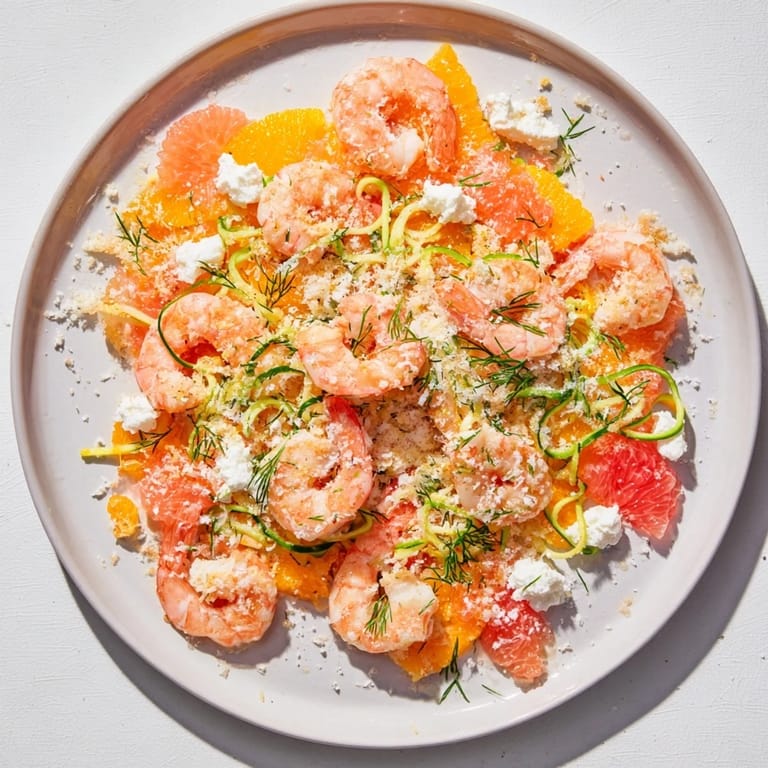
- Steam zucchini ribbons and carrot strips for just one to two minutes—they should still have a gentle bend to them. Arrange them on your oven-safe serving platter in loose, organic clusters, as if you're sketching the foundation of a reef.
- Layer the colors:
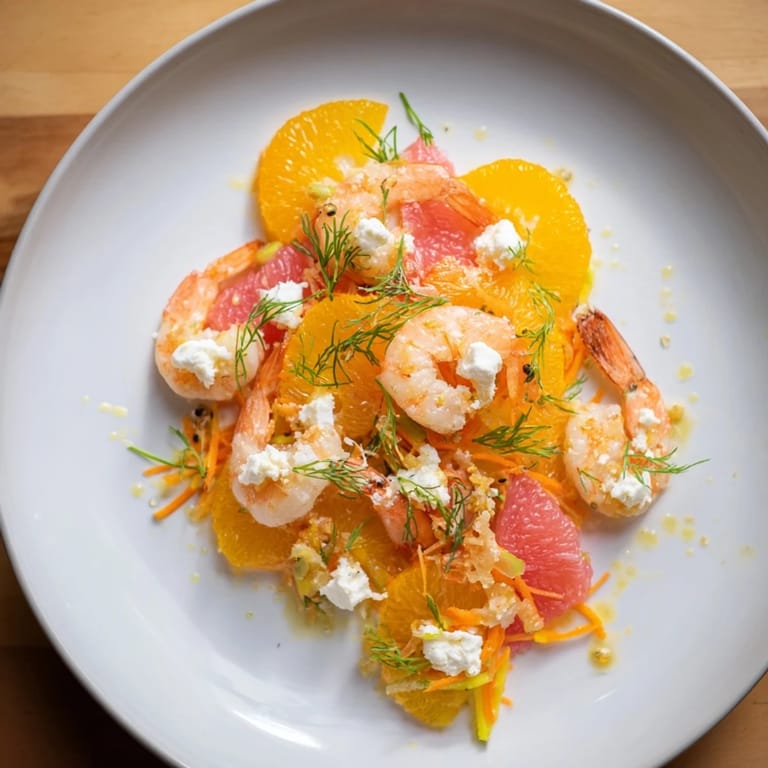
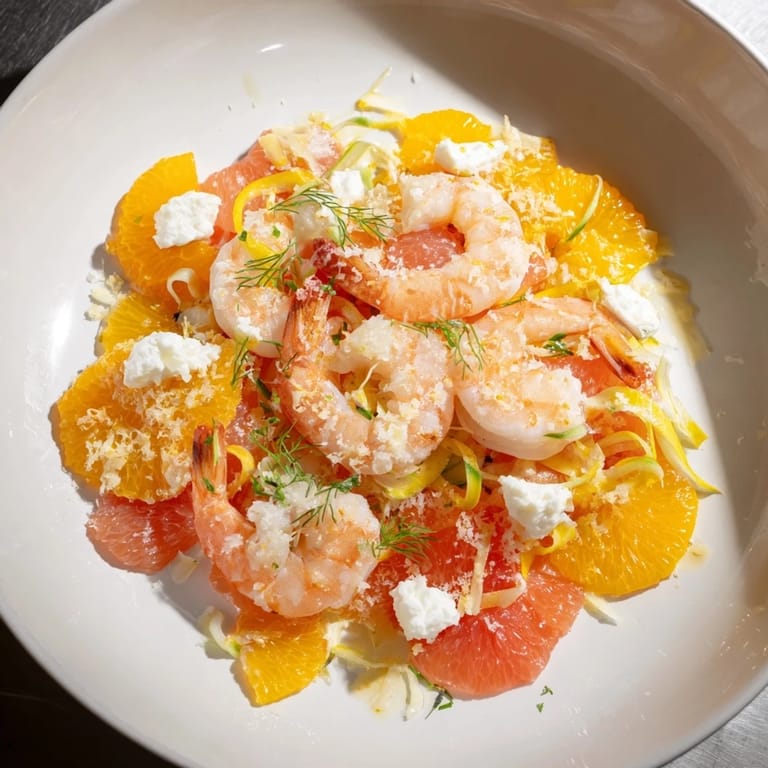
- Nestle the warm shrimp and cool citrus segments among the vegetables, tucking them in to create visual interest and depth. This is where you get to play—there's no wrong way as long as it looks like something you'd want to eat.
- Add the cheese:
- Sprinkle grated Gruyère evenly across everything, then dot small spoonfuls of ricotta around the platter. The combination of these two cheeses is what creates that incredible contrast of textures.
- Broil until bubbly:
- Slide the platter under the hot broiler for two to three minutes, until the Gruyère bubbles and gets lightly golden at the edges. Watch it carefully—broilers are moody, and two extra seconds can turn gorgeous into burned.
- Finish and serve:
- Pull it out, scatter fresh chives and torn dill over the top, and drizzle with remaining olive oil. The fresh herbs add a moment of coolness against the warmth, and the olive oil ties everything together. Serve immediately while the cheese is still melted and the vegetables are warm.
 Pin to Board
 What struck me most about this dish is that it somehow feels both light and indulgent at the same time. Someone once told me that the best meals are the ones that surprise you—and this one does, every single time, with the way the warm cheese mingles with cool citrus and tender shrimp.
The Magic of Visual Eating
We eat with our eyes first, and this dish knows that. The moment it comes out from under the broiler, golden and bubbling, conversation stops. I've learned that when you take the time to make something look like it belongs in a magazine, people automatically slow down and taste more carefully—they're already invested in the experience before the first bite. The colorful vegetables and pink shrimp against the melted cheese create a natural frame that makes everything look more special than the sum of its parts.
Citrus as Your Secret Weapon
This is where the dish comes alive. Most people don't think about pairing shrimp with grapefruit, but the slight bitterness cuts through the richness of the cheese in a way that feels both unexpected and inevitable. Orange adds sweetness and brightness, while lemon provides the structural acidity that keeps everything from feeling heavy. The trick I've learned is to use fresh citrus segments rather than juice—you get the clean flavor without turning your platter into a puddle, and the visual element of whole segments is half the appeal.
Why This Works as One Dish
The Coral Reef succeeds because it respects the natural flavor of each ingredient while letting them amplify each other. Shrimp and cheese might seem like an odd pairing, but when you add bright citrus and fresh herbs, suddenly it makes perfect sense. The vegetables provide textural contrast and volume without competing for attention. Every element serves the whole, and nothing feels forced or fussy.
- Don't rush the plating—take an extra minute to arrange things thoughtfully, and it elevates the entire experience.
- If you're cooking for people with different preferences, this dish is flexible enough to subtract (no cheese for someone avoiding dairy) without falling apart.
- Serve with a very cold white wine or rosé; the meal practically demands it.
 Pin to Board
 This dish has a way of becoming part of your entertaining rotation for good reason—it's beautiful, relatively quick, and tastes like you spent hours in the kitchen. More importantly, it reminds you that some of the best meals are the ones where you take a moment to make something thoughtfully, not necessarily something complicated.
Common Questions
- → What type of shrimp is best for this dish?
Large pink shrimp, peeled and deveined, work best to provide tender texture and mild flavor.
- → Can I substitute Gruyère cheese if unavailable?
Yes, Emmental or bubbly mozzarella are excellent alternatives that melt well and complement the citrus notes.
- → How should the vegetables be prepared?
Zucchini should be sliced into thin ribbons and steamed briefly with julienned carrot strips to keep textures tender yet vibrant.
- → What cooking methods enhance the citrus flavors?
Tossing citrus segments with zest and a pinch of salt brightens and balances their natural sweetness with the savory shrimp and cheese.
- → How long should the dish be broiled?
A quick 2–3 minute broil under high heat melts and lightly browns the cheese without overcooking the shrimp.
- → What garnishes complement this dish?
Fresh chives, torn dill, and a drizzle of olive oil enhance freshness and add subtle herbal notes.