 Pin to Board
 There's something about the way a spoon breaks through cool yogurt that makes morning feel intentional. I discovered çılbır at a small breakfast spot in Istanbul where the owner moved with such ease between tables, pouring tea and setting down these luminous plates. The eggs were perfect, the yogurt garlicky and cool, but what stopped me was the butter—it had this dusty, almost citrus note that I later learned was sumac. Now whenever I make it at home, that same smell takes me right back to that narrow kitchen with sunlight streaming across blue tiles.
Last winter I made this for a friend who'd been skeptical about eggs for breakfast—she was stuck in the scrambled-eggs rut. Watching her fork through that first bite, seeing her pause at the sumac, then go back for another—that's when I realized this dish does something most breakfast food doesn't. It asks you to slow down and notice the layers.
Ingredients
- Greek yogurt: Use full-fat if you can; it's the foundation and should taste clean and slightly tangy, not sour.
- Garlic clove: Grate it finely rather than mincing—the microplane does something special that turns it creamy instead of sharp.
- Eggs: The fresher the better; older eggs slip out of their shells too easily when poaching.
- Sumac: This is non-negotiable; it's what makes this dish itself, with a bright lemon-like flavor that can't be replaced.
- Butter and olive oil: The combination matters—butter gives richness, olive oil adds a subtle fruity note.
- Pomegranate seeds: Choose ones that are tart-leaning rather than super sweet; they should feel like a flavor accent, not candy.
- Fresh herbs: Dill is traditional, but parsley works too; tear or chop just before serving so they stay bright.
Tired of Takeout? 🥡
Get 10 meals you can make faster than delivery arrives. Seriously.
One email. No spam. Unsubscribe anytime.
Instructions
- Build your yogurt base:
- Stir the grated garlic and salt into yogurt until it's silky and even, then spread it across your plates like you're creating a small landscape. This is what the eggs will sit on, so make sure it's calm and level.
- Prepare the poaching water:
- Fill a saucepan with enough water so the eggs will float freely, bring it to that gentle simmer where you see small bubbles rising (not a rolling boil). Add vinegar, which helps the egg whites set faster without any flavor impact.
- Poach the eggs:
- Crack each egg into a small bowl first—this lets you control the slide into water. Swirl the water gently to create a little whirlpool, then slide the egg in; it should hold together within seconds. Watch for the whites to turn opaque and firm while the yolk jiggles slightly when you shake the pan—about 3-4 minutes total.
- Finish the infused butter:
- Melt butter with olive oil over medium heat until it's foaming, then add sumac and pepper. Thirty seconds of gentle stirring is all you need; you're just waking up the spices, not cooking them into oblivion.
- Plate and serve:
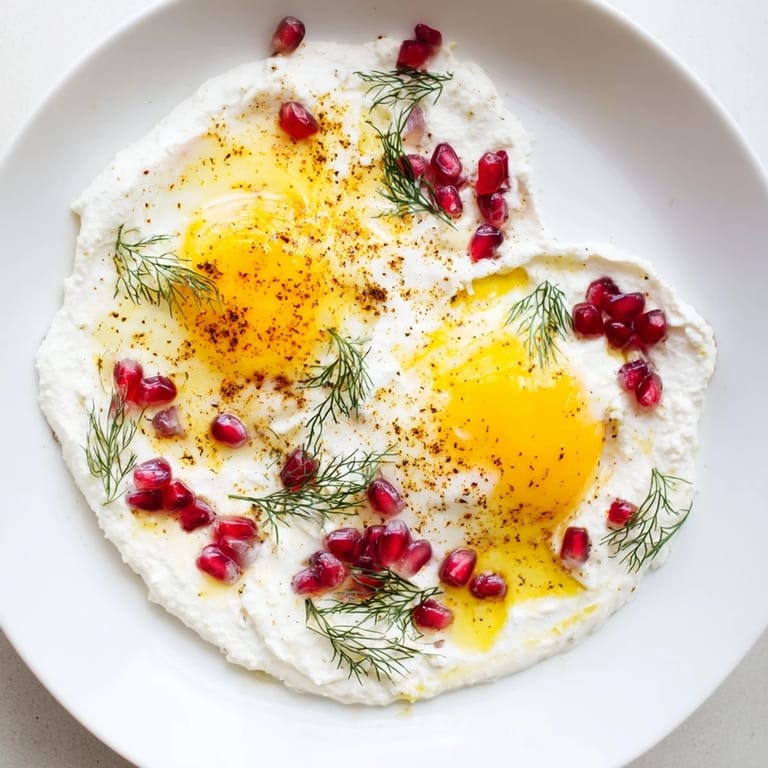
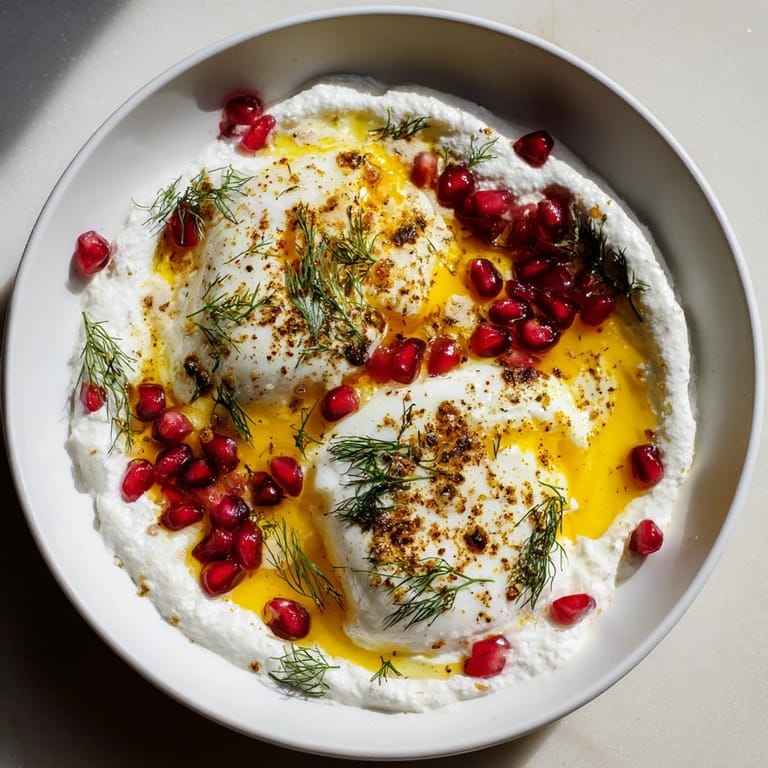
- Top the yogurt with two poached eggs per plate, drizzle with that golden sumac butter, then scatter pomegranate seeds and herbs across everything. Taste the seasoning and crack fresh pepper over the top. Eat it while the eggs are still warm and the yogurt is still cool.
 Pin to Board
 I remember my grandmother tasting this for the first time and nodding slowly, saying it reminded her of a dish from her childhood but different, better—like someone had taken an old idea and made it modern without losing its soul. That's what this feels like to cook: respectful but not precious.
Why Sumac Is Your Secret Weapon
Sumac gets overlooked in most kitchens, tucked behind paprika and cumin. But it's been the backbone of Middle Eastern cooking for centuries because it does something unique: it adds brightness and subtle tartness without any heat or bitterness. In this dish, it transforms what could be a simple egg-and-yogurt plate into something that feels complex. A quarter-teaspoon might seem small, but it's the difference between breakfast and an experience.
The Poaching Technique That Actually Works
Most home cooks are scared of poached eggs, and I understand why—they seem delicate, temperamental. But the truth is simpler than you'd think: the main variables are temperature and egg freshness. Once you accept that those two things matter, everything else becomes just technique. I've made hundreds of poached eggs, and the ones that fail are usually in water that's not quite hot enough, or from eggs that have been sitting around too long.
Building Layers of Flavor
What makes çılbır memorable isn't any single ingredient but how they exist together. The cool, savory yogurt base. The warm, runny egg yolk that acts like a sauce. The citrusy, almost dusty sumac. The bright pomegranate. Each component is subtle on its own, but together they create something that feels both comforting and surprising. This is the kind of breakfast that wakes up your palate instead of just filling your stomach.
- Serve with warm pita or flatbread if you want something to soak up the yogurt and butter.
- Make the yogurt base the day before and reheat it gently when you're ready to cook the eggs.
- Fresh pomegranate is best, but if it's out of season, a few pomegranate molasses drizzled on top adds similar tartness.
 Pin to Board
 This dish has become my answer to the question of what breakfast should be: simple enough for a weekday morning, special enough to feel like a gift to yourself. Make it once and you'll understand why it's survived centuries.
Common Questions
- → What is the best yogurt to use?
Plain Greek yogurt works well for its creamy texture and tang, but strained plain yogurt can offer a thicker consistency.
- → How do you poach eggs properly?
Use gently simmering water with a splash of vinegar to help the eggs hold shape, cook for 3-4 minutes until whites set and yolks are runny.
- → Can I substitute sumac with another spice?
Lemon zest or a mild chili powder can offer some brightness, but sumac's unique tang is key to authentic flavor.
- → What role do pomegranate seeds play?
Pomegranate seeds add bursts of sweetness and a crunchy contrast that complement the creamy and savory elements.
- → Is this dish suitable for a vegetarian diet?
Yes, it contains no meat and uses dairy and eggs, fitting vegetarian preferences.