 Pin to Board
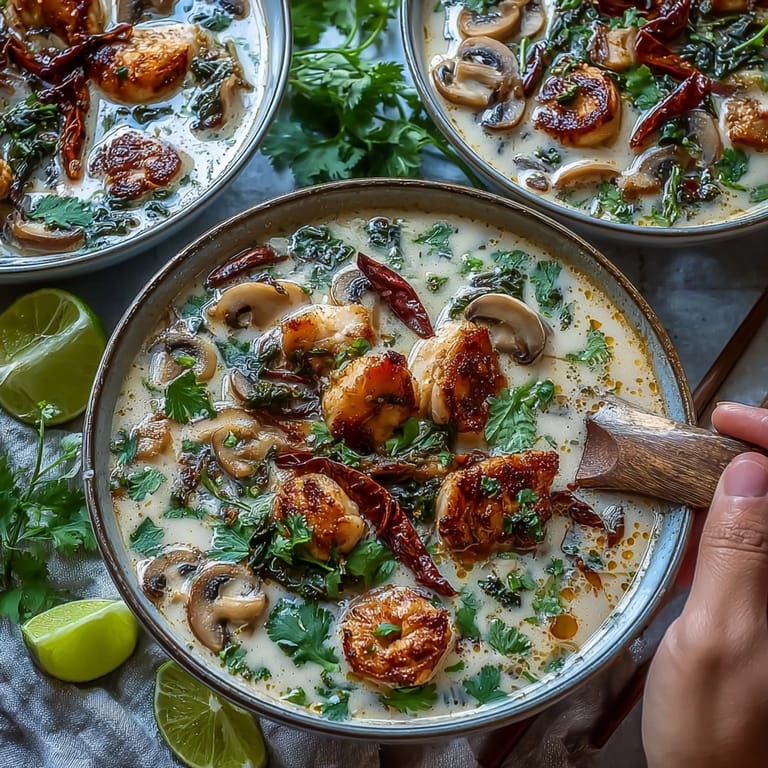
 Tom Kha Soup is a cornerstone of Thai cuisine, celebrated for its incredible depth of flavor and comforting, velvety texture. This fragrant soup perfectly balances the creaminess of coconut with the sharp, citrusy notes of lemongrass and kaffir lime leaves. It is a soul-warming dish that brings the vibrant tastes of Southeast Asia right to your table.
Pin to Board The secret to an authentic Tom Kha lies in the aromatics. By gently simmering the galangal, lemongrass, and lime leaves, you unlock essential oils that create a sophisticated and aromatic broth. This version uses tender chicken and button mushrooms, providing a satisfying heartiness to every spoonful.
Ingredients
Tired of Takeout? 🥡
Get 10 meals you can make faster than delivery arrives. Seriously.
One email. No spam. Unsubscribe anytime.
- Protein: 300 g (10 oz) boneless, skinless chicken breast or thighs, thinly sliced
- Broth & Base: 400 ml (1 can) coconut cream, 500 ml (2 cups) chicken stock, 2 stalks lemongrass (trimmed and bruised), 4 slices fresh galangal (or 1 tbsp ginger, if unavailable), 4 kaffir lime leaves (torn)
- Vegetables & Aromatics: 200 g (7 oz) button mushrooms (sliced), 2 small shallots (thinly sliced), 2 cloves garlic (smashed), 2–3 Thai birds eye chilies (smashed, optional)
- Seasoning: 2 tbsp fish sauce, 1 tbsp lime juice (plus extra to serve), 1 tsp sugar, salt (to taste)
- Garnish: Fresh cilantro leaves, extra lime wedges
Instructions
- 1. Infuse the Broth
- In a large saucepan, combine coconut cream and chicken stock. Add lemongrass, galangal, kaffir lime leaves, shallots, garlic, and chilies. Bring to a gentle simmer over medium heat.
- 2. Simmer
- Simmer for 10 minutes to infuse the broth with the aromatics.
- 3. Cook Protein and Mushrooms
- Add sliced chicken and mushrooms to the pot. Continue to simmer for 8–10 minutes, or until the chicken is cooked through and mushrooms are tender.
- 4. Clean the Soup
- Remove and discard lemongrass, galangal, and lime leaves.
- 5. Final Seasoning
- Add fish sauce, lime juice, sugar, and salt. Stir, taste, and adjust seasoning as needed.
- 6. Serve
- Ladle soup into bowls. Garnish with fresh cilantro and serve with extra lime wedges.
Zusatztipps für die Zubereitung
For the best results, ensure the broth stays at a gentle simmer; boiling too vigorously can cause the coconut cream to separate. Make sure to bruise the lemongrass thoroughly before adding it to the pot to maximize flavor extraction.
Varianten und Anpassungen
Substitute chicken with tofu for a vegetarian version and use soy sauce instead of fish sauce. You can also adjust the quantity of Thai birds eye chilies to suit your preferred heat level.
Serviervorschläge
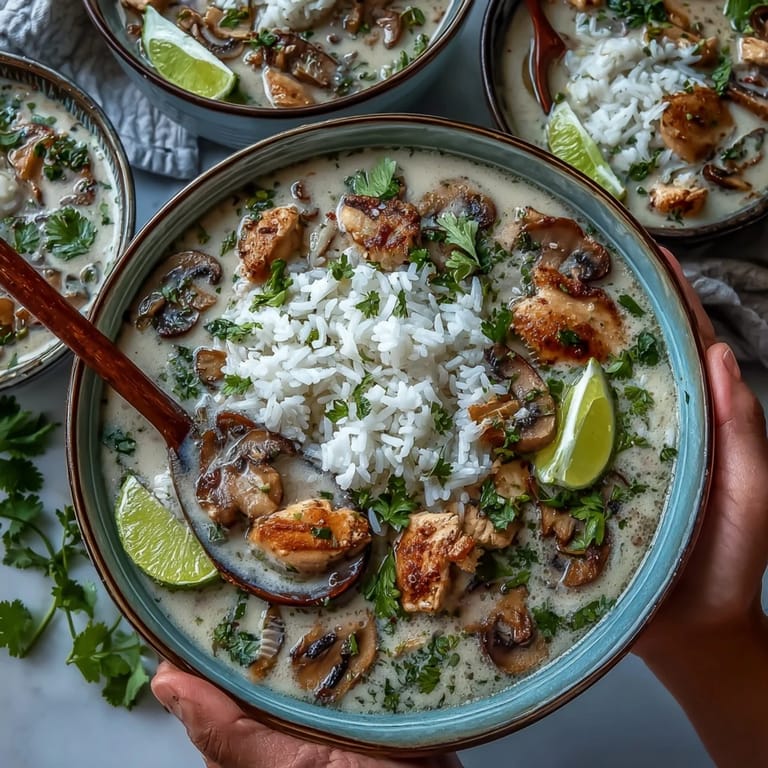
This Tom Kha Soup pairs exceptionally well with fragrant jasmine rice, which helps soak up the delicious, creamy broth.
 Pin to Board
 With its vibrant colors and complex flavors, this Tom Kha Soup is a rewarding dish to make at home. Finish each bowl with a fresh squeeze of lime and a handful of cilantro to experience the true essence of Thai comfort food.
Common Questions
- → What makes Tom Kha different from Tom Yum?
Tom Kha features coconut cream creating a rich, velvety texture, while Tom Yum is a clear broth soup. Tom Kha also includes galangal and tends to be milder with creamier notes from the coconut base.
- → Can I make this vegetarian?
Yes, substitute chicken with firm tofu and replace fish sauce with soy sauce. The result remains delicious with the same aromatic profile from lemongrass, galangal, and lime leaves.
- → How spicy is this soup?
The heat level is adjustable. Two to three Thai bird's eye chilies provide moderate heat, but you can reduce or omit them for a milder version or add more if you prefer it spicy.
- → What can I serve with Tom Kha?
Fragrant jasmine rice is the classic accompaniment, perfect for soaking up the creamy broth. It also pairs well with Thai spring rolls, green papaya salad, or grilled meats for a complete meal.
- → How long does Tom Kha keep in the refrigerator?
Stored in an airtight container, it keeps for 3-4 days. The broth may separate slightly when cold but will emulsify when reheated. Avoid freezing as coconut cream can change texture.
- → Can I use ginger instead of galangal?
Yes, though the flavor will differ slightly. Galangal has a piney, citrusy note while ginger is more peppery. Use fresh ginger in equal amounts if galangal isn't available.