 Pin to Board
 My neighbor brought over a Thai takeout container one humid summer evening, and I watched her eat straight from the bowl with a satisfied sigh that made me curious. She described the layers of creamy coconut rice, tender chicken, and those bright herbs that somehow made everything taste alive. That night, I decided to recreate it myself, and the moment the garlic and ginger hit hot oil in my wok, I understood why she looked so content. It's the kind of dish that feels fancy but doesn't demand a cooking degree, just a willingness to let the ingredients speak for themselves.
I made this for my partner on a random Tuesday when he'd had a rough day at work, and I watched him pause mid-chew, fork suspended, then close his eyes like he was tasting it for the first time. He went back for seconds and asked when I'd learned to cook Thai food, which made me laugh because I hadn't, not really. That bowl somehow became our shorthand for a meal that says, 'You matter enough for me to spend time on this,' and we still make it regularly when we want to feel like we're traveling without leaving the kitchen.
Ingredients
- Jasmine rice: Rinsing it removes excess starch and lets it stay separate and fluffy instead of clumping together, which I learned the hard way after my first sticky batch.
- Full-fat coconut milk: Don't grab the light version here; the fat is where the richness and authentic flavor live, transforming plain rice into something creamy and luxurious.
- Boneless, skinless chicken thighs: They stay juicier than breasts and forgive you if you're a few minutes off on timing, which feels important when you're juggling multiple components.
- Fish sauce: It smells funky in the bottle, but trust it, because it's the salty, savory backbone that makes everything taste more like itself.
- Fresh ginger and garlic: Minced or grated fresh versions wake up your wok and make the whole kitchen smell like a Thai restaurant in the best way.
- Lime juice: It arrives at the end like a cymbal crash, brightening everything and cutting through the richness so nothing feels heavy.
- Fresh Thai basil and cilantro: If you can find Thai basil, use it; if not, regular basil works, but cilantro is non-negotiable because it carries the herbaceous soul of the dish.
- Roasted peanuts: They add crunch and nuttiness, though you can swap them for sesame seeds if allergies are a concern in your kitchen.
Tired of Takeout? 🥡
Get 10 meals you can make faster than delivery arrives. Seriously.
One email. No spam. Unsubscribe anytime.
Instructions
- Start the Coconut Rice:
- Combine your rinsed jasmine rice, coconut milk, water, and salt in a saucepan and bring it to a boil so you can see the liquid bubbling around the grains. Once it boils, drop the heat to low, cover it, and let it simmer for 15 to 18 minutes until the rice is tender and all that liquid has been absorbed into each grain.
- Sear the Chicken:
- Heat your oil in a wok or large skillet over medium-high heat until it shimmers, then add minced garlic and ginger and let them toast for about a minute until your kitchen fills with that toasty, aromatic smell. Add your chicken pieces and stir them around for 6 to 7 minutes until they're golden on the outside and cooked through, then pour in the fish sauce, soy sauce, brown sugar, white pepper, and lime juice and toss everything together so the sauce coats every piece.
- Quick-Blanch the Vegetables:
- Drop your sugar snap peas and julienned carrots into boiling water for just one minute so they soften slightly but still have that satisfying crunch when you bite them. Drain them and rinse under cold water immediately to stop the cooking, then set them aside with the raw bell pepper strips.
- Build Your Bowls:
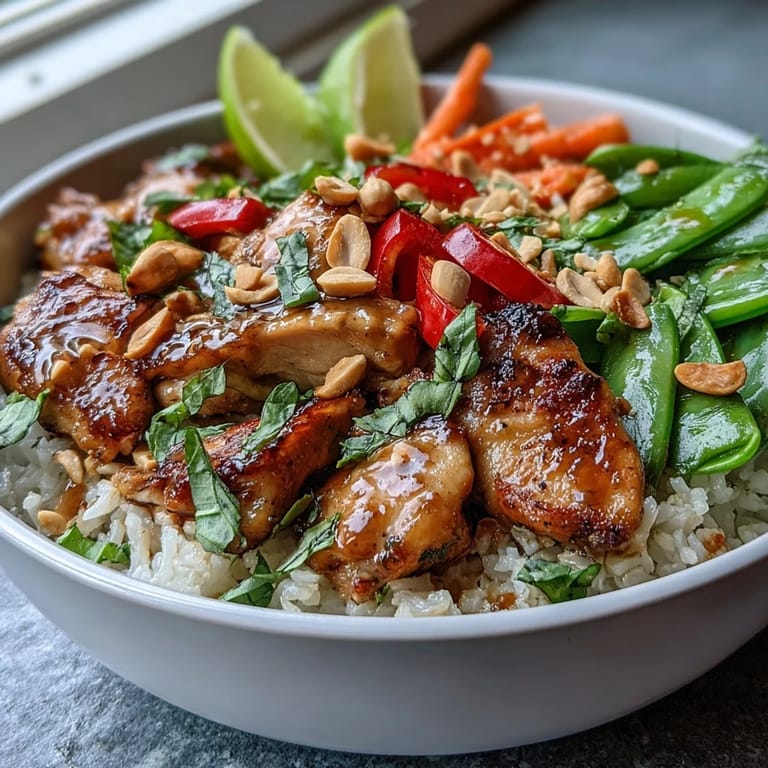
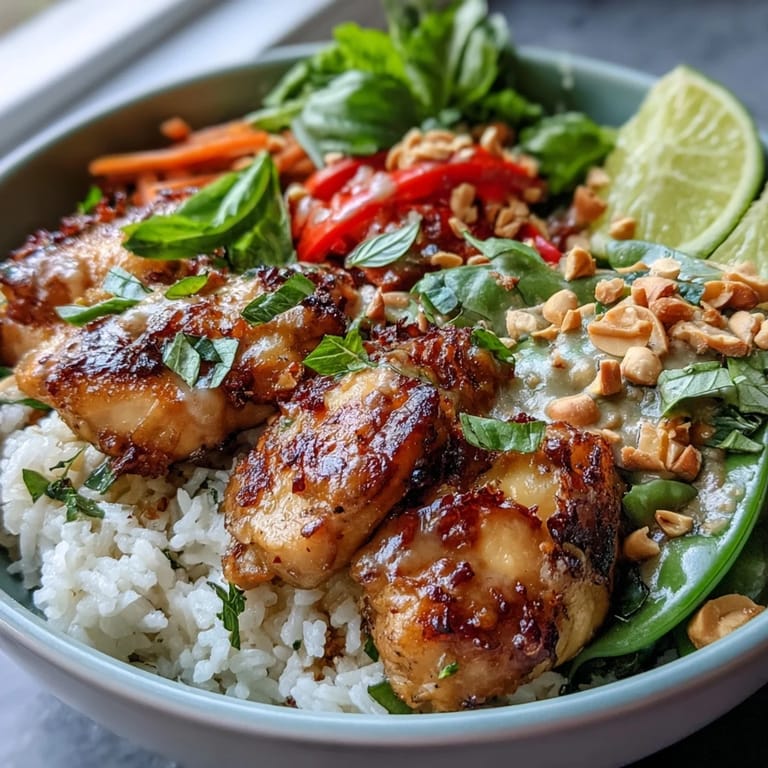
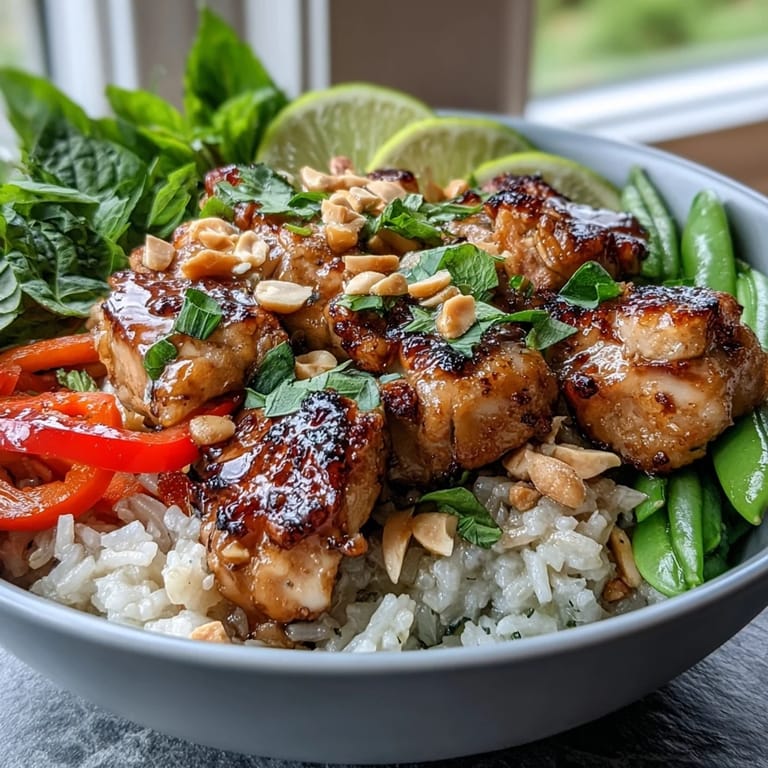
- Divide the fluffy coconut rice among four bowls as your base, then top each one with a portion of the saucy chicken, the bell pepper, peas, and carrots, arranging them so you can see all the colors. Scatter the cilantro, Thai basil, and green onions over the top, add sliced chili if you want heat, then finish with a handful of chopped peanuts and serve with lime wedges on the side.
 Pin to Board
 One evening, I made this bowl for my mom who said she didn't eat 'that kind of food,' and she came around to the idea pretty quickly. By the end of her meal, she was asking about the herbs and whether she could make it at home, and something shifted in how we thought about cooking together. It's one of those dishes that quietly proves how much flavor and satisfaction live in simplicity and fresh ingredients.
Why the Coconut Rice Changes Everything
Most coconut rice recipes use a coconut milk to water ratio that leans too heavy toward milk, leaving you with rice that tastes good but feels almost dessert-like. This one balances them equally, so the coconut flavor whispers instead of shouts, letting it play nicely with the savory chicken and herbs. The first time I tasted this proportion, I understood why bowls work so well as a format, because you're not fighting one dominant flavor but experiencing a harmony where each element has space to exist.
The Herb Situation and Why It Matters
Fresh herbs can feel like a luxury add-on, but in this bowl they're structural, not decorative. They provide brightness, contrast, and a cooling sensation against the warm rice and chicken, and they're what transforms a competent meal into one that makes you close your eyes for a second. I used to undershomp the cilantro thinking it would be too much, but then I learned that these herbs are meant to be generous, and now I always buy a little extra because handfuls of green make the bowl look alive.
Customizing without Losing Your Way
This bowl is flexible enough to handle substitutions without falling apart, which is one reason I return to it so often. You can swap the chicken for tofu by pressing it well and cooking it until it's golden, swap the peanuts for sesame seeds or cashews, use regular basil if Thai basil is impossible to find, and adjust the chili heat to whatever your household prefers. The important part is respecting the balance between the creamy rice, the protein, the crunch, and the fresh elements, because that interplay is what makes the bowl feel complete rather than chaotic.
- If you can't find Thai basil, a mix of regular basil and a tiny bit of fennel-forward herb like tarragon creates a similar complexity.
- Tofu works beautifully here if you're feeding vegetarians, and it absorbs the soy sauce mixture just as readily as chicken does.
- Leftover components can be stored separately in the refrigerator and assembled fresh the next day, so you're not eating cold rice from a container.
 Pin to Board
 This bowl has become my answer to the question of what to cook when I want something that feels special without requiring restaurant-level skill. It's a reminder that good food lives in respecting your ingredients and not overcomplicating things, and every time I make it, someone asks for the recipe.
Common Questions
- → Can I make this bowl ahead of time?
Yes, prepare the coconut rice and chicken up to 2 days in advance. Store components separately in airtight containers. Reheat gently and assemble with fresh vegetables and herbs before serving.
- → What's the best way to cook jasmine rice?
Rinse jasmine rice until water runs clear to remove excess starch. Combine with coconut milk, water, and salt. Bring to boil, then simmer covered for 15-18 minutes until liquid is absorbed. Let rest 5 minutes before fluffing.
- → Can I use chicken breast instead of thighs?
Absolutely. Chicken breasts work well but may cook slightly faster. Cut into uniform pieces and cook until golden and cooked through, about 5-6 minutes. Be careful not to overcook to maintain moisture.
- → How do I make this vegetarian?
Replace chicken with firm tofu, pressed and cut into cubes. Substitute fish sauce with additional soy sauce or a vegetarian fish sauce alternative. Everything else remains the same for a delicious plant-based version.
- → What vegetables work best in this bowl?
Sugar snap peas, bell peppers, and julienned carrots provide great crunch and color. You can also add thinly sliced cabbage, cucumber, steamed broccoli, or roasted sweet potato based on seasonal availability and preference.
- → Is this bowl spicy?
The base is mild with balanced flavors. Add sliced red chili to increase heat according to your preference. Start with a small amount and adjust—the chili's heat level varies, so taste as you go.