 Pin to Board
 A friend once told me that the best meals are the ones that don't apologize for being good for you, and this falafel quinoa bowl proved her right the first time I assembled it. I'd been experimenting with ways to make weeknight dinners feel less routine, and something about the combination of crispy, herb-studded falafel tumbling over fluffy quinoa just clicked. The tahini sauce was what sealed it, dripping down like liquid gold, transforming simple vegetables into something that felt both nourishing and indulgent. Now it's become the bowl I reach for when I want something that feels restaurant-worthy but actually comes together in under an hour.
I made this for my sister during a busy Tuesday when she showed up stressed about eating well while traveling for work. Watching her face light up when she tasted the tahini sauce was one of those quiet kitchen moments that reminded me cooking is really just saying "I want you to feel taken care of." She's been texting me photos of her attempt to recreate it ever since.
Ingredients
- Cooked chickpeas (1 1/2 cups): Use canned and drained if you're short on time, but cooking from dried gives you better texture control and a slightly earthier flavor.
- Fresh parsley and cilantro (1/2 cup each): Don't skip the fresh herbs; they're what make falafel taste alive rather than dusty.
- Green onions (2, chopped): They brighten the falafel mixture and appear again as a fresh garnish, so there's continuity in flavor.
- Garlic (2 cloves for falafel, 1 for sauce): Mince it finely so it distributes evenly throughout the mixture.
- Cumin and coriander (1/2 tsp each): These are the quiet backbone of authentic falafel flavor; toasting them briefly in a dry pan before grinding brings out their warmth.
- Cayenne pepper (1/4 tsp, optional): This is where you can customize heat; some batches I skip it entirely, other times I go heavier.
- Chickpea flour (3 tbsp): This is your binder and also keeps things gluten-free; all-purpose flour works but changes the texture slightly.
- Lemon juice (2 tbsp in falafel, 2 in sauce): It's the acid that brightens everything and prevents the mixture from tasting flat.
- Olive oil (2 tbsp for brushing): This is what gives you that golden, crispy exterior without deep frying.
- Quinoa (1 cup): Rinse it before cooking to remove the natural coating that can taste bitter; it takes just 15 minutes to cook perfectly.
- Water for quinoa (2 cups): Use a 1 to 2 ratio for fluffy, separated grains rather than mushy quinoa.
- Cucumber and cherry tomatoes: Buy them the day you plan to cook so they're at their crispest and sweetest.
- Tahini (1/3 cup): Stir it well before measuring because the oil separates; natural tahini without additives tastes cleaner.
Tired of Takeout? 🥡
Get 10 meals you can make faster than delivery arrives. Seriously.
One email. No spam. Unsubscribe anytime.
Instructions
- Get your oven ready:
- Preheat to 400°F and line a baking sheet with parchment paper so your falafel won't stick and cleanup is effortless. This small step makes everything smoother.
- Build the falafel base:
- Add chickpeas, fresh herbs, green onions, garlic, and spices to your food processor and pulse until you have a mixture that's mostly smooth but still holds some texture. You want it to feel like wet sand, not a puree.
- Shape with damp hands:
- Wet hands prevent sticking; form 12 balls or slightly flattened patties and arrange them on your sheet. Brush each one with olive oil so they'll crisp up beautifully as they bake.
- Bake until golden:
- Slide them into the oven for 22 to 25 minutes, flipping halfway through, until they're deep golden and the edges feel crispy when you press gently. The aroma that fills your kitchen is your signal they're almost done.
- Cook quinoa alongside:
- While falafel bakes, bring quinoa and salted water to a boil in a covered saucepan, then reduce heat and simmer for 15 minutes. Let it sit covered for 5 more minutes, then fluff with a fork so each grain stays separate.
- Whisk the tahini sauce:
- Combine tahini, minced garlic, lemon juice, salt, and 2 tablespoons of water and whisk until smooth and pourable. Add more water a splash at a time if you want it thinner; it should coat a spoon but still drizzle.
- Assemble your bowls:
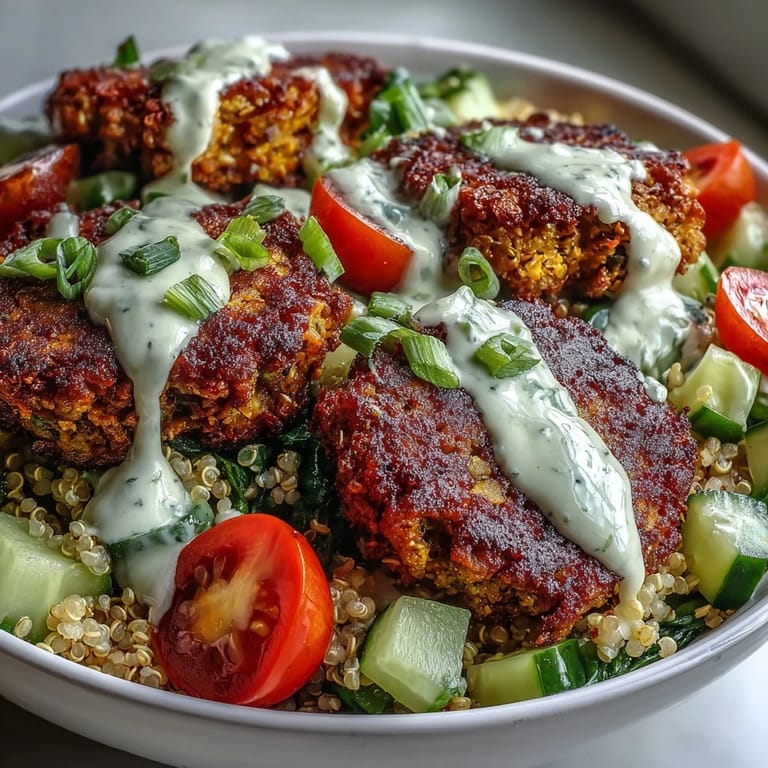
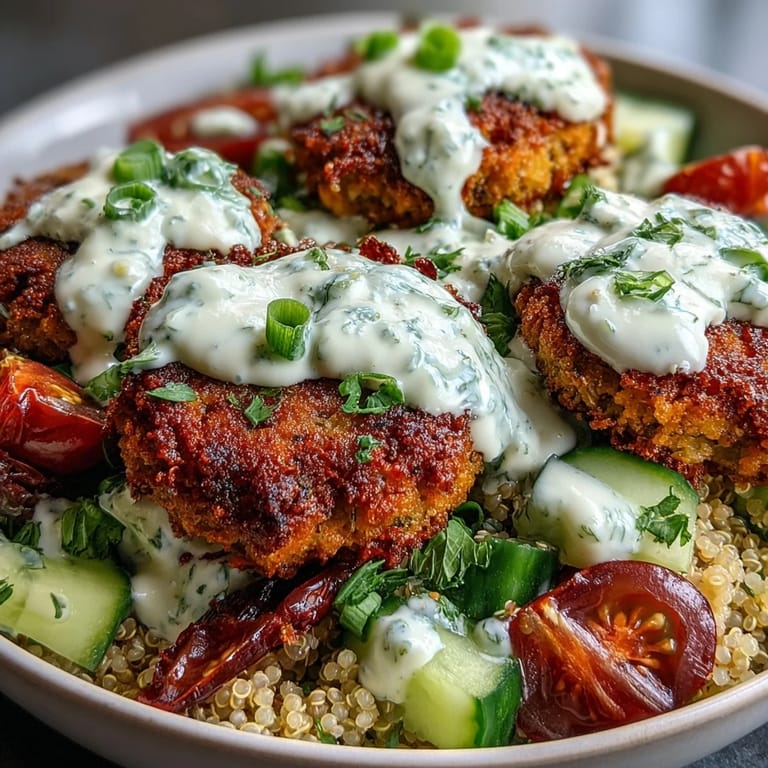
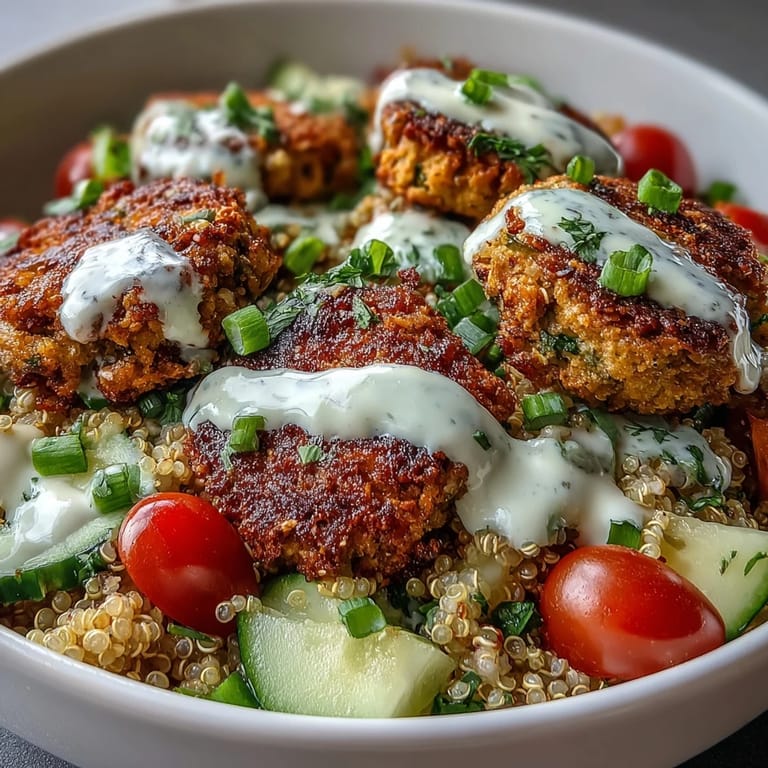
- Divide warm quinoa evenly among 4 bowls, then top each with diced cucumber, halved cherry tomatoes, sliced green onion, and three warm falafel. Drizzle generously with tahini sauce and serve right away.
 Pin to Board
 My neighbor smelled the falafel baking through our shared wall and knocked on my door mid-bite, which is how I learned that good food speaks louder than the timer. We ended up eating bowls together and talking for two hours about what makes us feel nourished versus just fed.
Building Flavor Through Layers
Each component of this bowl plays a different role in how it tastes and feels. The warm falafel brings earthiness and textural contrast, the cool, crisp vegetables add refreshment, and the tahini sauce ties everything together with its creamy, garlicky presence. When you eat it all together rather than in separate bites, you get a conversation between flavors instead of a list.
Make It Your Own
This bowl is genuinely flexible once you understand the framework. I've added toasted pumpkin seeds for crunch, swapped in roasted red peppers for cherry tomatoes when that's what I had, and once used za'atar instead of cumin because I was curious. The tahini sauce stays constant because it's what holds the whole thing together, but everything else bends to what your kitchen and mood offer.
Storage and Make-Ahead Strategies
Cooked falafel keeps for three days in an airtight container and actually tastes fine cold, though reheating in a 350°F oven for 8 minutes restores their crispness. Quinoa lasts up to five days refrigerated, and tahini sauce stays fresh for a week if you keep it sealed. Assemble bowls fresh to keep vegetables crisp, but having these components ready means dinner comes together in minutes.
- Store leftover falafel separately from the sauce so they don't get soggy.
- Make a double batch of tahini sauce and keep it on hand for drizzling over other bowls and salads all week.
- If you cook quinoa ahead, let it come to room temperature or add it while still warm depending on whether you want a hot or cool bowl.
 Pin to Board
 This bowl has become my answer to the question "what should I make?" when I want something that feels like self-care in dinner form. It's the meal that reminds you that eating well doesn't have to feel like restriction.
Common Questions
- → Can I fry the falafel instead of baking?
Yes, traditional falafel can be deep-fried for extra crispiness. Heat oil to 350°F (175°C) and fry patties for 3-4 minutes until golden brown. Drain on paper towels before serving.
- → How long does this bowl keep in the refrigerator?
Individual components stay fresh for 3-4 days when stored separately in airtight containers. Assemble just before serving for the best texture. The tahini sauce may thicken—whisk in a little water before drizzling.
- → What can I substitute for chickpea flour?
All-purpose flour works well as a binder. For gluten-free options, try oat flour, almond flour, or additional ground chickpeas. The flour helps hold the patties together during baking.
- → Is this bowl freezer-friendly?
Baked falafel freezes beautifully for up to 3 months. Cool completely, then freeze in a single layer before transferring to a freezer bag. Reheat at 375°F (190°C) for 10-12 minutes to restore crispiness.
- → Can I make the tahini sauce ahead of time?
Absolutely. The sauce keeps for 5-7 days refrigerated and actually develops more flavor over time. Store in a sealed jar and whisk well before using, adding water to reach desired consistency.
- → What other vegetables work well in this bowl?
Shredded carrots, diced bell peppers, radishes, or roasted eggplant complement the flavors beautifully. Fresh herbs like mint or basil add brightness, while pickled onions provide tangy contrast.