 Pin to Board
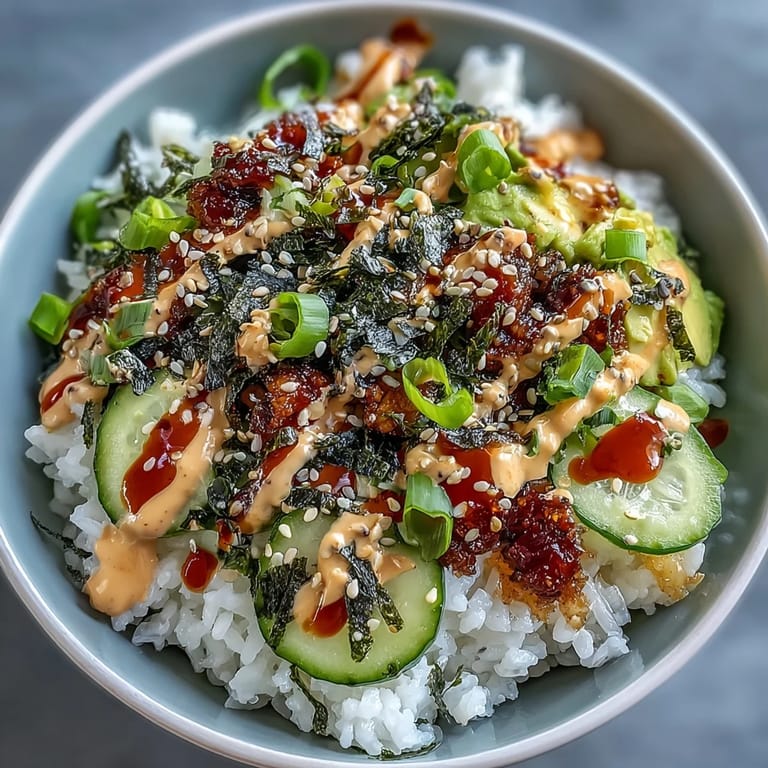
 There's something magical about the moment you realize you don't need to spend an hour rolling sushi to capture all those flavors you crave. I stumbled onto this bowl concept on a Tuesday afternoon when I had exactly fifteen minutes and a craving that wouldn't quit, standing in my kitchen with nori strips in one hand and a half-used jar of spicy mayo in the other. What started as improvisation became the meal I now make at least twice a week, because deconstructed sushi somehow tastes even better when you can taste each ingredient singing on its own. The beauty is in the simplicity, and honestly, it's prettier to look at than a tightly rolled cylinder anyway.
My friend Marco came over last month, halfway through a conversation about how he'd given up on sushi because his hands were too clumsy for rolling, and I quietly assembled two of these bowls while we talked. Watching his face light up when he took that first bite, realizing he could absolutely eat sushi without the intimidation factor, reminded me why I keep making this. Sometimes the best dishes aren't the ones that look fancy on Instagram, they're the ones that make someone feel capable and delighted at the same time.
Ingredients
- Sushi rice (1 cup): The foundation everything rests on, and rinsing it until the water runs clear makes all the difference in achieving that fluffy, separate grain texture instead of gluey paste.
- Water (1 1/4 cups): The ratio matters more than you'd think, so measure carefully and don't skip this step even though it seems obvious.
- Rice vinegar (2 tablespoons): This is what actually transforms plain rice into sushi rice, giving it that subtle tang that makes your taste buds wake up.
- Sugar (1 tablespoon) and salt (1/2 teaspoon): These dissolve into the vinegar and balance its sharpness, creating a dressing that's complex rather than one-note.
- Cucumber (1 small, julienned): The crunch factor, and julienning it thin ensures it doesn't overpower the other vegetables or make the bowl feel heavy.
- Carrot (1 small, julienned, optional): Adds natural sweetness and a beautiful pop of color that makes the whole bowl more vibrant.
- Avocado (1, sliced): Creamy and luxurious, it should be perfectly ripe but still firm enough to slice without falling apart.
- Scallion (1, thinly sliced): A whisper of onion flavor that adds depth without overwhelming the more delicate ingredients.
- Nori sheets (2, cut into strips): Seaweed strips give you that umami punch and remind you this is absolutely sushi, just unrolled.
- Pickled ginger (2 tablespoons, optional): A palate cleanser between bites and a little flavor wildcard if you're feeling adventurous.
- Edamame (1/2 cup, optional): Adds protein and a satisfying firmness, though if you're using fish you might skip these to avoid overloading the bowl.
- Sushi-grade fish (4 ounces, optional): Whether salmon or tuna, make sure it's actually labeled sushi-grade and keep it chilled until the last possible moment.
- Mayonnaise (3 tablespoons): Choose something you actually like eating straight because it's the base of your sauce and its quality matters.
- Sriracha (1 tablespoon): The heat hero, though you can dial it down if you prefer or swap it for another hot sauce you love.
- Lime juice (1 teaspoon): Brightens the mayo and cuts through the richness with a subtle citrus note.
- Toasted sesame seeds (1 tablespoon): Toasting them yourself if you can makes a noticeable difference in nuttiness and flavor intensity.
- Soy sauce or tamari: For serving on the side, letting people adjust the saltiness to their preference.
Tired of Takeout? 🥡
Get 10 meals you can make faster than delivery arrives. Seriously.
One email. No spam. Unsubscribe anytime.
Instructions
- Rinse and cook the rice:
- Run your sushi rice under cold water, stirring gently with your fingers until the water goes from milky white to clear, which takes about three to four rounds and honestly feels a bit meditative. Combine it with water in a saucepan, bring to a boil, cover tightly, reduce heat to low, and let it cook undisturbed for fifteen minutes, then sit covered for another ten minutes off the heat.
- Season while it's warm:
- Dissolve the rice vinegar, sugar, and salt together in a small bowl until you can't see any crystals, then gently fold this mixture into the still-warm rice, turning it carefully so every grain gets kissed with the dressing. This is where patience matters, because rough stirring will break the rice and turn it into mush.
- Make your spicy mayo:
- Whisk mayonnaise, Sriracha, and lime juice together in a small bowl until smooth and even, tasting as you go because Sriracha brands vary in heat level. You want it creamy, glossy, and just spicy enough to make you sit up straighter when you try it.
- Prep your vegetables:
- Julienne your cucumber and carrot into thin, matchstick-like pieces, slice your avocado, thinly slice your scallion, cut your nori into strips about the width of your pinky finger, and cook your edamame if using. This is the part where having a sharp knife and a steady hand makes everything easier and faster.
- Assemble your bowls:
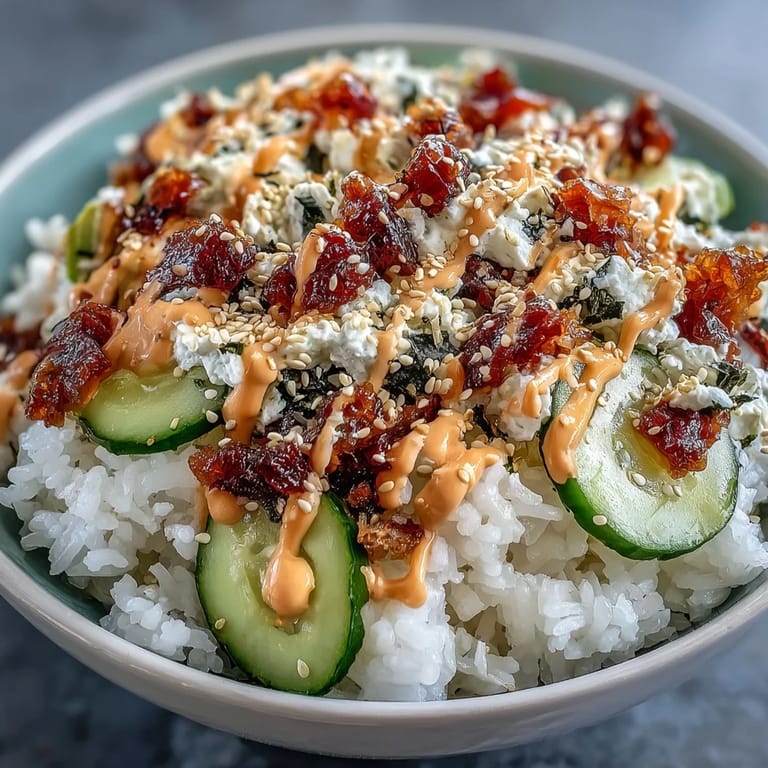
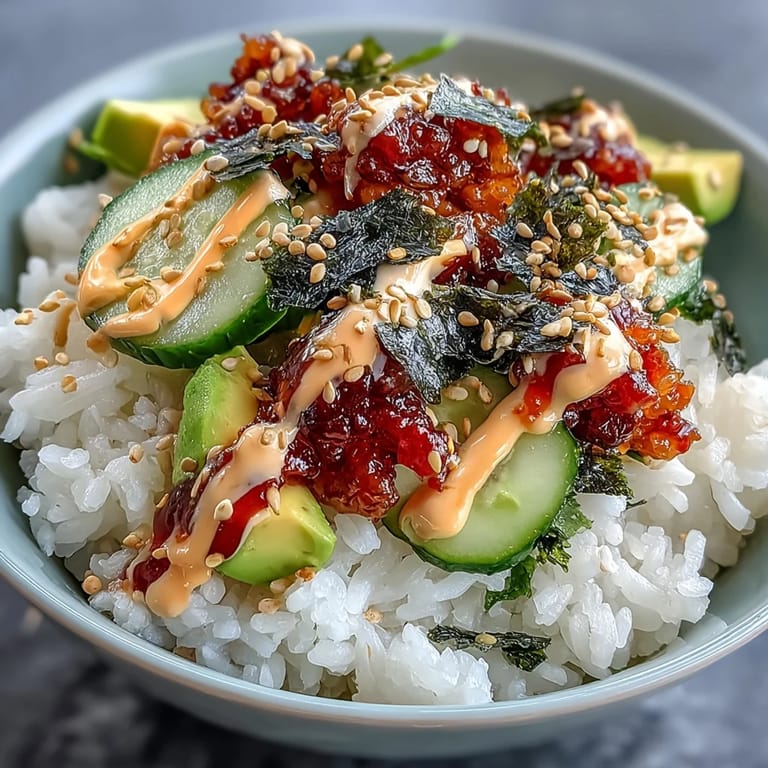
- Divide the cooled sushi rice between two bowls, then arrange your vegetables, nori, and fish (if using) in little clusters on top, because presentation matters even when you're eating alone. Think of it like creating a landscape where each ingredient has its own space.
- Drizzle and garnish:
- Drizzle your spicy mayo over everything in loose, generous strokes, then sprinkle toasted sesame seeds on top so you get them in every bite. Serve immediately with soy sauce or tamari on the side for people to adjust to their taste.
 Pin to Board
 My mom called while I was assembling one of these bowls last week and mentioned, almost offhand, that it was nice to hear me excited about cooking again. I'd nearly forgotten how picky I'd become about Asian food after some disappointing takeout experiences, and this simple bowl somehow erased all that cynicism, reminding me that the best meals are often the ones where you taste the individual ingredients instead of a muddled whole. Food has a way of shifting your mood when you're not expecting it.
Why This Bowl Works Every Time
The genius of a deconstructed sushi bowl is that it removes all the anxiety from sushi making while keeping every single flavor you actually love. There's no pressure to roll perfectly, no mystery about what's inside, and no waste because you only include what you actually want to eat. It's engineering and creativity meeting in the middle, and somehow that intersection is exactly where comfort food lives.
Customization Is Your Secret Weapon
I've made this bowl dozens of different ways depending on the season, what's on sale at the market, and what my body is asking for. In summer I add mango and jalapeño, in winter I sometimes swap in roasted mushrooms or add a soft-boiled egg for richness. The only real rule is that your rice base and your vinegar dressing should stay consistent, because those two elements hold everything together both literally and flavor-wise.
The Spicy Mayo Situation
This condiment deserves its own moment because it's honestly the difference between a healthy bowl and something you'll actually crave. The mayonnaise gives you fat and richness, the Sriracha gives you heat and character, and the lime juice gives you a brightness that prevents the whole thing from feeling heavy. You can make a larger batch and keep it in the fridge for a few days if you want to speed things up on busy nights, though it does separate slightly so give it a quick stir before using.
- Use Japanese or Korean hot sauce instead of Sriracha if that's what you have in your pantry, or even harissa or sriracha's milder cousins if heat isn't your thing.
- If you're vegan, swap regular mayo for vegan mayo and the texture and flavor are honestly almost indistinguishable in this application.
- Taste the mayo mixture before you assemble the bowls so you can adjust the heat level or lime juice to match your mood.
 Pin to Board
 This bowl has become my reset meal, the thing I make when I want to feel healthy and happy without any fuss or overthinking. It's taught me that simple, quality ingredients arranged with intention are sometimes more satisfying than anything complicated ever could be.
Common Questions
- → What type of rice is best for this bowl?
Sushi rice works best due to its sticky texture and mild flavor, which holds together nicely with the vinegar seasoning.
- → Can this bowl be made vegetarian or vegan?
Yes, by substituting vegan mayonnaise and omitting the fish, this bowl can easily cater to vegetarian or vegan preferences.
- → How is the spicy mayo prepared?
Mix mayonnaise with Sriracha and lime juice for a creamy, tangy, and spicy sauce that complements the bowl perfectly.
- → What are good alternatives to nori strips?
You can try toasted seaweed snacks or substitute with thinly sliced kale chips for a different texture.
- → How can I make this bowl gluten-free?
Use tamari in place of soy sauce and ensure all other ingredients are certified gluten-free to avoid gluten contamination.
- → Is this dish suitable for a quick meal?
Yes, with a total preparation and cooking time of about 30 minutes, it makes an easy and speedy option for a flavorful meal.