 Pin to Board
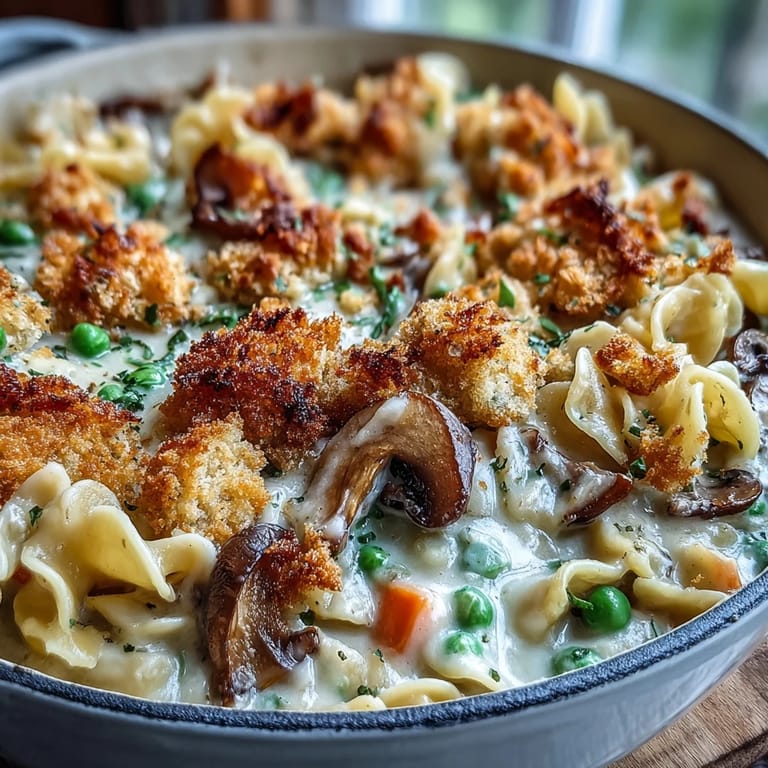
 My kitchen filled with steam one rainy Tuesday when I decided to stop choosing between pot pie comfort and pasta night cravings. I'd been staring at a half-empty box of penne and a bag of frozen peas, thinking there had to be a way to make them talk to each other. The buttery biscuit topping I scattered on top was pure instinct, a last-minute decision that turned out to be exactly the texture my spoon needed when it hit the creamy sauce below. Since that afternoon, this dish has become my answer to almost everything: busy weeknights, unexpected guests, the moment when someone says they're hungry but nothing sounds quite right.
I made this for my neighbor's family after she mentioned her kids were bored with their usual dinner rotation. Her youngest took one bite, looked up with genuine surprise, and asked if the topping was a biscuit or a cracker. That small moment of confusion felt like a victory, proof that unexpected textures and flavors landing on the same plate actually work. They asked me for the recipe three days later, and I knew I had something worth keeping around.
Ingredients
- Unsalted butter: Start with cold butter for the topping so it creates those tender, delicate crumbs that stay crisp even under the warm sauce.
- Yellow onion, carrots, and celery: This holy trio is your flavor foundation, and dicing them small means they'll soften evenly and almost disappear into the sauce.
- Button mushrooms: They add an earthy depth that keeps this from tasting too light or one-dimensional.
- Frozen peas and corn: Using frozen means they're picked at peak ripeness and won't turn mushy if you leave them in longer than expected.
- Vegetable broth: Quality matters here because it becomes your sauce's personality, so choose one you'd actually sip on its own.
- Whole milk: This creates that luxurious, coat-your-spoon creaminess that makes pasta night feel special.
- Short pasta: Shells and penne hold onto the sauce better than long noodles, so every bite tastes intentional.
- Dried thyme and parsley: These herbs whisper comfort without shouting, so they work whether you're feeling cozy or feeding a crowd.
- Smoked paprika: Just a pinch adds a subtle warmth that people always notice but can never quite name.
- Parmesan cheese: Use freshly grated if you can because the pre-shredded kind never quite melts as smoothly.
- All-purpose flour: For both the sauce base and the topping, it's your quiet partner in creating structure.
- Baking powder: This small amount lifts the biscuit crumb just enough to make it feel separate from the pasta below.
Tired of Takeout? 🥡
Get 10 meals you can make faster than delivery arrives. Seriously.
One email. No spam. Unsubscribe anytime.
Instructions
- Heat your oven and build your base:
- Set the oven to 400°F now so it's ready when you need it. In your oven-safe pot, melt butter over medium heat, then add your onion, carrots, and celery. Let them soften for about 5 minutes, stirring occasionally so they cook evenly without browning.
- Deepen the flavor:
- Add the mushrooms and let them release their moisture for 3 minutes, then stir in your minced garlic and cook until the whole pot smells like something you want to eat. This takes just a minute, but it's where the magic really begins.
- Create your sauce:
- Sprinkle flour over everything and stir constantly for a minute to eliminate any raw flour taste. Pour in your vegetable broth slowly while whisking, followed by the milk, then keep stirring until the sauce thickens slightly and coats the back of your spoon.
- Add the pasta:
- Stir in your short pasta along with the thyme, parsley, salt, pepper, and smoked paprika. Make sure every piece of pasta gets coated, then cover the pot and let it simmer for 10-12 minutes, stirring every few minutes so nothing sticks to the bottom.
- Finish the filling:
- Stir in your peas, corn, and Parmesan cheese, then let everything warm through for 2-3 more minutes. If your sauce feels too thick, add a splash more broth or milk until it feels like it can support both pasta and vegetables comfortably.
- Make the biscuit topping:
- While the pasta simmers, combine your flour, baking powder, and salt in a bowl. Cut your cold butter into small cubes and use your fingers to rub it into the flour mixture until it looks like rough sand, then stir in milk and fresh parsley just until everything is barely combined and still crumbly.
- Bring it together:
- Scatter your biscuit crumb topping evenly over the pasta, breaking up any large clumps so the topping cooks evenly. Transfer the whole pot to your preheated oven and bake for 10-12 minutes until the top is golden and looks crispy.
- Rest and serve:
- Let the pot sit for 5 minutes before serving so the sauce sets slightly and every spoonful stays together on your fork.
 Pin to Board
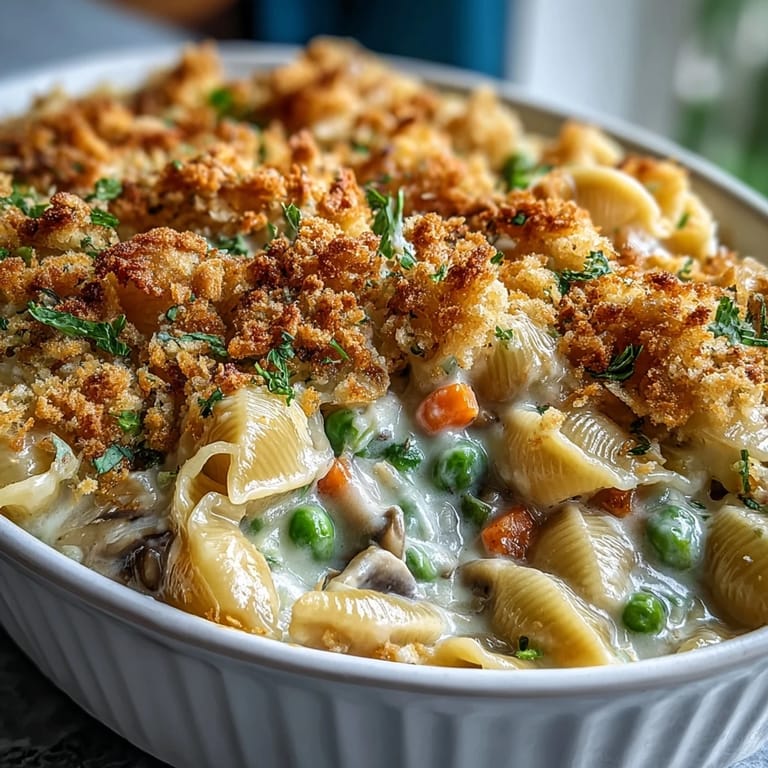
 There's a moment right after the pot comes out of the oven when the kitchen smells like every comfort food memory at once, and that's when I know someone's going to feel better because of this dish. Whether it's a quiet night alone or a table full of hungry people, this pasta has a way of making everyone slow down and actually taste what's happening.
The Secret to Creamy Without Feeling Heavy
I used to make this sauce by dumping everything in at once, and it would either break into an oily mess or thicken into something that needed a fork to navigate. The trick I learned was patience with the whisking: add your liquid gradually while stirring constantly, and the flour actually has time to cook and thicken properly instead of clumping up like it has something to hide. That one small shift turned this from a dish I made when desperate into something I actually look forward to.
Biscuit Topping Magic
The reason this topping stays crispy instead of turning soggy is because it bakes on top rather than swimming in the sauce. I learned this the hard way after burying the crumb mixture in the pasta, which turned into a sad paste. Now I scatter it on top right before the pot goes into the oven, and it gets just enough time to cook through and turn golden while staying textured enough to catch on your fork.
Make It Your Own
This recipe is forgiving enough to bend to what you have on hand and what you're craving that day. I've added everything from spinach to fresh dill, roasted cauliflower to sun-dried tomatoes, and the pasta always welcomes whatever you throw at it. The real magic is that balance between creamy and crispy, between vegetables and sauce, between comfort and actual nutrition on your plate.
- Stir in a handful of fresh spinach or chopped kale right after the frozen vegetables for extra greens that wilt into the warm sauce.
- Add cooked shredded chicken or crumbled tempeh if you want more protein without changing the entire character of the dish.
- Swap regular Parmesan for gruyere or sharp cheddar if you want a more adventurous cheese flavor that lingers after you swallow.
 Pin to Board
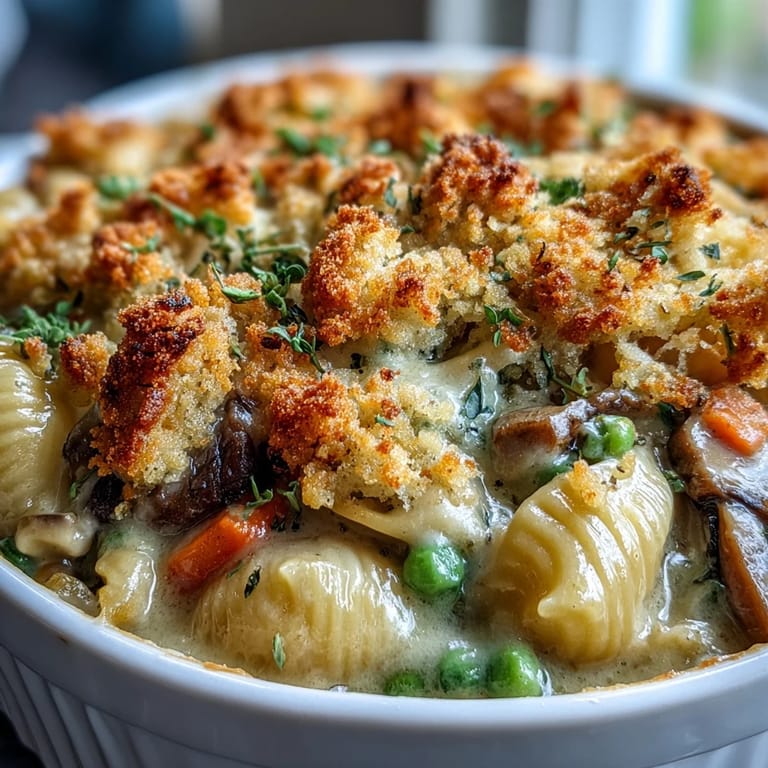
 This dish quietly earned its place in my regular rotation because it asks for almost nothing and delivers something that feels generous. Make it this week, and I bet someone will ask for seconds before their bowl is even halfway empty.
Common Questions
- → Can I make this dish vegan?
Yes. Substitute plant-based butter for dairy butter, use your favorite non-dairy milk in place of whole milk, and swap Parmesan for vegan hard cheese or nutritional yeast.
- → What type of pasta works best?
Short pasta shapes like penne, fusilli, or shells hold the sauce beautifully. Their curves and ridges capture the creamy mixture, ensuring every bite is flavorful.
- → Can I add protein to make it non-vegetarian?
Absolutely. Cooked shredded chicken or turkey can be stirred in during step 8 along with the frozen vegetables. Use about 2 cups of cooked meat.
- → Is it possible to make this gluten-free?
Yes. Use gluten-free pasta and replace all-purpose flour with a 1:1 gluten-free flour blend for both the sauce thickening and biscuit crumb topping.
- → Can I prepare components ahead of time?
The vegetable mixture can be cooked through step 7 up to a day in advance. Refrigerate, then reheat gently, add frozen vegetables, proceed with topping, and bake when ready to serve.
- → What other vegetables can I include?
Chopped spinach or kale add extra greens. Diced potatoes, green beans, or bell peppers also work well. Keep total vegetable amount around 4 cups for proper sauce consistency.