 Pin to Board
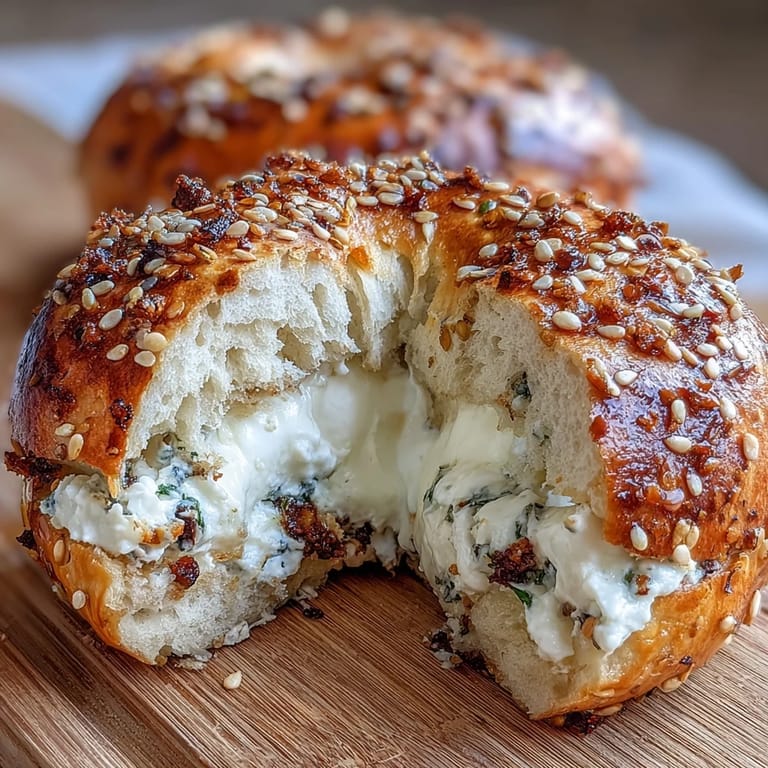
 I stumbled onto Greek yogurt bagels completely by accident, honestly—I'd forgotten to buy yeast and had a craving for something chewy at breakfast. Standing in front of my fridge at 7 a.m., I spotted a container of Greek yogurt and thought, why not? Twenty minutes later, these golden, pillowy bagels came out of the oven, and I couldn't believe how simple it was. My coffee got cold because I was too busy eating warm bagels slathered with cream cheese, wondering how I'd lived without this recipe for so long.
My roommate walked into the kitchen mid-bake and the smell—that toasted garlic and sesame hitting the warm dough—stopped her in her tracks. She asked what was happening, tasted one while it was still warm enough to burn her mouth slightly, and I've made these at least twice a month since. There's something about sharing food that catches someone off-guard that makes it feel special, even if it's just a bagel you invented out of necessity.
Ingredients
- Plain Greek yogurt (1 cup): This is the secret ingredient that replaces water, kneading, and yeast—it adds moisture, protein, and a subtle tang that makes these bagels taste rich without any dairy tartness overpowering the bread.
- All-purpose flour (1 cup): Measure by weight if you can, because spooning flour into a cup is unreliable and leads to dry, tough bagels that won't have that perfect chewy crumb.
- Baking powder (2 tsp): This gives you the lift and structure without waiting for fermentation; don't skip it or your bagels will be dense pucks instead of airy clouds.
- Fine sea salt (1/2 tsp): Brings out all the subtle flavors in the dough and seasons the everything seasoning blend when it hits the surface.
- Egg wash (1 beaten egg): This is what gives you that beautiful golden-brown gloss and helps the seasoning stick like it's meant to be there.
- Everything bagel seasoning (2 tbsp): Use store-bought or make your own by mixing sesame seeds, poppy seeds, dried garlic, dried onion, and coarse salt—the store-bought stuff saves time, but homemade tastes like you actually cared.
Tired of Takeout? 🥡
Get 10 meals you can make faster than delivery arrives. Seriously.
One email. No spam. Unsubscribe anytime.
Instructions
- Heat up and prep:
- Preheat your oven to 375°F and line a baking sheet with parchment paper—this prevents sticking and cleanup is basically nonexistent, which is a win I never take for granted.
- Mix the dry ingredients:
- Whisk flour, baking powder, and salt together in a large bowl, breaking up any tiny clumps of baking powder with the back of your whisk. This ensures even leavening and no pockets of raw baking powder taste.
- Bring the dough together:
- Add the Greek yogurt and stir with a spoon or spatula until everything comes together into a shaggy, wet-looking dough—don't overmix or you'll develop too much gluten and end up with tough bagels. The dough should look almost impossible to work with, but trust the process.
- Knead gently:
- Turn the dough onto a lightly floured surface and knead for just 1 to 2 minutes until it's smooth and slightly tacky, adding more flour a tiny pinch at a time if it sticks to your hands. This is not bread dough that needs a full 10-minute workout—we're going for tender, not chewy-tough.
- Divide and shape:
- Cut the dough into 4 equal pieces, roll each one into a rope about 8 inches long, then bring the ends together and pinch firmly to seal the bagel shape. The seam should be underneath so it's hidden when you flip it onto the baking sheet.
- Add the shine and seasoning:
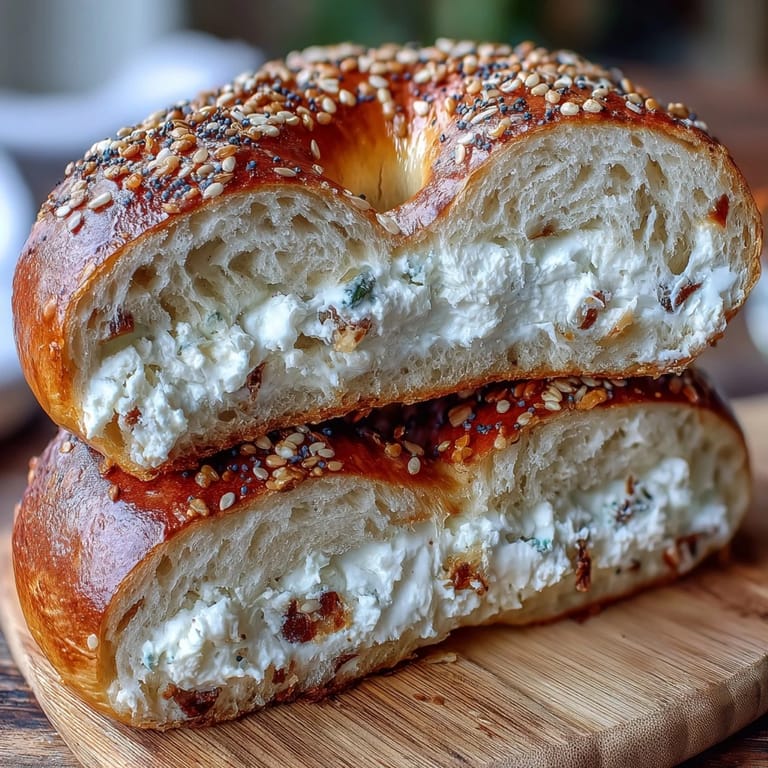
- Brush each bagel with beaten egg so it glistens, then sprinkle generously with everything seasoning—don't be shy, because the seasoning is where all the personality happens.
- Bake until golden:
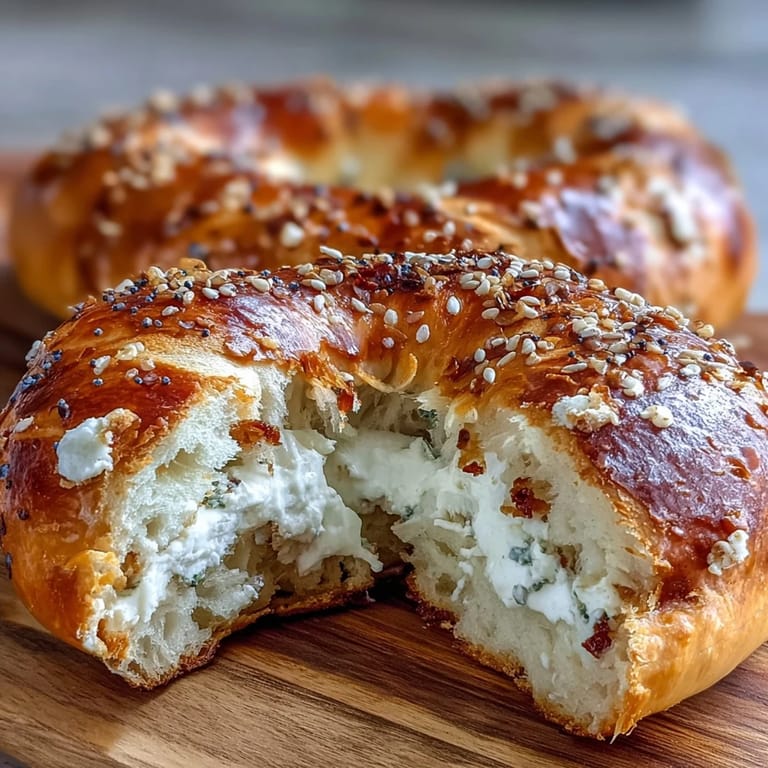
- Bake for 22 to 25 minutes until the tops are deep golden brown and a toothpick inserted into a bagel comes out clean. The bottom should sound hollow when you tap it, which is the small victory that tells you it's perfectly baked.
 Pin to Board
 I made these for a breakfast gathering once, and the best part wasn't the compliments—it was watching someone realize that a 40-minute breakfast item could actually exist and taste like you'd spent all morning at a proper bakery. Those small moments of surprise remind me why cooking for people matters, even when it's something as simple as a bagel.
Make Them Your Own
The base recipe is straightforward, but bagels are also incredibly forgiving if you want to experiment. I've folded grated cheddar into the dough, added everything from fresh herbs to hot sauce, and even sprinkled a bit of za'atar on top instead of the traditional seasoning blend—every version has been delicious and fast.
Storage and Reheating
These bagels stay soft for a few days if you keep them in an airtight container or a bread bag, and they toast beautifully if you want to crisp them up before serving. I've wrapped and frozen them too, and they thaw perfectly at room temperature or reheat in the toaster oven for 10 minutes—no weird texture changes, just ready-to-eat bagels whenever you need them.
Serving Ideas and Final Thoughts
These bagels are soft and sturdy enough to hold basically anything—smoked salmon and cream cheese feels fancy, but they're equally happy with a fried egg, avocado, or just butter and jam. The protein in the Greek yogurt means you can eat these and actually feel full, which is how I justify eating two of them before work.
- Serve them warm or at room temperature, though warm is definitely where they shine and taste most like you tried.
- If you're feeding guests, bake them in the morning so they're still slightly warm when people arrive, and watch how fast they disappear.
- Toast leftover bagels lightly so they regain that soft texture and don't feel like day-old bread that's been sitting around.
 Pin to Board
 There's something deeply satisfying about pulling warm bagels out of the oven knowing they took less time than most coffee shop lines. Keep making these until they feel like second nature, and then introduce someone else to the magic of Greek yogurt bagels.
Common Questions
- → What gives these bagels their protein content?
The use of Greek yogurt in the dough significantly increases the protein content compared to traditional bagels.
- → Is yeast required to make these bagels?
No yeast is needed; baking powder acts as the leavening agent allowing for a quicker preparation time.
- → Can I make these bagels gluten-free?
Yes, substitute the all-purpose flour with a 1:1 gluten-free baking flour blend for a gluten-free version.
- → How is the everything seasoning topping made?
Everything seasoning typically includes sesame seeds, poppy seeds, dried garlic, dried onion, and coarse salt, either store-bought or homemade.
- → What is the texture of these bagels compared to traditional ones?
These bagels are soft and chewy with a tender crumb, differing from traditional boiled bagels which have a denser texture.
- → Can other toppings be added?
Yes, toppings like grated Parmesan or cheddar cheese can be folded into the dough for added flavor.