 Pin to Board
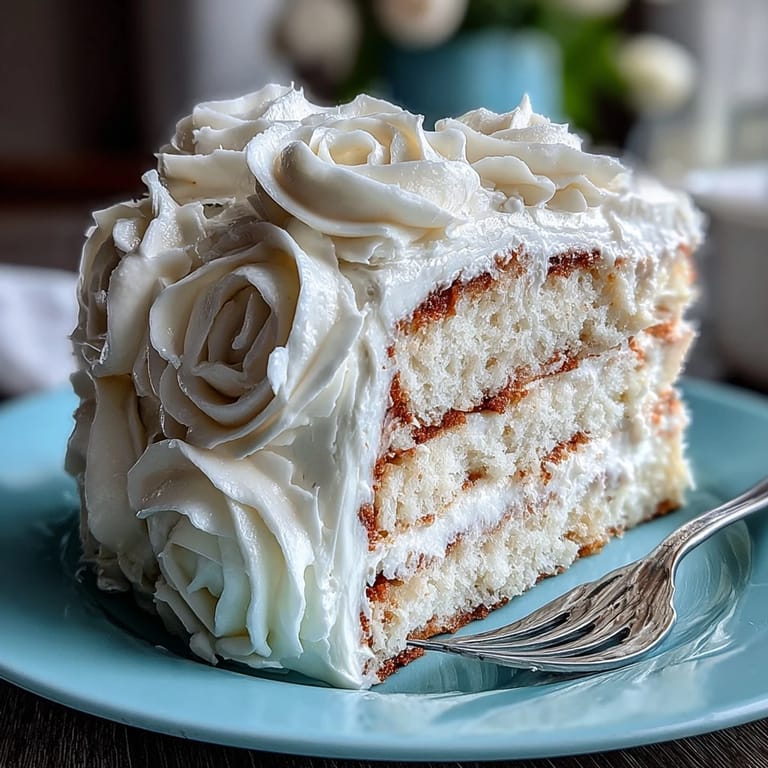
 My cousin's daughter was turning seven, and her mother asked if I could bake something special for her First Communion celebration. I found myself in the kitchen on a quiet Saturday morning, thinking about how a cake could hold meaning beyond just sweetness—how fondant roses and a delicate cross could turn flour and butter into something almost ceremonial. That's when I knew this vanilla sponge cake had to be perfect, not because the recipe demanded it, but because this moment deserved it.
I remember my hands shaking slightly as I piped the final swirl of buttercream, then pausing to step back and look at what I'd made. My sister walked in, gasped, and said it looked like something from a magazine—and in that moment, all the careful measuring and fondant shaping suddenly felt worth it. Watching that little girl's face when she saw her cake was better than any compliment could have been.
Ingredients
- All-purpose flour: Use the spoon-and-level method rather than scooping directly from the bag, which packs it down and can make your cake dense.
- Baking powder: Fresh baking powder matters more than you'd think—old powder won't give you that tender crumb you're after.
- Unsalted butter: Room temperature is non-negotiable; cold butter won't cream properly with the sugar, and you'll lose that light, fluffy texture.
- Granulated sugar: This feeds the creaming process and creates structure, so don't skip or reduce it.
- Eggs: Also room temperature—they emulsify better and incorporate air more easily, which is what gives the cake its delicate lift.
- Pure vanilla extract: The real stuff, not imitation, makes a noticeable difference in flavor depth.
- Whole milk: Room temperature so it doesn't shock the batter or cool everything down unexpectedly.
- Powdered sugar: Sift it before adding to avoid lumps that can ruin the smoothness of your frosting.
- White fondant: Buy quality fondant or make your own; cheap versions can taste waxy and won't roll as smoothly for shaping roses.
- Gel food coloring: Gel is better than liquid for fondant because it doesn't add extra moisture that can make fondant sticky.
Tired of Takeout? 🥡
Get 10 meals you can make faster than delivery arrives. Seriously.
One email. No spam. Unsubscribe anytime.
Instructions
- Set your stage:
- Preheat the oven to 350°F and get those two 8-inch pans greased and lined with parchment paper. Having everything ready before you start mixing is the difference between a smooth bake and scrambling at the last minute.
- Combine your dry ingredients:
- Whisk flour, baking powder, and salt together in a medium bowl, breaking up any lumps so everything bakes evenly. This step prevents streaks of baking powder in your final cake.
- Cream butter and sugar:
- Beat softened butter and sugar for about three minutes until the mixture looks pale and fluffy, like clouds. This is where you're incorporating air, which gives the cake its tender crumb.
- Add eggs gently:
- Add eggs one at a time, waiting until each one is fully incorporated before adding the next. If you rush this, the batter can separate and your cake won't rise as beautifully.
- Introduce vanilla:
- Mix in the vanilla extract, then switch to low speed on your mixer for the next step to avoid overworking the batter.
- Alternate your wet and dry:
- Start with flour, then milk, then flour again, always beginning and ending with the flour mixture. This technique prevents the batter from separating or becoming grainy.
- Fill and smooth:
- Divide batter evenly between the pans and smooth the tops gently with a spatula. Even distribution means both layers bake at the same rate.
- Bake with patience:
- Bake for 30 to 35 minutes until a toothpick inserted in the center comes out clean or with just a few moist crumbs. The kitchen will smell like pure vanilla happiness.
- Cool thoughtfully:
- Let cakes cool in the pans for ten minutes to set slightly, then turn them out onto wire racks to cool completely. Cooling completely prevents the frosting from melting and sliding.
- Prepare the frosting:
- Beat softened butter until creamy, then gradually add sifted powdered sugar, vanilla, and a pinch of salt. Add milk or cream one tablespoon at a time until you reach a spreadable consistency that's not too soft.
- Level and layer:
- If your cakes have domed tops, level them with a serrated knife for a stable structure. Place the first layer on your cake board and spread buttercream across the top evenly.
- Add the crumb coat:
- Apply a thin first layer of frosting to seal in any crumbs, then chill for twenty minutes. This step prevents crumbs from ruining your final frosting layer.
- Final frosting layer:
- Apply a smooth, final coat of buttercream once the crumb coat is set. An offset spatula and a gentle touch create a more polished look.
- Craft fondant roses:
- Roll out white fondant to 1/8-inch thickness and cut into small circles or squares. Roll each piece into a ball, flatten it gently, then layer the flattened pieces around a center to create rose petals, building from the outside in.
- Shape leaves:
- Tint a small amount of fondant with green gel coloring and shape into simple leaf forms by hand or with fondant tools. A toothpick or knife can create subtle veining for extra detail.
- Arrange your decoration:
- Position the fondant roses and leaves on the frosted cake, securing them gently with a dab of buttercream or frosting. You're creating a picture with edible flowers, so take your time and step back often.
- Add finishing touches:
- Scatter edible pearls or silver dragees around the roses for a touch of sparkle and elegance. These tiny details catch the light and make the cake feel even more special.
- Crown with the cross:
- Place the cross topper at the center or slightly off-center, depending on your design. This is the moment the cake transforms from beautiful into meaningful.
- Chill before serving:
- Refrigerate the finished cake until it's time to serve so the frosting stays firm and the fondant holds its shape.
 Pin to Board
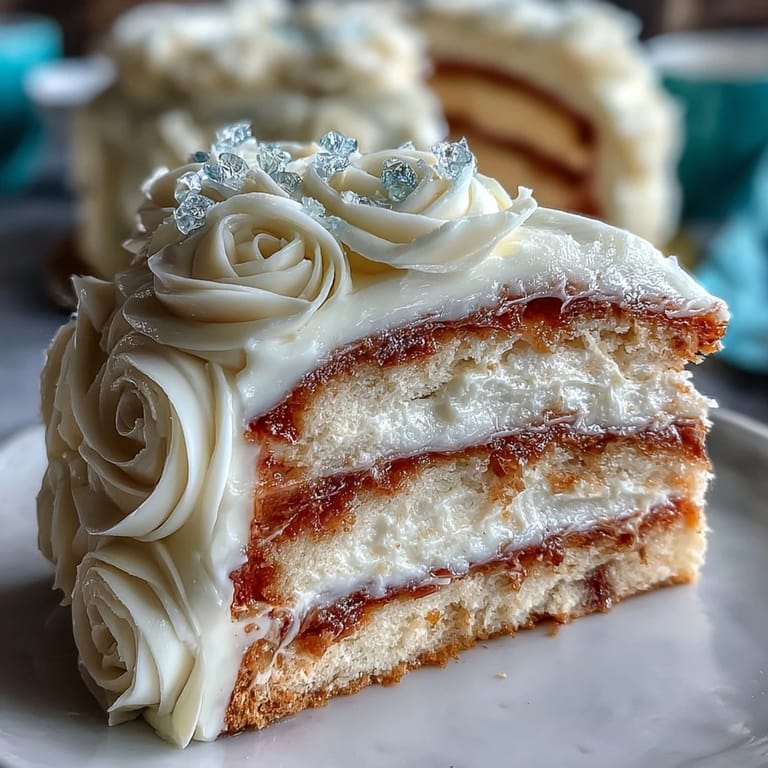
 What surprised me most wasn't the technical skill the cake required, but how it became a centerpiece for memory-making rather than just something to eat. The family gathered around it before slicing, phones came out for photos, and for a moment everyone paused to appreciate something made with care and intention.
The Secret to a Tender Crumb
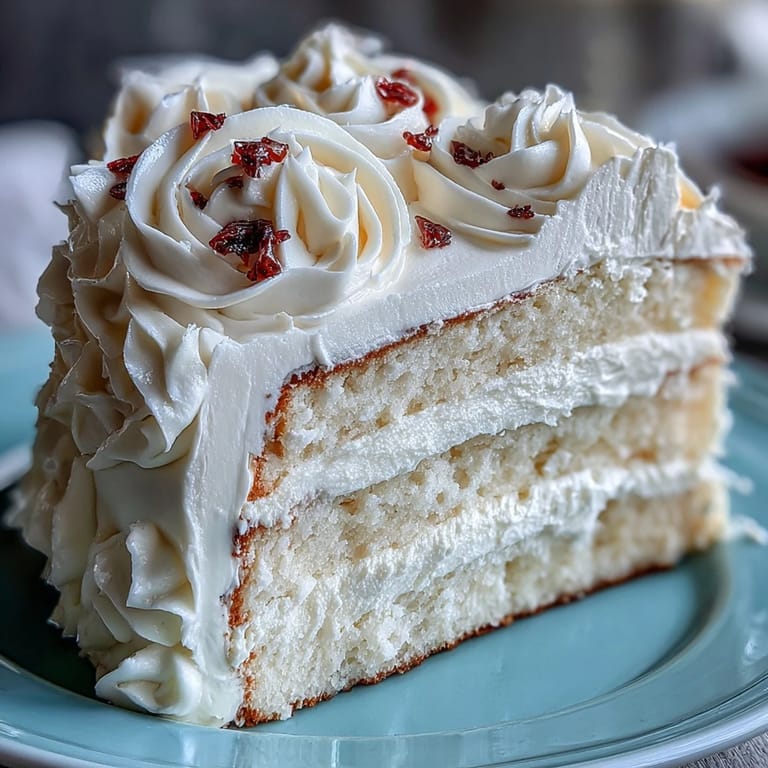
The key to this cake's delicate texture lies in the creaming method and the temperature of your ingredients. When butter and sugar are creamed together properly, they create tiny air pockets that expand during baking, giving you that prized tender crumb. Room temperature eggs and milk integrate smoothly without temperature shock, and the alternating wet-and-dry method prevents overmixing, which would develop gluten and toughen the cake. I learned this the hard way after rushing through a batch and ending up with something closer to cornbread than celebration cake.
Mastering Fondant for Beginners
Fondant can feel intimidating, but it's really just sugar that's been worked into submission. The first time you work with it, your hands might feel clumsy shaping those roses, but fondant is forgiving—if a petal tears, just smooth it back together and try again. Keep your work surface lightly dusted with cornstarch or powdered sugar to prevent sticking, and if fondant gets too warm and soft, pop it in the refrigerator for a few minutes. Working slowly and deliberately feels better than rushing anyway, and you'll find a rhythm that suits your hands.
Why This Cake Matters Beyond the Recipe
Baking a cake for a significant milestone is different from baking for an ordinary Tuesday. There's intention in every step, and somehow that comes through in the finished cake, even if no one can quite explain how. This particular cake works because it's elegant without being pretentious, special without being difficult, and completely customizable to match the meaning you want it to carry. Whether you're decorating it with fondant roses or keeping it simple with buttercream swirls, you're creating something that marks a moment and makes it edible.
- Don't worry if your fondant roses aren't perfect—slight imperfections make them look more romantic and handmade.
- You can prepare the sponge layers a day ahead and keep them wrapped at room temperature, making the final decoration day less stressful.
- If you're nervous about the cross topper placement, dry-run it on top of the finished cake before the big reveal to build confidence.
 Pin to Board
 This cake will stay with you long after the last crumb is eaten—not because the recipe is complicated, but because you'll have made something that mattered to someone. That's the real magic of baking.
Common Questions
- → What type of flour is best for the sponge?
All-purpose flour provides the ideal structure and texture for a tender vanilla sponge.
- → Can I substitute butter in the sponge?
Yes, substituting half the butter with vegetable oil yields a lighter crumb without sacrificing moisture.
- → How do I achieve smooth buttercream frosting?
Beat softened butter until creamy before gradually adding sifted powdered sugar and vanilla. Add milk or cream a tablespoon at a time for spreading consistency.
- → How are the fondant roses made?
Fondant is rolled thin then small portions are shaped into petals and assembled into roses, often tinted lightly for leaves.
- → What is the best way to prevent a dry cake?
Ensure not to overbake and cool cakes properly before frosting. Incorporating butter and milk adds moisture to the sponge.
- → Can this be adjusted for gluten-free diets?
Using a 1:1 gluten-free flour blend can replace wheat flour while maintaining a similar texture.