 Pin to Board
 There's something about mac and cheese that stops time in a kitchen. My college roommate made it once on a Tuesday night when we were too broke for takeout, and suddenly the whole apartment smelled like butter and possibility. That first bite—creamy, tangy, with just enough sharpness to make you sit up and pay attention—I realized homemade was a world away from the box version I'd grown up with. It's the kind of dish that makes people linger at the table, forks scraping the bottom of their bowls, asking for the recipe even though they're certain they can't make it. But you can, and it's easier than you think.
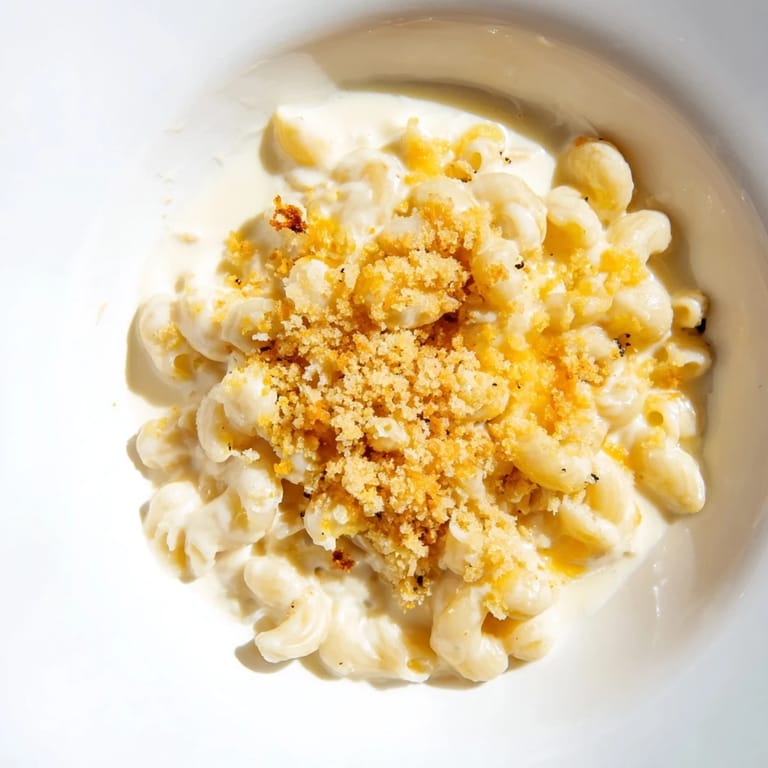
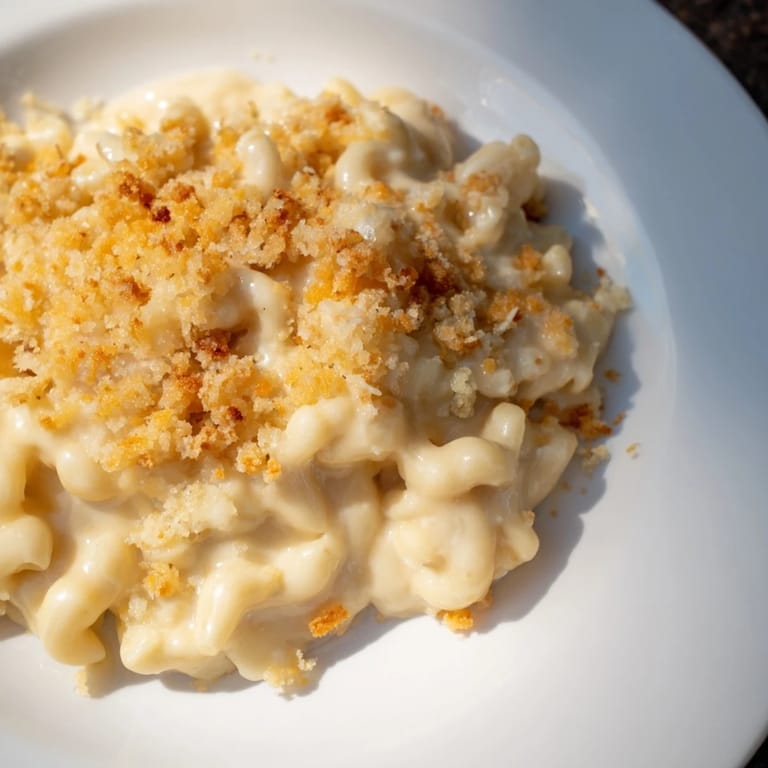
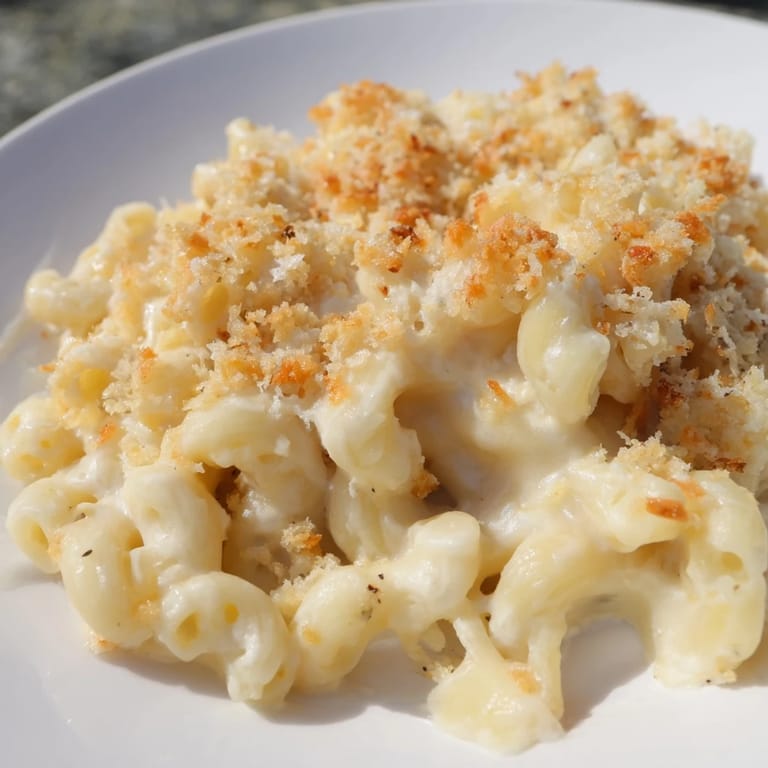
I made this for a dinner party once where someone announced they were gluten-free, and I nearly panicked until I realized everyone else would demolish the regular version. Watching people reach for seconds, even thirds, while pushing salad aside—that's when I knew this recipe was the real deal. The golden crust crackling under their forks, steam rising from the creamy center, felt like I'd done something right.
Ingredients
- Elbow macaroni (350 g): Cook it just under al dente because it'll soften more in the sauce and oven.
- Unsalted butter (3 tbsp): Use real butter here—it's the foundation of your roux and you'll taste the difference.
- All-purpose flour (3 tbsp): This thickens the sauce without weird graininess if you whisk it in properly.
- Whole milk, warmed (2 cups): Warm milk whisks in smoother and prevents lumps that cold milk can cause.
- Heavy cream (1 cup): This is your luxury ingredient; it makes the sauce lush and protects against breaking.
- Sharp cheddar cheese, grated (200 g): The backbone flavor—don't skip the sharp stuff, mild cheddar gets lost in the sauce.
- Gruyère or Swiss cheese, grated (75 g): Adds nutty complexity and helps the sauce stay creamy when baked.
- Parmesan cheese, finely grated (50 g): A little goes a long way for that salty, umami punch.
- Dijon mustard (1 tsp): You won't taste mustard; you'll taste sharper cheese.
- Garlic powder, onion powder, salt, pepper, cayenne (½ tsp each, adjusted): Layer these in gradually so the flavors build naturally.
- Panko breadcrumbs (½ cup) and melted butter (2 tbsp): This topping gets golden and crispy without burning if you watch it.
Tired of Takeout? 🥡
Get 10 meals you can make faster than delivery arrives. Seriously.
One email. No spam. Unsubscribe anytime.
Instructions
- Get everything ready first:
- Preheat your oven to 200°C (400°F) if you're baking, grease your dish, and grate all your cheese while the water comes to a boil. Having everything prepped means you won't be fumbling around once the sauce is heating.
- Cook the pasta just right:
- Drop the macaroni into salted boiling water and pull it out 1–2 minutes before the box says it's done. It should still have a slight bite because it'll keep cooking in the hot cheese sauce.
- Make a golden roux:
- Melt butter over medium heat, whisk in flour, and cook for 1–2 minutes until it smells nutty and toasted but looks pale gold. Watch it closely—burned flour tastes bitter and ruins everything.
- Whisk in the cream base:
- Pour in the warm milk and cream slowly while whisking constantly so the roux dissolves smoothly into the liquid. Bring it to a gentle simmer, still stirring, and let it thicken for about 4–5 minutes until it coats the back of a spoon.
- Season and taste:
- Turn the heat down low, add mustard, garlic powder, onion powder, salt, pepper, and cayenne. Taste it now before the cheese—this is when you can adjust.
- Melt in the cheese:
- Add the cheeses in batches, stirring each handful until it completely melts before adding more. The sauce should feel silky and smell incredible; if you rush this step you risk the cheese clumping.
- Fold in the pasta:
- Add the drained macaroni and stir gently until every piece is coated in that creamy cheese sauce. If it looks too thick, add a splash of warm milk; if it's too thin, wait a minute—it'll set up as it cools slightly.
- Finish your way:
- For stovetop, serve it right now while it's flowing and warm. For baked, transfer to your prepared dish and toss the breadcrumb-butter-Parmesan topping over the top, then into the oven for 20–25 minutes until the top is golden and the edges are bubbling.
 Pin to Board
 My grandmother used to make this on Sunday nights, and my cousins would fight over who got to scrape the crusty bottom corners from the baking dish. She never wrote down her recipe; she just moved through the kitchen like she was conducting an orchestra, tasting everything, adjusting as she went. Now when I make it, I feel her there in those small decisions, and somehow that ordinary Tuesday-night comfort dish became something sacred.
Stovetop vs. Baked: Which One Calls to You?
The stovetop version is pure indulgence—creamy, luxurious, meant to be eaten immediately while the sauce still flows like liquid gold. It's what you make for yourself on a quiet night or when you're serving it fresh to friends who arrive at your door. The baked version is the showstopper, that golden crust announcing itself the moment it comes out of the oven, the satisfaction of that textural contrast between crispy top and creamy center. Pick whichever matches your mood: are you seeking comfort, or are you hosting a moment worth remembering?
The Cheese Conversation
Cheese is not an afterthought here—it's the whole point. Sharp cheddar brings the twang, Gruyère adds that subtle nuttiness that makes people say they can't quite name what they're tasting, and Parmesan delivers salt and umami depth. If you only use mild cheddar, the sauce becomes one-dimensional and forgettable. If you want something lighter, swap the Gruyère for Monterey Jack, but don't compromise on the sharpness of your primary cheese. The mustard isn't there to add mustard flavor; it's a flavor amplifier that makes the cheese taste more like itself.
Build Your Own Adventure
This is also the canvas for your own kitchen creativity. I've stirred in crispy bacon and caramelized onions, tucked roasted broccoli into the layers, added sautéed mushrooms that absorb the creamy sauce like little flavor sponges. Even a thin layer of sliced tomato between the pasta and topping changes the whole dish in the best way. The base is strong enough to hold whatever you add, which is why it never gets boring.
- Bacon, mushrooms, or broccoli transform this from side dish to complete meal.
- A pinch more cayenne if you like heat, or skip it if you prefer pure comfort.
- Leftover mac and cheese bakes beautifully the next day if you add a splash of milk to loosen it up.
 Pin to Board
 Mac and cheese is proof that the simplest dishes, made with care and real ingredients, become the ones people never forget. Make this, and you'll understand why.
Common Questions
- → How do I achieve a smooth béchamel sauce?
Whisk the butter and flour over medium heat until lightly golden, then slowly add warm milk and cream while whisking constantly to prevent lumps. Simmer until thickened.
- → Can I use different cheeses in this dish?
Yes, you can substitute Gruyère with Monterey Jack or mozzarella for a milder flavor while keeping the sharpness from the cheddar.
- → What is the best way to cook the macaroni?
Boil the pasta in salted water until just al dente, about 1–2 minutes less than package instructions, then drain and set aside.
- → How do I get a crispy topping when baking?
Mix panko breadcrumbs with melted butter and Parmesan cheese, then sprinkle evenly over the macaroni before baking until golden and bubbly.
- → Can I add vegetables or other ingredients?
Absolutely, consider adding cooked bacon, sautéed mushrooms, or blanched broccoli to add variety and depth of flavor.